
“Did You Know”
The definition of an amateur golfer in 1916!
On January 18, 1916, Frank Woodward, president of the United States Golf Association, issued a lengthy statement on the definition of an amateur golfer. President Woodward stated, “Efforts of manufacturers to exploit their wares through the medium of skilled golfers is more widespread than was generally suspected, and that it has become absolutely necessary to call a halt.” A detailed list of violations of a golfer’s amateur status was spelled out.
Below are violations of one’s amateur status in abbreviated form:
*Playing or teaching the game of golf for pay, including accepting travel or living expenses for playing in a golf tournament or exhibition.
* Making or repairing golf clubs, golf balls, or other golf articles for pay.
* Serving after reaching the age of 16 as a caddie, caddie master, or greenkeeper for hire.* Lending one’s name or likeness for the advertisement or sale of anything except as a dealer, manufacturer, or inventor in the usual course of business.* Permitting one’s name to be advertised or published for pay as the author of books or articles on golf when one was not actually the author.* Accepting or holding any position that includes the handling of golf supplies or engaging in any business where one’s usefulness or profits arise because of skill or prominence in the game of golf.
* One who had been a professional in any other branch of athletics.
At the same time the USGA clarified some of the endeavors in golf for compensation that did not affect one’s amateur status. Writing books on golf, articles for newspapers or golf magazines, and employment as a golf course architect or golf course consultant did not make a person a golf professional.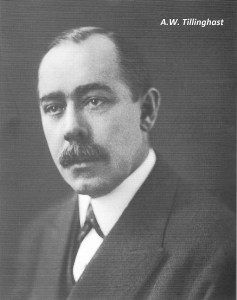 In order not to tarnish their amateur status, golf course architects like Philadelphia’s A.W. Tillinghast, George Thomas and Hugh Wilson had been wary of accepting compensation for their work.
When Francis Ouimet won the 1913 United States Open and became famous, some began to question his amateur status. Ouimet was working in sporting goods store, making $15 a week. In January Ouimet had been told that working in the sale of golf equipment was in violation of his amateur status.
On April 18, 1916, the USGA made it official. Ouimet received a letter from the USGA that his entry for amateur tournaments was no longer acceptable. By then Ouimet had formed a partnership with another man to open a store for the sale of golf supplies, but in the eyes of the USGA working in a store and owning a store was no different.
The New York Evening World newspaper stated “Based on the USGA’s definition of an amateur golfer, Ouimet had been a professional since 1911 when he began working in the sporting goods house”. That was at the age of 18. Two years later he had won the 1913 Massachusetts Amateur Championship and the 1913 US Open. A year later in 1914 Ouimet had won the US Amateur, the Massachusetts Amateur again, and the French Amateur. In 1915 he had won the Massachusetts Amateur for a third time.
Due to the USGA ruling, in 1916 Ouimet wasn’t able to defend his Massachusetts title or play in the US Amateur. Then with the USA in World War I there were no USGA championships in 1917 or 1918. Ouimet joined the US Army and participated in fund raising exhibitions for wartime charities.
When the USGA championships returned in 1919, Ouimet had a new line of work, banking. His amateur status was reinstated. Ouimet went on to win another US Amateur Championship, along with many other important amateur tournaments. He played on nine Walker Cup teams and was the captain six times. The 1919 Pennsylvania Open was at Whitemarsh Valley Country Club. Before John Beadle teed off his amateur standing was questioned. Someone had said that Beadle, a former caddy at Llanerch CC, who was now 19, had caddied after the age of 16. Beadle finished second to Charlie Hoffner in the PA Open that day. The real crux of Beadle’s amateur status was that he was also entered in the Pennsylvania Amateur Championship, beginning the next day at that same course, Whitemarsh Valley. Beadle produced a letter verifying that his last caddy days were before his 16th birthday. But, with all of the conversation about his amateur status, Beadle did not play well in the PA Amateur. He would go on to be the professional at Paxon Hollow Country Club (later White Manor GC) for 35 years.
Even as recently as the 1960s, a golfer would be deemed to be a professional by the USGA, if he worked in a golf shop, or as a caddy master after the age of 20 or received golf equipment for less than the listed price.
With the college golfers now being compensated, what is the definition of an amateur golfer in 2024?










 In the spring of 1938 Hogan landed a job as the teaching and playing professional at the Century Country Club in White Plains, New York. In the embedded photo, Hogan and Nelson, pictured with William Flynn, are at the Philadelphia Country Club the week after the 1939 Masters, playing a practice round for the upcoming US Open. Nelson was back at Reading CC and Hogan was on his way to White Plains.
 The competition was scheduled for one 18-hole round. At the end of 18 holes, 1908 US Open champion Freddie McLeod was tied for the title with Long Island’s Charlie Mayo, with 76s. A sudden death playoff was held, beginning on the first hole. Representing Maryland’s Columbia Country Club, McLeod’s drive was in the fairway and his iron shot to the green finished 8 feet from the hole. Mayo, the professional at Pomonok Country Club, drove into the right rough and his second shot was barely on the green. From there Mayo holed his putt of 30 feet for a birdie. McLeod failed to hole his putt and Mayo was crowned the champion.
 In 1960 on his third attempt and now with the help of an attorney, Sifford’s application for an “Approved Players Card” was accepted by the PGA, after an eight week wait. Even with that he could still only play in the Monday qualifying rounds for tournaments that were open and not invitations. With such a limited schedule, winning enough money to be among the top sixty money winners and gain full exemption for the next year was difficult.
 After working as the professional at Maidstone Golf Club, Shippen became the professional at Aronimink Golf Club in 1899, for that one year. His brother Cyrus was his assistant. At times his employers, to justify his employment, would say that he was not a black man but of English/Indian decent. It was said and written that Shippen was related to John Raife on his father’s side and Pocahontas on his mother’s side, which was far from realty. Shippen himself had registered for that 1896 US Open as a Shinnecock Indian, to avoid problems. In later years in an interview with his daughter, she said her father was 100 percent black.
  For many years Shippen was the professional and course supervisor at the Shady Rest Golf & Country Club in Scotch Plains, New Jersey. It was later Scotch Hills Country Club. In 1991 the John Shippen Foundation was created to offer golf instruction and competition for young minority golfers.
 A third challenge match was back at Oakland Hills in August 1942. In late 1941 the PGA had selected another wartime Ryder Cup team. Sarazen was back on the team along with newcomers Hogan and Demaret. Harold “Jug” McSpaden, who was now the professional at the Philadelphia CC, was on the team again. For the first time since the first match in 1927, Hagen was not the captain. The captain was Craig Wood. Hagen was now the captain of the Challengers. Hagen invited Jones to play on his team, but Jones was in the Army and could not arrange leave. Snead was in the Navy so Ed Dudley, who was a veteran of three Ryder Cup teams and president of the PGA, subbed for Snead. The Cup team won all five foursome matches and split the second day singles for a 10-5 victory. $25,000 was raised for the Red Cross.
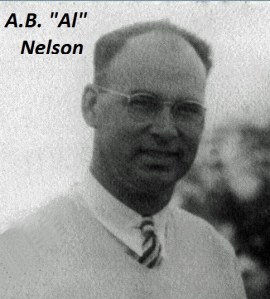 It was going to be the first time a major golf tournament would be held in Florida. Why in Florida and why at Ponte Vedra? The golf professional at Ponte Vedra was A.B. “Al” Nelson. Nelson had been a head professional at the Country Club of York, Yardley CC and then just across the Delaware River in New Jersey at Hopewell Valley CC. before becoming the professional at Ponte Vedra in 1936. He played in PGA Championships and US Opens along with being an officer in the Philadelphia PGA. Once he attended his first national PGA meeting in 1932, he seemed to attend them all. Thru all of this, Nelson knew nearly everyone in professional golf and sold the PGA on bringing the Ryder Cup to Ponte Vedra.
 Even with the cancellation of the Ryder Cup, a ten-man U.S. team was selected and announced at the PGA’s national meeting on November 13. The selection committee was composed of Jacobus who was now the past president of the PGA, Dudley, Hagen, Leo Diegel and Olin Dutra.
 Nineteen-year-old George Low, Jr. (Huntingdon Valley CC) led the 36-hole qualifying with a 145. Also qualifying for the seven allotted spots were Ed Dudley (Concord CC), Joe Kirkwood (PGA Tour), Hackney, Hoffner and John Beadle (Paxon Hollow GC). Markel defeated Al Heron (Riverside CC), who he used to work for, in a sudden death playoff to pick up the last spot. Even though Dudley had won twice on the PGA Tour in the past year he had to qualify along with Kirkwood who had been a semifinalist in the PGA the year before.
 In the second week of October the successful qualifiers were at Siwanoy for the first PGA Championship. There were only three players there from west of the Mississippi River; one from Missouri,
 Kirkwood was the perfect partner for a golf exhibition. Kirkwood was the leading golf trick shot artist in the world. Kirkwood grew up in Australia. As a young boy he worked on a sheep ranch that had a three-hole golf course, where he learned to play. While tending the sheep he would pass the time attempting trick shots. During World War I he entertained the Australian soldiers with his various shots. He could do more than hit unusual shots. At age 23 he won the Australia Open, New Zealand Open and New Zealand PGA, all in 1920. The next year he left the South Pacific for the United States. He played his way across the country arriving in Pinehurst in April for the North and South Open. One round after having been paired with Walter Hagen, he was asked to show off his array of trick shots. When he finished, Jimmy Walker, the mayor of New York, passed a hat to collect tips for Kirkwood. When Hagen saw how much money was in the hat he could see someone he should team up with for exhibitions. It was a partnership that would last for the rest of their lives. On occasion like 1934, Kirkwood would also team up with Sarazen. In 1923 Kirkwood moved to the states. He purchased a home in Glenside, a suburb of Philadelphia, and joined Cedarbrook Country Club. For many years he kept a home in Glenside, no matter what club he might be representing.
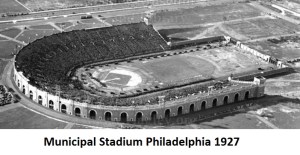 Municipal Stadium later named John F. Kennedy Stadium was demolished in 1992 to make room for more modern sports venues. The stadium was an open horseshoe. Tees with an elevation of forty feet were constructed at the South end of the field. A fairway, sixty yards in width, extended 422 yards.
 In 1930 the Indian Creek Country Club in Miami hired Barnett as their golf professional. He was now the professional at Chevy Chase in the summer months and Indian Creek in the winter. As the professional at those two clubs he had several assistants who went on to prominence in golf. Max Elbin, president of the PGA of America 1966-68, and Bill Strausbaugh were with him at Indian Creek. Strausbaugh went on to be one of the countries’ leading golf instructors and a PGA of America award is named for him, for his lifelong endeavor to assist golf facilities in finding the right head professional.
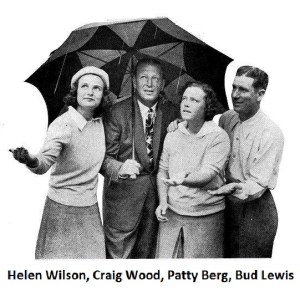 On the fourth Sunday of June 1944, Philmont Country Club then a jewel of Philadelphia golf with its 36 holes of championship golf, staged an event to sell US War Bonds. Ellis Gimbel of Gimbels Department Store was president of Philmont. A golf exhibition featuring Craig Wood, Bud Lewis, Helen Sigel and Patty Berg was played in the afternoon. Wood was the holder of the US Open title, Lewis the Philadelphia Open holder, Sigel runner-up in the 1941 US Women’s Amateur and Berg one of the countries’ leading women professionals who was stationed with the Marines in Philadelphia. In the evening Ella Fitzgerald entertained the members and guests. Philmont CC, which was predominantly composed of Jewish members, sold $3,000,000 in War Bonds. To purchase a War Bond one paid 75 cents on the dollar. That meant that $2,250,000 had been paid to purchase the bonds, which with inflation equates to $32,979247 in 2020 dollars.
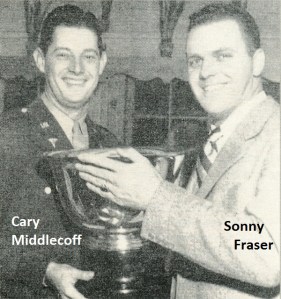 Once he began to recover from his eye injury he started playing golf again at the public Meadowbrook Golf Club, which was not far from the hospital. The nine-hole golf course that had been built at the hospital for wounded veterans returning from World War II lacked the distance and challenge for someone of Middlecoff’s ability. It was feared that Middlecoff’s career as an elite golfer might to be over but in October 1945, while still a patient at VFMH, he decided to enter the James “Sonny” Fraser Invitational golf tournament at the Atlantic City Country Club. At that time Sonny Fraser, who was a brother of future PGA president Leo Fraser, was the owner of Atlantic City CC. Playing his first competitive golf in three years, Middlecoff won the tournament.
 In October of that year, Anderson passed away at the age of 31. He was buried near the Philadelphia Cricket Club in Chestnut Hill’s Ivy Hill Cemetery. The Philadelphia Cricket Club members arranged a subscription to create a monetary fund for Anderson’s widow and baby. The Eastern Professional Golfers Association provided a large monument for the grave site, which mentioned his four U.S. Open victories. His father and brother, also golf professionals, are buried next to Willie. The monument nearly bankrupt The Eastern Professional Golfers Association.
 Edmundson won the First Irish Professional Championship, and in 1908 he was the winner again. Along with that, he finished second in 1909, 1910 and 1911.
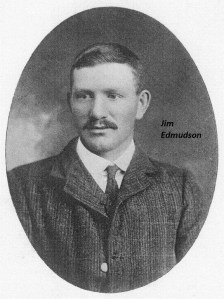 With the onset of World War I, Edmundson volunteered for the British Army’s artillery division, seeing action in France for two years. When the war was over he could not find another head professional position. In early 1921, his brother John, who was the professional at the Llanerch Country Club, wrote to him saying that he should visit the states. John’s letter mentioned that there were clubs with well-to-do members near Llanerch looking for experienced golf professionals.
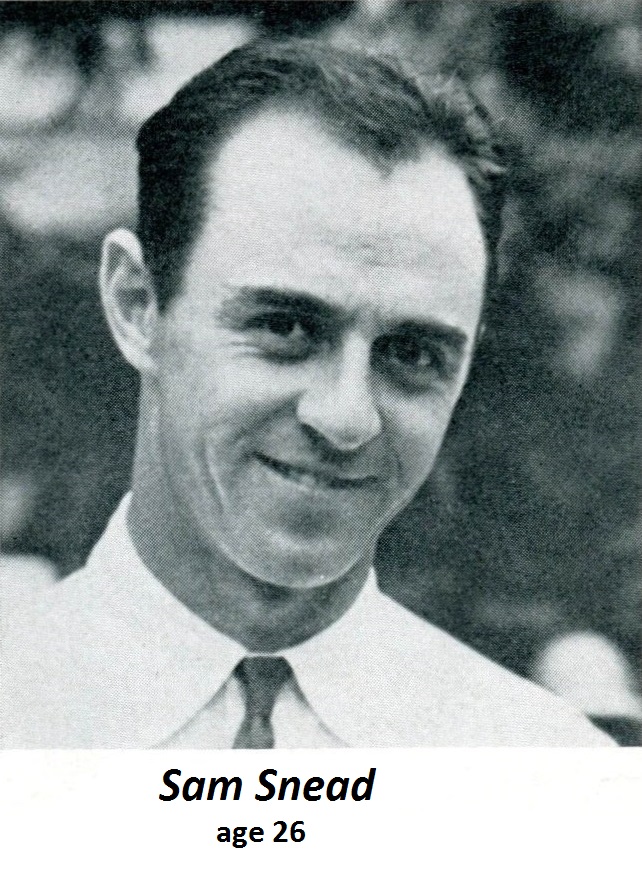
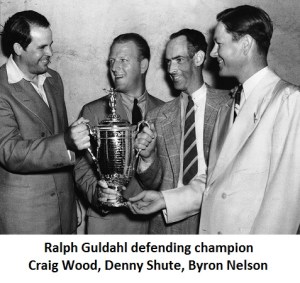 Most golfers, even 80 years later, have heard the stories of how Sam Snead appeared to be a sure winner when he teed off on the 71st hole with a two stroke lead, only to make a bogie 5 on that hole and a triple bogie 8 on the last hole. When all the scores were posted he tied for 5th at 286. Playing right in front of Snead, Reading Country Club professional Byron Nelson posted a 68 for a total of 284, which made him the leader in the clubhouse. 25 minutes later Craig Wood reached the last green with two big shots. His birdie 4 gave him a 72 and he was in at 284. In those days there were no gallery ropes, so in order to spread out the spectators the leaders were not paired together. The players had been paired in twos, at five minute intervals for Saturday’s final 36 holes. Former Llanerch Country Club professional Denny Shute, who had teed off 55 minutes after Nelson, shot a 72 for another 284 and a three-way tie for the title.
 Robert W. White was born in St. Andrews, Scotland in 1874, and immigrated to Boston 20 years later. White held pro jobs in Boston, Cincinnati, Louisville and Chicago before landing at the Shawnee Inn & Country Club in the Pocono Mountains of Pennsylvania in the fall of 1913.
 By 1916 Wanamaker’s had been surpassed in golf equipment sales by A.G. Spalding & Bros., that had been created by a professional baseball pitcher named Albert Spalding. McNamara convinced his boss, Rodman Wanamaker, to help the professionals organize as it would be good for Wanamaker’s golf sales. On Monday January 17, 1916 McNamara, who knew all of the golf professionals, invited them to lunch at Wanamaker’s private restaurant in New York, the Taplow Club. Thirty-five golf professionals attended. Several of the leading professionals had misgivings as to the success of a national organization. Also some may have wished not to be beholden to Wanamaker’s, but when Rodman Wanamaker offered to put up the prize money for a championship along with a trophy, the professionals signed up.
 At the U.S. Open all of the 258 entries had to qualify. England’s Ted Ray, the defending champion, was not in the states. The field was divided with one half qualifying on Tuesday, and the other half on Wednesday. They played 18 holes and the low 40 plus ties each day were put into the starting field. 36 holes were played on Thursday and 36 again on Friday. Jim Barnes, who had been the professional at Whitemarsh Valley just four years before, put together a score of 289 that won by nine strokes over Walter Hagen and the host professional Fred McLeod. President Harding was on hand to present the trophy, along with Vice President Calvin Coolidge. That was a first, and has not happened since. First prize was $500 which was $50 less the top prize at the Shawnee Open.
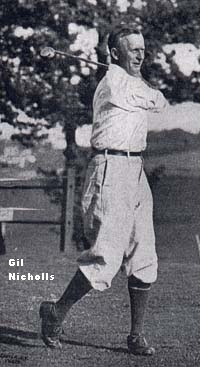
 The Philadelphia professionals had a busy summer. Wilmington Country Club’s Gil Nicholls won the Met Open for a second time along with the Shawnee Open, where Walter Hagen was second, and he finished sixth at the Western Open in Chicago. Pocono Manor’s Eddie Loos lost the Pennsylvania Open in an 18-hole playoff to North Jersey’s Tom Anderson. Boston’s Tom McNamara won the Philadelphia Open, as Whitemarsh Valley’s Jim Barnes and Philmont’s Charlie Hoffner tied for second. Barnes finished seventh at the Western Open, where he was the defending champion and won the Connecticut Open later in the summer.
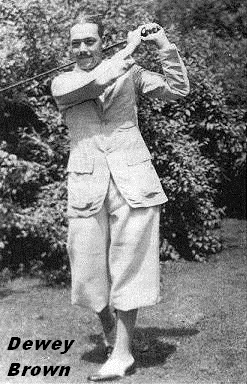 Dewey Brown was born in North Carolina in 1898 and grew up in New Jersey. He was introduced to golf as a caddy at the Madison Golf Club. Before long he was working on the golf course mowing fairways behind a horse drawn mower for $1 a day.
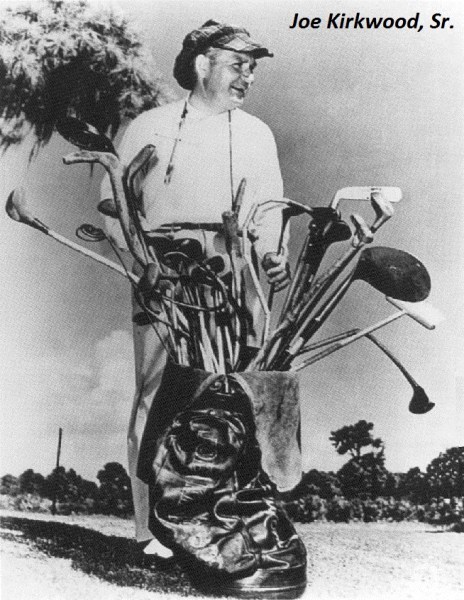 The next year (1921) the Western Golf Association abandoned the stymie rule completely. Sometime during that year the president of the USGA, Howard Whitney, met up with Joe Kirkwood, Sr., who was the greatest golf trick shot artist of all time. (Kirkwood was a longtime resident of Glenside, Pennsylvania and the professional at the Huntingdon Valley Country Club from 1938 to 1949.) Whitney watched Kirkwood demonstrate the art of negotiating a stymie. Upon witnessing that exhibition, Whitney decided that the stymie was an important part of golf.
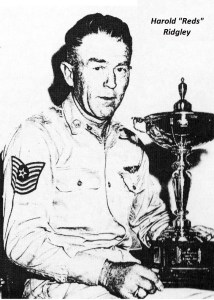 Ridgley caddied for Harry Cooper. At the same time he was playing golf anywhere he could. By the late 1930s he was in money matches against the best golfers in Philadelphia, like Billy Hyndman and George Fazio. In 1942 he was drafted into military service, and ended up in the Army Air Force as the tail-gunner on a B-17. He was stationed in England and on his 23rd mission his plane was shot down over Germany. He parachuted from the plane and was captured, spending the rest of World War II in a POW camp.
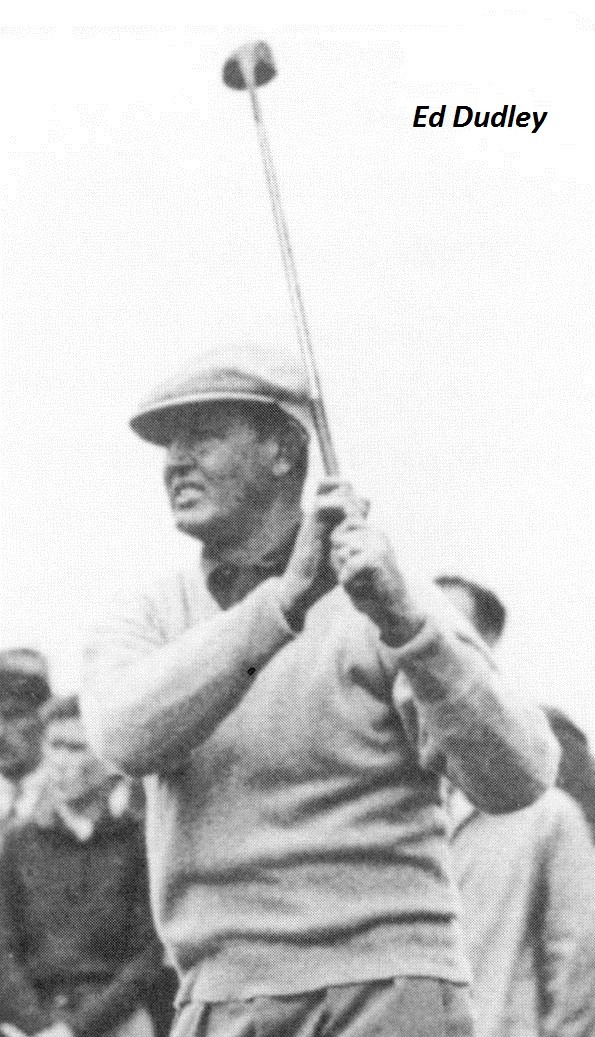 Ed Dudley, who was in his third year as the professional at the Concord Country Club must have liked the new ball. He had a great year, winning the Los Angeles Open and the Western Open along with having the lowest scoring average on the PGA Tour. The ladies liked it because of being lighter it sat up better on the turf which made it easier to play with fairway woods but most golfers didn’t like the ball. The lighter ball was difficult to control in the wind. Also at times the ball would not stay in place on the greens when it was windy. Some frustrated golfers referred to it as the “Balloon Ball”.
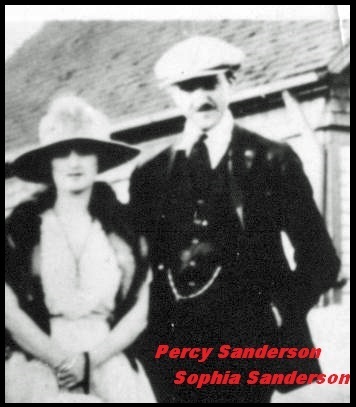 Fourteen days after that first Philadelphia PGA Championship was played Sanderson and Maxwell were critically injured in an automobile accident west of Norristown near Betzwood. Early on a Sunday morning they had come upon a car stalled in the road. Maxwell was driving. Fearing a holdup he swerved around the car and ran head-on into a truck loaded with boy scouts heading back to Valley Forge Park from a dance. Three other passengers in the car were also injured. Maxwell had seven fractured ribs and a dislocated hip. Sanderson who was in the back seat with his wife and another lady was injured the worst with a fractured skull and concussion. Everyone suffered injuries of some sort. Sanderson’s wife was a duchess who he had married while in Europe during World War I. All five occupants of the car were taken to the Montgomery County Hospital in Norristown.
 Before the playoff began, a representative from the St. Mungo Mfg. Co. told the three players that the company would match the $300 first place prize if the winner was playing one of their Colonel golf balls. McDermott agreed to change from the Rawlings Black Circle ball to a Colonel ball. On the first hole McDermott’s first two tee shots were out-of-bounds. With his third tee shot he made a birdie four for a score of six. The out-of-bounds penalty at that time was loss of distance only. McDermott also made a bogey on the third hole, but when he holed a short putt for a birdie four on the last hole, he was the United States Open champion and $600 to the better.
 When Johnny McDermott won the U.S. Open at the Chicago Golf Club in 1911 he was the first American born golfer to win our Open and also at age 19 the youngest; a distinction he still holds today. In 1912 he defended his title at the Country Club of Buffalo by winning the tournament again. Having lost the 1910 U.S. Open in a playoff, McDermott had come within one stroke of winning the tournament three straight years. Only five others have won two consecutive U.S. Opens.
 Bill Mehlhorn, who was later the professional at Brandywine Country Club, was also a member of the team and rooming with Hutchison. After losing, Hutchison said to Mehlhorn who had failed to qualify “Let’s go over to St. Andrews and play a practice round for the British Open”. Off they went by cab to The Old Course. Even though Hutchison had grown up at St. Andrews and had played 18 holes of tournament golf that day they went 36 holes.
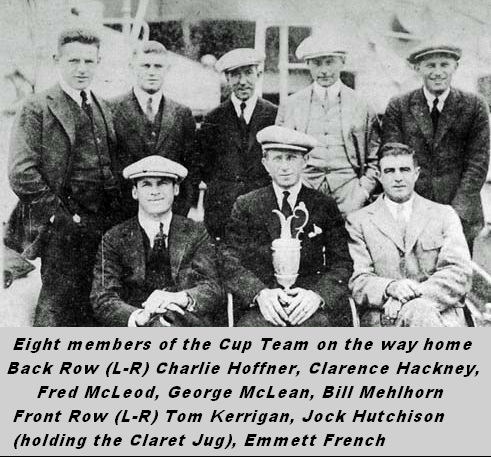 Qualifying for the British Open was on June 21 and 22 with 18 holes each day. Even the defending champion (known as the holder in Great Britain) had to qualify. The British Open was played on June 23, 24 and 25 with 18 holes each of the first two days and 36 holes on the third day. Hutchison posted a score of 296 and was tied for the title with Roger Wethered, an amateur. The next day Hutchison won a 36-hole playoff by nine strokes with a 150 total. First prize was 75 British Pounds. Mehlhorn tied for 16th.
 Five members of the American team had connections to clubs that would make up the Philadelphia PGA later that year. They were Charlie Hoffner, Wilfrid Reid, Clarence Hackney, Jim Barnes and Emmett French.
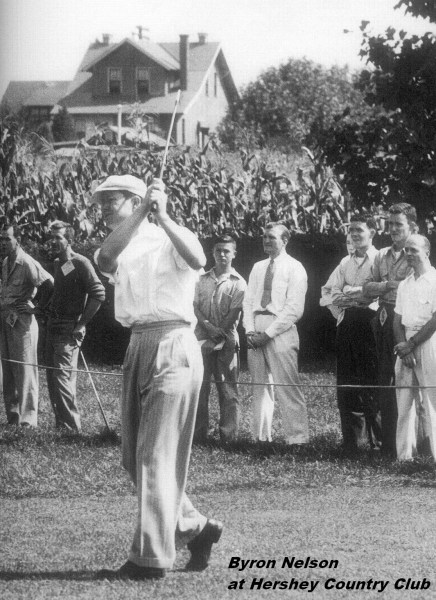 It was September 1939 and Reading Country Club professional Byron Nelson was playing in the 72-hole Hershey Open. Late in the final round Nelson was in contention needing to play the last three holes in one under par to tie Scranton Country Club’s professional Felix Serafin for the top prize. On the 70th hole Nelson’s tee shot was just off the fairway but could not be found. He returned to the tee and with a two stroke penalty for the lost ball made a double bogey. Serafin won with a total of 284. Ben Hogan and Jimmie Hines tied for second at 286 and Nelson finished fourth at 287. Serafin’s victory was worth $1,250. Hogan and Hines each won $650.
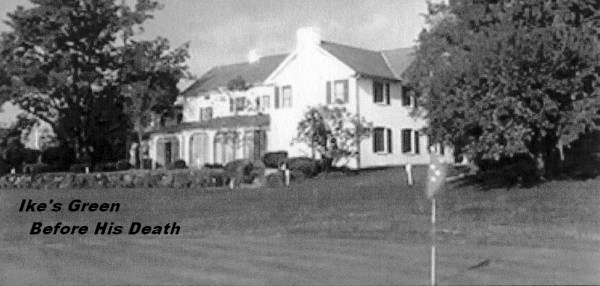 By the time the green was completed it was getting late in the year. Poe didn’t want the President to wait nine months for a seeded green to grow in but he didn’t have the proper sod. Poe then received a telephone call from Eugene Grace, the president of Bethlehem Steel. He said I understand that you are building a putting green for President Eisenhower. Grace said that Bethlehem Steel, which owned the Saucon Valley Country Club, would like to donate the sod. Their men would install it at no charge but they couldn’t get there until the next day. The only stipulation was that the PGA couldn’t tell anyone who had provided the sod. One of the major golf course equipment companies donated the mowers. The construction of the putting green turned out to be timely. President Eisenhower suffered a heart attack in September and spent seven weeks in the hospital. After leaving the hospital on November 11 he went to his Gettysburg farm to recuperate. His heart specialist reported that it was quite likely that the President would eventually get back to regular rounds of golf and hopefully he would be able to get in some practice on his new putting green before the end of the year. Three months later he announced that he was running for reelection and in November he was elected for a second term.
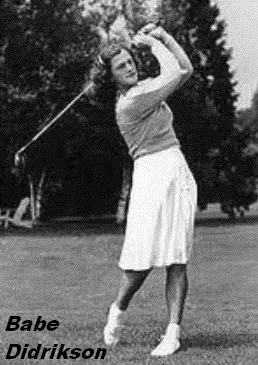 For what was a first in American men’s professional golf two women were entered as well. The two women professionals were Mildred “Babe” Didrikson (later Zaharias) and Betty Hicks. Didrikson, the star of the 1932 Olympics, was not a polished golfer yet as she had only begun playing golf in 1935. The ladies were not a factor other than being in the starting field. Seven months later Didrikson played in the Los Angeles Open on the PGA Tour. Most records cite the 1938 L.A. Open as the first time a female competed against males in a PGA tournament, but it actually took place during 1937 in Philadelphia.
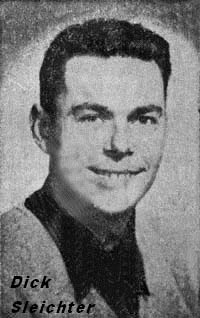 One of those was Gettysburg Country Club professional Dick Sleichter who met Dow Finsterwald in the first round. After 16 holes the match was all square. On the par three 17th hole both players were on the green with their shots from the tee. When they arrived at the green they realized that Sleichter’s ball had spun back into its pitch mark. At that time the golfers were not allowed to repair pitch marks before putting. Sleichter thought that when he struck the ball with his putter it would jump up from the indentation and then roll toward the hole. What happened was that the ball popped straight up and Sleichter’s putter struck the ball a second time. Only Sleichter knew that he had hit the ball twice and he promptly reported it to Finsterwald. Finsterwald two putted for a par to win the hole and when they halved the 18th hole Finsterwald moved on to the second round eventually losing to Lionel Hebert in the final.
 The Canadian Open has been played more than 100 times and twenty-one of the winners have had ties to the Philadelphia Section PGA. Most of those victories came before 1963 but there have been a few recent ones.
 Trenham Golf History