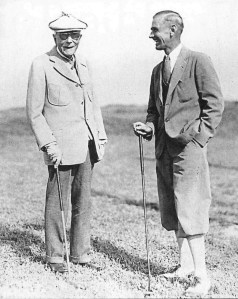
How Walter Hagen found an exhibition partner!

“Did You Know”
How Walter Hagen found an exhibition partner!

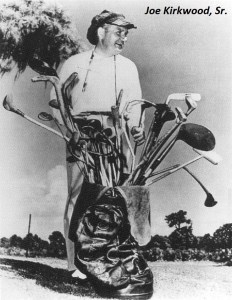
Joe Kirkwood was born in 1897 in Sydney, Australia and was introduced to golf as a caddy. Kirkwood was labeled a truant as he was skipping school for golf, so at the age of ten he was sent to work on a sheep station far from his Sydney home.  The owner of the sheep station was a golfer, so he and Kirkwood set up a three-hole golf course.

While tending the sheep Kirkwood would hit golf balls. At times he would fool around hitting shots that weren’t ordinary, like big hooks and slices or standing on one foot. At age 16, his employer entered him in a golf tournament at a nearby town. Kirkwood won the tournament.  With that his employer arranged for him to serve his five-year apprenticeship as an assistant professional at the Manly Golf Club, back in Sydney.

Australia became involved in World War I and servicemen began returning from the war with injuries like amputated legs. Kirkwood found that he could entertain the hospitalized men with his golf shots and especially his trick shots. When he hit golf balls standing on one leg, he was able to show the wounded men what they might be able to accomplish.

In 1920 Kirkwood won both the Australian and New Zealand Opens. Then some local people gave Kirkwood money to play in the 1921 British Open. In early March of 1921, Kirkwood left Australia for the British Open via the United States. He played his way across the USA on his way to North Carolina for the North and South Open.

At the North and South Open in early April he was paired with Walter Hagen for all four rounds. Kirkwood and Hagen tied for ninth along with former Philadelphia professional Emmett French, winning last money. The sand greens at Pinehurst were a challenge for Kirkwood as that was a first for him.

Having heard about Kirkwood’s ability to perform various golf shots, he was asked to show them off after the tournament. With the upcoming North and South Amateur Championship, there was a large contingent of golfers present. With a gallery of 700, Kirkwood showed his large variety of golf trick shots. At the conclusion of the show, New York Mayor Jimmy Walker passed his hat around for donations. The money collected totaled more than $400. Later that year, first money at the US Open and the PGA Championship was $500. When Hagen got a glimpse of how much money was in the hat he saw an opportunity.

Hagen proposed teaming up for some exhibitions after the British Open. At the British Open in June at St. Andrews they tied for sixth and set sail back across the Atlantic.

In 1921 there were a few important United States tournaments like the US Open, PGA Championship, Western Open, Canadian Open and Shawnee Open, but not too much else. When they weren’t playing in those tournaments, they played exhibitions which added up to 105 one-day 36-hole exhibitions. Each one included Kirkwood’s trick shot show.

They were a perfect pair. Kirkwood enjoyed the parties but did not drink alcoholic beverages. Hagen was known to consume some alcohol at times, even late into the night. On exhibition days, if Hagen was a bit tardy, Kirkwood would entertain the paying customers with his trick shots. And Hagen never hit any practice shots; he just showed up and played. He said he didn’t want to waste any of his good shots. Kirkwood was more the business person keeping track of the funds and the schedule. Kirkwood never tried to show up Hagen on the golf course. He would hit big hooks or slices out over trees that would end in the fairways. Or he would top his second shots which might then roll a couple hundred yards onto the greens. He might play right hand shots with a left-hand club or the opposite.

Kirkwood was back in the States again in 1922 in time for the North and South Open where he tied for third and Hagen finished out of the money. In late June Kirkwood and Hagen were in Scotland for the British Open at St. Andrews again, where Hagen won and Kirkwood tied for 20th. Then they returned to the states for the US Open in July where Hagen finished 5th and Kirkwood tied for 22th. After that they were off on another exhibition tour with Hagen skipping the PGA Championship at Oakmont CC in August, even though he was the defending champion. One of their exhibitions was at Philmont Country Club in front of 5,000 golf fans.

In 1923 Kirkwood returned to the states and joined the PGA of America. There were more exhibitions with Hagen. Later that year, he purchased a home near Philadelphia in Glenside and joined the old Cedarbrook Country Club, a Tillinghast design.

Kirkwood was a great golfer. Along with winning those Australian and New Zealand Opens he also won the North and South Open, Canadian Open and Philadelphia Open. During the 1923 winter tour, Kirkwood won three straight tournaments in Texas, with one being the Texas Open. But golf exhibitions were more lucrative and less stressful than competing against Walter Hagen, Gene Sarazen and Bobby Jones in tournaments. Kirkwood put Australian golf on the map. Each year, the Joe Kirkwood Cup is still awarded to the winner of the Australian PGA Championship.

Hagen and Kirkwood took golf around the world playing hundreds and hundreds of exhibitions in North America, Europe, Asia, Africa, Australia and South America. They “grew the game” of golf before the phrase was termed. Kirkwood was golf’s first great trick shot artist. No one did it better.

The “Great Depression” put a damper on business, including golf. Exhibitions were in less demand and Hagen was becoming less into world travel. Kirkwood needed some steady work. In 1938 Kirkwood became a club professional. He took over as the head professional at Huntingdon Valley Country Club, near Philadelphia. He was still able to sell a few of his exhibitions and after WWII there was more money and the interest in his shows was back. He had a line of Joe Kirkwood golf clubs on the market made by Golfcraft. In late 1949 the HVCC board decided to hire a new golf professional. Kirkwood was very popular with the members, and many wished Kirkwood wasn’t leaving. Some days he would hit trick shots from the first tee. Kirkwood had a positive influence on two Huntingdon Valley members who lost in the final of the US Amateur Championship; Duff McCullough and Bill Hyndman. Often he would assist members with their golf games without charging them, but the board said they wanted a professional who would be at the club more often.

At the age of 53 Kirkwood went back on the road with his exhibitions, but without Walter Hagen who was now 57.

The PGA and the touring pros divorced at Whitemarsh Valley CC in 1968!

“Did You Know”
The PGA and the touring pros divorced at Whitemarsh Valley CC in 1968!

With the Great Depression and World War II in the past, the United States was prospering and so was golf. For the first time a golf professional could make a living on the PGA Tour without needing a second job in golf.

In November 1946 Ben Hogan made an unannounced appearance at the PGA’s national meeting in Chicago. At the PGA’s annual meeting any PGA member can present themselves and speak from the floor on any subject during what is called “Open Forum”. Hogan was representing an unofficial group of disgruntled players. For many years the touring pros had been at odds with the PGA of America over prize money, money breakdown, the size of fields, scheduling, field staff, tournament promotion and more. The PGA wanted the leading players to support the PGA Tour by entering more tournaments. The PGA officers agreed to meet with Hogan and the players at the Orlando Open later that month.

After meeting with Hogan and his committee in Orlando, the PGA and Hogan made a joint announcement.  PGA fields would be limited to 150 players. (There had been 210 at Orlando.) The minimum purse on the PGA Tour would be $10,000, up from $7,500 in 1946. The number of tournaments would be reduced from 42 in 1946 to 37 in 1947. The PGA would open an office in Chicago in conjunction with its national office to promote the PGA Tour events. When Hogan was asked about his committee the following week at the Miami Open, Hogan said his committee was dormant.

Then in early April 1950, 25 touring pros threatened to leave the PGA Tour and form their own organization. That included Ben Hogan and all the major tournament winners. There were several evening meetings at the Masters, some lasting three hours. As a result, the players were given the power to elect four players to a committee that included the three officers of the PGA. The committee would represent the players in tournament negotiations, but the officers did have veto power, which they used only once. In 1966 the PGA had vetoed holding a $200,000 Frank Sinatra tournament in Palm Springs because it would have been in the same month as the Bob Hope Desert Classic, also in Palm Springs. 

For years the PGA Tour lost money, but by the late 1960s the television industry was televising more than the majors. Money was finding its way to the PGA Tour. In the third week of August 1968, the PGA Tour was at the Whitemarsh Valley Country Club for the Philadelphia Golf Classic. First played in 1963 its $125,000 purse was the largest in the history of the PGA Tour. Now, five years later in 1968, its $100,000 payout was in the bottom half on the PGA Tour. Some of the big names like Arnold Palmer and Jack Nicklaus did not enter. Only 50 of the 70 players who made the cut earned a check, with last money $100.

The touring pros thought the current $5.8 million in prize money for 1968 should be more, and under their control and management it would be. The PGA officers knew the situation needed their attention. To put out the fire, PGA President Max Elbin arrived on Sunday from Bethesda, Maryland where he was the professional at the Burning Tree Golf Club. Elbin was in the tournament office when the players were filing their entries.

The top 60 from the 1967 money list, along with players from the two Q-Schools were exempt. 30 had earned playing cards in October and another 15 in June. Also, any player who had made the cut the previous week on the tour was in. The tournament sponsor could invite six also. PGA members and amateurs with low handicaps could pay an entry fee and attempt to qualify.

On Monday there was qualifying for the remaining spots in the 150 players starting field at Whitemarsh, with 232 players competing for 40 spots. For those who are interested in speed of play, the players were paired in fours, and they all completed their rounds that day. A playoff to break the ties for the last spots was held on Tuesday morning.

After Wednesday’s pro-am the players gathered in the clubhouse for an open meeting. The 150 players, who would be teeing off the next day, and some who failed to qualify were there. Elbin presented the case for the PGA to the players. The players said they did not want to leave the PGA. That evening they voted to form their own association within the PGA. A name for their organization was announced, American Professional Golfers. The officers were: Gardner Dickinson President, Jack Nicklaus Vice President and Billy Casper Treasurer. The attendees were informed that a lawyer had been hired. The committee announced that all tournament commitments for 1968 would be honored. The players had already begun negotiating for tournaments and television contracts for the next year.

As a result of this, the PGA and the APG both began putting together tournament schedules for 1969. In September the PGA Tour Sponsors Association held a meeting in Houston to talk about their future. Both organizations, the PGA and APG, held eight-round Q-Schools in October. 30 player-cards were given out by the PGA at PGA National Golf Club and 21 were given out at Doral Golf Resort by the APG.

In December Leo Fraser, Atlantic City CC owner and professional, was elected president of the PGA of America. After the election Fraser said he would do everything possible to make peace with the APG.

A settlement with the players was made on December 13. The tour players would be an arm of the PGA called the Tournament Division to be managed by a ten-man Tournament Policy Board. The board would consist of the three PGA officers, four players and three independent directors. The board would make all decisions concerning the PGA Tour. The separation was not totally amicable. The PGA did not name a PGA Player of the Year that year, 1968.   

In 1975 the divorce became complete with the tournament players separating from the PGA, taking the name PGA Tour. The PGA of America kept the Ryder Cup, PGA Championship, Senior PGA Championship and 4-man World Series of Golf. PGA club professionals could still enter Monday qualifying until 1983 when the PGA Tour instituted the “All Exempt Tour”. With that there were 125 fully exempt players on the PGA Tour each year along with 25 more earning PGA Tour status at Q-School. Other players had a limited number of exemptions based on previous years and there were still sponsor’s exemptions.

There was peace, but not total peace. In 1974 the PGA Tour created the Players Championship to compete with the PGA Championship. Then in 1994 they created the Presidents Cup to compete with the Ryder Cup. Players on the Ryder Cup team began demanding compensation. To keep the name PGA and still be PGA members, the PGA Tour players pay dues to the PGA.

The PGA Tour, managed by the players, still has many of the regulations like earlier times under the PGA of America. Full time tour members have to enter a certain number of events each year. There are only three releases each year to play somewhere else like the South African Open or the Australian Open. Nonmembers, like foreign professionals, are limited to five tournaments a year.

In 2024 Scottie Scheffler won $29,228,357 plus a $25 million bonus for winning the Tour Championship. That year the 100th player won $2,930,385. Even with that not all PGA Tour players were content.

Hogan, not Dudley, was the non-playing 1949 Ryder Cup captain!

“Did You Know”
Hogan, not Dudley, was the non-playing 1949 Ryder Cup captain!

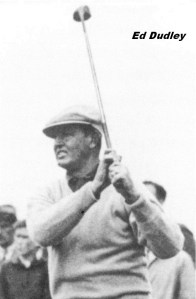
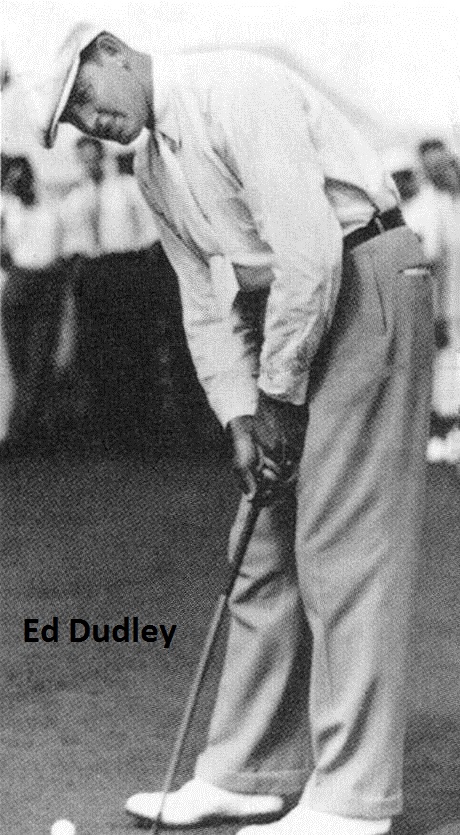
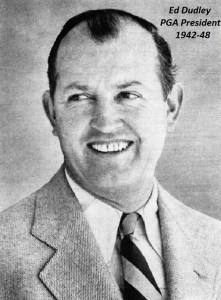
After seven years as president of the PGA of America, Ed Dudley stepped down from office at the PGA’s annual meeting in December 1948. The delegates from the 30 PGA Sections made Dudley the captain of the 1949 Ryder Cup team, through a unanimous vote.

1949 was a Ryder Cup year with the match being played in England in September. The members of the team were chosen through a point system covering the two-year cycle between the playing of the Ryder Cup on odd numbered years.

The 1948 PGA Tour season ended with Ben Hogan leading by 215 Ryder Cup points over Lloyd Mangrum, who was in second place for the 1949 team. Hogan had won ten times that year. Six were consecutive wins. Hogan began 1949 piling up more points. He finished tenth at Los Angeles, won the Crosby Pro-am and Long Beach before losing a playoff at Phoenix to Jimmy Demaret.

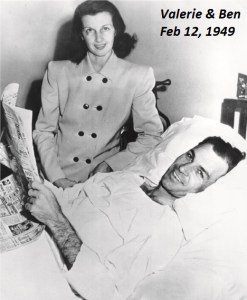
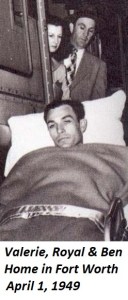
Two days later Hogan was driving home with his wife to Fort Worth, Texas when their Cadillac collided with a Greyhound bus on a foggy morning in west Texas. Hogan’s wife, Valerie, was not seriously injured, but he could have lost his life. Doctors doubted Hogan would even walk again, let alone return to competitive golf.          

In late May the 1949 PGA Championship was held at the Hermitage Country Club in Richmond, Virginia. It was nearing the end of an opportunity to earn Ryder Cup points. There was always a bit of a rift between some of the touring pros and some of the club professionals. The touring pros wanted larger purses and fewer constraints on where and when they competed. Each year the home professionals could see some of their dues going to operate their PGA Tour, which usually lost money. The PGA officials thought of the PGA Tour as advertising, like window dressing at a store. This PGA Championship was no exception for complaints from the players. Some touring pros mentioned that the golf course was not challenging enough. Jimmy Demaret described the course as, 18 holes that looked like the Pennsylvania Turnpike with trees. But each year the PGA had to find a golf course for its championship that would assist in providing a competitive purse that measured up to the other major championships. When the qualifying rounds were played the scores were not low. Ray Wade Hill, a former assistant to Hogan at Hershey CC, led with a six under par 136.

Ryder Cup captain Ed Dudley was another topic at the PGA Championship. Some touring professionals inferred that the election had been rigged by Dudley.

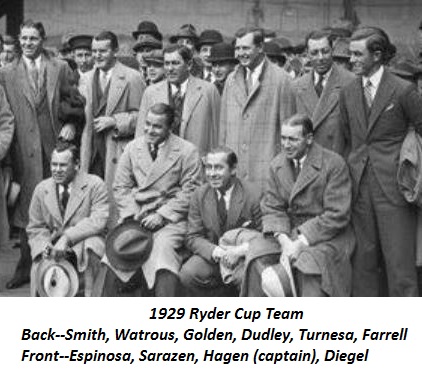
It was after World War II, with a new contingent of stars on the PGA Tour, who knew Dudley, the president of the PGA, as a politician, not a tournament player like them. But Dudley had been a top-level player. In 1931 Dudley had won the Western Open and the Los Angeles Open, along with having the lowest scoring average on the PGA Tour that year.  As the professional at the Concord Country Club and the Philadelphia Country Club, he had played on three Ryder Cup teams; 1929, 1933 and 1937. In the late 1930s, while serving as the professional at Augusta National GC and The Broadmoor, Dudley had been the tournament chairman on the PGA Tour. As a player Dudley knew if the players weren’t happy with him as their captain he should resign, and he did, staying on as the honorary captain.

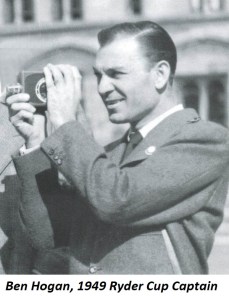
At the conclusion of the Dapper Dan tournament in Pittsburgh on July 18th, the final Ryder Cup points were tabulated, and the team was announced. Even though the injured Hogan had not hit a golf ball since the last day of January he was still in second place in Ryder Cup points, only to Mangrum. At that point, Hogan had been told by his doctor not to swing a golf club for another three months. Hogan said that even though he couldn’t play, he would be traveling with the team to England.  The PGA informed the press that the Ryder Cup team members would be selecting a captain. Soon after that the players named Ben Hogan as their captain, non-playing.  

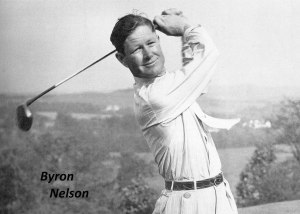
Before leaving for England the Ryder Cup team played a two-day challenge match near Boston against a team captained by the retired Byron Nelson. With Hogan unable to play golf, the team had only nine members, even though Great Britain & Ireland would have ten. At the conclusion of the challenge match, the New England PGA presented the Ryder Cup team members with a check for $10,500 to help defray the expense of being away from their club jobs and tournament golf for a more than a month.

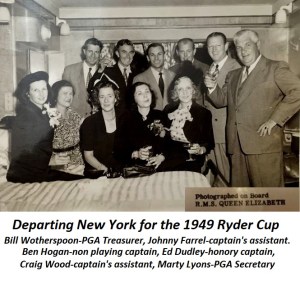
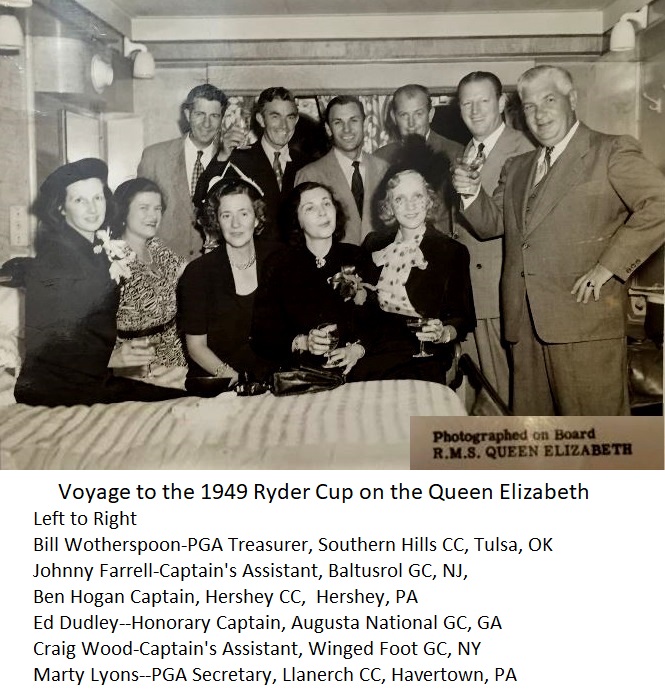
The USA’s Ryder Cup team, PGA officials and wives departed from New York on the Queen Elizabeth on September 3rd, arriving in England on September 10th. The Ryder Cup was being played at Ganton Golf Club in northeast England in the third week of September. That may have seemed like an early arrival, but the Americans had to adjust to playing with the smaller British golf ball that held its line better in the wind. To begin the adjustment, Hogan had his team hitting the British golf balls off the deck of the Queen Elizabeth during the voyage from New York. Hogan said that once on British soil his team would adjust to the smaller golf ball fairly quickly.

When the US Ryder Cup team arrived in England they were greeted by a fleet of Rolls-Royce cars. Each player was driven to the Savoy Hotel by chauffeur, accompanied by a British golf dignitary. Within a few miles it became obvious to Hogan’s host that Hogan was tense. Being driven on the wrong side of the road and not having control of the steering wheel was unnerving to Hogan, so the host had their chauffeur drop back to the tail end of the procession.

The day before the Ryder Cup began Ben Hogan filed a complaint that the grooves on some of the GB&I players’ clubs did not conform to R&A and USGA rules. Renowned golf writer Bernard Darwin, who was a member of the R&A rules committee, was selected to examine the grooves for conformity to the R&A’s rules. He determined that the clubs did not conform. The Ganton GC professional then spent the evening filing away the grooves that were in violation.

The Ryder Cup was one day of four foursome (alternate strokes) matches and one day of eight singles, with one player sitting out each session. GB&I led after day one, three points to one, but the USA came to life the second day winning six of the eight singles matches. Final score: USA 7, GB&I 5.

At the PGA’s annual meeting in late November It was reported that it had cost $25,000 to take the team and PGA officials to England for the Ryder Cup. The delegates were informed that their national dues were being increased from $35 to $45. To help fund their PGA Tour, that was a heavy price to pay for some club professionals who were scraping by at home.

,                                       

Playing captain Sam Snead was suspended from the 1961 Ryder Cup matches!

“Did You Know”
Playing captain Sam Snead was suspended from the 1961 Ryder Cup matches!

In the third week of September 1961 six big name professionals were playing in the $10,000 Losantiville Pro-Am in Cincinnati at the same time the $25,000 Portland Open was being played in Oregon. The six professionals were suspended and fined. Without a waiver from the tournament sponsor, certain PGA members could not play in a conflicting event. The rule was created by the PGA to protect the tournament sponsors of PGA sanctioned events.

One of the suspended professionals was Sam Snead; the USA’s playing captain of the upcoming Ryder Cup, which would be played in England. The other five were Tommy Bolt, Lew Worsham, Dick Mayer, Walter Burkemo and Chick Harbert. Snead and Bolt had asked for waivers and had been denied. The suspensions were for six months, and the fines were $500. The rules allowed that a PGA Tour professional did not need a waiver from a tournament sponsor to compete in tournaments in his own PGA Section.

After the first round, the six players were notified by the PGA via telegram of their suspensions. Snead, Bolt and Mayer withdrew before the second round. Snead maintained that playing in a pro-am was not a violation. He stated that this event was not an individual stroke play event like the Portland Open.  But he had been denied a waiver by the Portland Open sponsor. Snead said he would get a lawyer to appeal the suspension and would go to court if necessary. Bolt said that he was not committed to play anywhere and could never understand the PGA’s rules.

A student from The Ohio State University named Jack Nicklaus, and his golf coach Bob Kepler, won the two-day tournament for a second straight year. Kepler picked up a check for $2,000 and Nicklaus received $200 credit in the golf shop. After the tournament, Nicklaus told the press he had no intention of turning pro, but a few months later he was playing in the Los Angeles Open as a professional.

At the same time as the Portland Open was being played, Doug Ford was playing in the Met Open at Winged Foot Golf Club. Ford was a member of the Metropolitan PGA, so he did not need a waiver from the Portland Open.

After a long meeting of the PGA of America executive committee at the PGA national office in Dunedin, FL on September 26, it was announced that Snead was off the Ryder Cup team. He had been a member of seven Ryder Cup teams and playing captain in both 1951 and 1959. Snead was told that he could appeal the decision, but the PGA appeals committee would not be meeting until November 2nd. Snead was replaced on the Ryder Cup team by Doug Ford, who was number 11 in points for the ten-man team.

Snead was replaced as playing captain of the Ryder Cup team by Jerry Barber, who had won the PGA Championship that year. Barber had been the professional at Cedarbrook Country Club in 1950 and won the Pennsylvania Open that year. Wilmington, DE’s Ed “Porky” Oliver, who was in poor health, had been named honorary captain by the PGA, but died before the Ryder Cup was played.

When the Ryder Cup was played, there were two home-grown eastern Pennsylvania professionals on the team; Honesdale’s Art Wall and Berwick’s Mike Souchak. Also on the team was Bill Collins, who had been an assistant at Philmont Country Club in 1951. The US team, loaded with major tournament winners, won with ease; 14-1/5 points to 9-1/5 points for Great Britain & Ireland.

In November Snead met with the PGA appeals committee. After the meeting the fines for Snead and Bolt were reduced to $100 and the suspensions were reduced to 45 days. The fines and suspensions for the other four professionals were rescinded because they had not won a PGA Tour event in the last 12 months. That year, Snead had won the Tournament of Champions and Bolt had won the Pensacola Open.


Without an appointment, a Scottish professional arrived in the USA for employment!

“Did You Know”
Without an appointment, a Scottish professional arrived in the USA for employment!

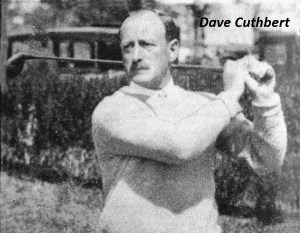
David Scott Cuthbert was introduced to golf as a caddy at St. Andrews Links. As a young teen Cuthbert often caddied for Freddie Tait, who was twice the British Amateur champion (1896 and 1898), and twice tied third in the British Open. (At age 30 Tait lost his life during the Second Boer War in South Africa.)  Cuthbert served his apprenticeship as a golf professional working for Old Tom Morris, the professional at St. Andrews.

In 1912 Cuthbert learned from a friend, who had been working in America as a club-maker, that Huntingdon Valley Country Club, near Philadelphia, was looking for a new golf professional. Having heard glowing tales of opportunity in the USA, Cuthbert immediately set sail for the states. Cuthbert arrived in Philadelphia in a March blizzard. With a suitcase and his golf clubs, he made his way to HVCC. Without an appointment he arrived and announced that he was David Cuthbert of St. Andrews and had come all the way from Scotland for the position of golf professional. He got it.  

HVCC, in Rydal at that time, was a founding member of the Golf Association of Philadelphia and one of Philadelphia’s foremost clubs. One of its members was Rodman Wanamaker, a son of department store magnet John Wanamaker. Four years later in 1916 Rodman Wanamaker played an important role in the founding of the PGA of America. Rodman hosted 75 golf professionals and some of the country’s leading amateurs at a luncheon in New York. When it was announced that Wanamaker would provide the prize money for a PGA Championship, the golf professionals agreed to form the PGA of America. With that, Cuthbert became one of the first members of the PGA of America.

Cuthbert only stayed at HVCC for six years, but that was long enough to get Helen Stetson’s golf game on track to win the 1926 US Women’s Amateur Championship. Cuthbert left HVCC after 1917 for a professional position in Canada. The March 1918 issue of the American Golfer described him “as not a particularly strong player, but a capital coach and clubmaker. “

Cuthbert returned to Philadelphia in 1923 as the professional at the Ashbourne Country Club. It was a new club with construction of the golf course nearly finished. With four golf holes completed, Cuthbert was able to begin giving golf lessons to the members.   

The 1923 Pennsylvania Open was held at Huntingdon Valley, where Cuthbert had been the professional. Along with being a windy day, the golf course was challenging with a brook that had to be crossed 22 times. In the morning Cuthbert shot a 73, which was the low round by several strokes. But then he frittered away a stroke on each on the last three afternoon holes for a 78. With that he lost the tournament by one stroke to Jim Edmundson, a transplanted Irishman. Cuthbert’s golf game must have improved.

The day before the 1923 Pennsylvania Open, Cuthbert’s father, David Sr., arrived in New York from Scotland for a visit. He made it to Philadelphia on the morning train in time to caddy the 36 holes for his son that next day. The Pittsburgh Post newspaper described Cuthbert, Sr. as “the aged daddie of David.” Ten years later David, Sr. caddied for Ed Dudley in the 1933 British Open at St. Andrews. Dudley was the professional at the Concord Country Club and was now also the professional at the newly opened Augusta National Golf Club during the winter months. Dudley contended from round one and tied for seventh. Whenever Harry Vardon played St. Andrews, David Sr. would be his caddy.

Cuthbert stayed at Ashbourne for 15 years. He qualified for the 1929 PGA Championship, which was being played in Los Angeles. The Ashbourne CC board of directors voted Cuthbert $500 to make the trip. He served as an officer in the Philadelphia PGA and was president in 1928. Cuthbert was a member of the committee that organized the first Senior PGA Championship which was played at the Augusta National Golf Club in 1937. He finished his career as the teaching professional at Bala Golf Club.

Dave Cuthbert was one of the many golf professionals who emigrated from Great Britain where golf had been played for several hundred years. With their vast knowledge on the game of golf, they taught the American novices about golf. With that imparted knowledge, within 30 years the American golfers were on top of the golf world.

Professional golfers used to play without delay!

“Did You Know”
Professional golfers used to play without delay!

There was a time when tournament rounds were played in three to four hours, and even less at times. 

In late July of 1915 the Connecticut Open was played at the Shenecossett Country Club. Play began in the one-day 36-hole tournament at 9 a.m., with the 72 entrants paired in twos. Some of the pairings finished the first 18 holes in less than two hours, with the others were around in 2 hours. Then there was a cut to the low 60. The ones who made the cut were paired in fours for the final 18 holes. With a total of 148 strokes, Whitemarsh Valley Country Club’s Jim Barnes won by five strokes, over Jock Hutchinson and Mike Brady. 

Six years later and four years after having left Whitemarsh, Jim Barnes returned to Philadelphia for the Main Line Open. The tournament was staged by the Philadelphia professionals, who were on the verge of forming the Philadelphia PGA. The tournament was in early November at the Tredyffrin Country Club in Paoli, with 36 holes in one day. Having missed a train connection, Barnes arrived late. He began play on the 10th hole with a professional who had been waiting for him. Playing the first 18-holes in one hour and 45 minutes Barnes shot a course record 72. As some players were completing their 36 holes, Barnes was finishing his first round. After a break for lunch, Barnes played his second round in two hours and ten minutes. Barnes won by five strokes, with a total of 149 strokes for the day.

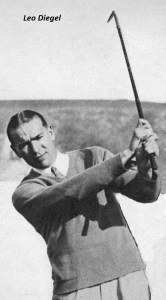
The 1924 Shawnee Open was held in the middle of July with 36 holes a day for two days. There were 90 entries. At the end of the second day Leo Diegel and Willie Macfarlane were tied for the title. That same day the two professionals played an 18-hole playoff, with Diegel ending up the winner. That was 54 holes of tournament golf in one day.

The 1940 New Orleans Open, played in mid February, had a starting field of 175 players. Even with less daylight at that time of year, the first two rounds were completed each day without problems.

Then in November 1946 there was the Orlando Open at the 6,454-yard Dubsdread Country Club. World War II had ended and the golfers were eager to get back to competing. The golf professionals from the northern states had some down time and the tournament committee took entries right up to the eve of the tournament. On Thanksgiving Day, 210 professionals and amateurs began play at 6:45 a.m., all from the first tee. The committee stated that play began early so the players would not be hurried along too much. Everyone completed their rounds. After round one there was a cut to the low 100 scores.  

In 1950 the US Open was scheduled for Merion Golf Club in Ardmore, Pennsylvania in mid June. A few days before play began, Joe Dey, the executive director of the USGA, announced that excessive slow play would not be tolerated. Dey said that the first three players at the previous year’s US Open at Medinah had taken three hours and 27 minutes to finish their first rounds, and the last three players that day needed four hours and 14 minutes. Dey said that due to that, the field for the 1950 Open had been cut from 171 to 165. Dey threatened two-stroke penalties or even disqualification for offenders.

Now, 75 years later, the 2025 US Open was in Pennsylvania at the Oakmont Country Club with 156 in the field paired in threes. In order to complete play before dark, the USGA started play from the 1st and 10th tees. The first pairing took five hours and 30 minutes, and the last players needed 5 hours and 50 minutes to complete play in the first round.

In 2025 the golf ball goes much farther than 1950. Because of that, the golf courses are longer – 700 yards or more. With that errant drives go farther into trouble. The greens are faster, which take more time to figure out. The USGA rules have become more lenient. Instead of “playing the ball as you find it”, the present rules give the golfers relief from nearly every imperfect situation. The USGA rules have been modified to speed up play, but sometimes they seem to slow down play, with things like tapping down every imperfection in the line of one’s putt. Until 1960 the USGA rules did not allow a golfer to lift and clean his golf ball on the green. Even on the green, if your golf ball was in its own pitch mark you just played it to the best of your ability.

Remember Lloyd Mangrum being penalized for lifting his ball on the 16th green during the 1950 US Open playoff to blow off a bug. A golfer could only lift his ball on the green if it interfered with the play of another golfer.

Five-hour rounds of golf and longer are difficult to watch. Now for entertainment between golf shots, the PGA Tour allows spectators to have their cell phones on the golf course.

Ben Hogan won a golf tournament on the Sunday before winning the 1950 US Open!

“Did You Know”
Ben Hogan won a golf tournament on the Sunday before winning the 1950 US Open!

Hershey Country Club’s Ben Hogan was in Virginia playing in the National Celebrities Golf Tournament the weekend before winning the 1950 US Open. The tournament was held to raise money for disadvantaged young people in the Washington DC area. The celebrities and golf professionals all paid their own expenses for travel and their stay during the event.

A few days before Hogan had been in Philadelphia playing practice rounds at Merion Golf Club, which was hosting the US Open one week later. On Thursday he toured the course with his lawyer Francis Sullivan, who was a member of Merion GC, and Tommy Armour, winner of the 1927 US Open. Hogan said that the round wasn’t worth much, with the golf course very wet from rain and the back tees closed.

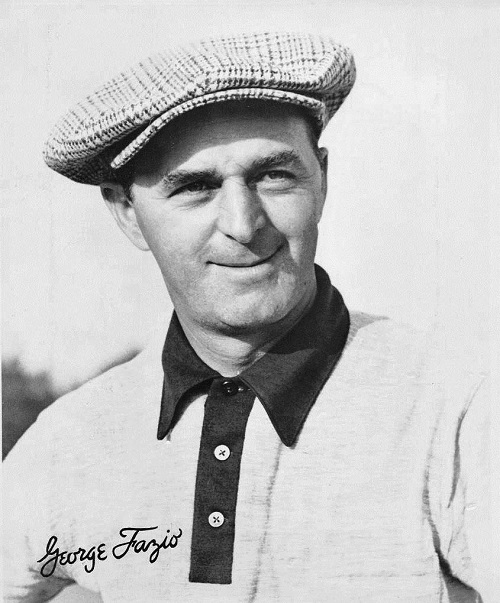
On Saturday and Sunday Hogan was winning the National Celebrities Golf Tournament at the Army Navy Country Club in Arlington, Virginia. Hogan turned in a five under par 65 in the first round on Saturday. Paired with Bob Hope on Sunday, Hogan shot a 33 on the first nine and then it rained so hard, the rest of the round was canceled. Hogan’s total of 98 strokes won by eight strokes over Philadelphia’s George Fazio, who was tied by two other professionals. Two veteran professionals, Gene Sarazen and Henry Picard were also entered there as a warm-up for the US Open. Bob Hope tied for low celebrity at 117 strokes, with New York Yankees co-owner Dan Topping, and Robert R. Young, president of the C&O Railroad. Babe Zaharias won the women’s division with a 103 total.

With Hogan still recovering from his near fatal automobile accident he was playing a limited schedule. The two-day Celebrities Tournament was a perfect warm-up for the upcoming US Open.

That next Sunday, Ben Hogan won the US Open at Merion Golf Club in a three-way 18-hole playoff over Lloyd Mangrum and George Fazio. The week before Mangrum had won the Fort Wayne Open on the PGA Tour. It became evident that Hogan’s, Mangrum’s and Fazio’s golf games had been trending in the right direction.

Philadelphia was where televised golf found its future!

“Did You Know”
Philadelphia was where televised golf found its future!

While attending the 1956 PGA of America’s annual meeting, Llanerch Country Club professional Marty Lyons sold the delegates on a proposal for his club to host the 1958 PGA Championship.

In July 1957 Lyons and several Llanerch members took a trip to Dayton, Ohio to check out the PGA Championship which was being played at the Miami Valley GC. They were there to learn what they could about hosting a major golf championship.

On returning home, Lyons said he had witnessed the best run championship the PGA had ever held, but it had lost money. The PGA Championship had been played with a match play format for 42 years. Lyons knew there was something missing other than losing money. Lyons decided the tournament would be better if played at stroke play instead of match play.

Lyons wrote a letter to the PGA of America laying out his reasons for changing the PGA Championship to match play. The $42,000 in prize was almost $14,000 more than that year’s US Open but some of the best players did not enter. In five days the finalists had to play four 18-hole matches the first two days and then three 36-hole matches the next three days. That was not appealing to some of the more veteran professionals. With stroke play the starting field would be larger. More PGA members could play in the tournament and the best players in the world would enter. Four days of stroke play would draw more spectators than match play. The tournament would show a profit and more facilities would be bidding to host the championship. Also, with stroke play television companies might be interested, which could make the tournament profitable.

In the fall of 1957 Lyons was in attendance at the PGA’s national meeting in California where he sold the delegates on changing the PGA Championship to stroke play.

Lyon’s work was just beginning. John Facenda, a Llanerch CC member and later the voice of NFL Films, was the nightly news anchor at Philadelphia’s CBS affiliate WCAU. Lyons talked to Facenda about televising the tournament and Facenda spoke to the executives at CBS. A contract to televise the tournament was worked out.

Working on the nightly newscasts at WCAU were two young men who played golf, Frank Chirkinian and Jack Whitaker. Many days they played golf before reporting for work at WCAU. Chirkinian produced the nightly news telecasts and Whitaker reported on sports.

In 1954 NBC had begun televising the last two holes of the US Open for one hour. CBS began televising the Masters In 1956 with six stationary cameras. CBS could not afford to send more to Augusta, Georgia. CBS televised the last four holes for three days. There was one hour of coverage on Sunday and the three days totaled two and one-half hours. Ten million people tuned in over the three days.

With the PGA Championship being a match play format there was no assurance of who would be playing in the tournament final on Sunday, so the television companies had no interest in paying money for broadcast rights.

Even though CBS had been televising the Masters for three years, 32-year-old Frank Chirkinian was chosen to produce the telecast of the PGA Championship. Whitaker did interviews with the leading players for CBS’ nightly news. The last three holes on Saturday and Sunday, along with the awarding of the Wanamaker trophy to the winner, were televised for a total of two and one-half hours over the two days.

1958 PGA Championship

It was great television. Forty-six year-old Sam Snead led with 18 holes to play with Billy Casper one stroke back. On Sunday Snead fell back with a 73. Dow Finsterwald put together a 67 to slip past both Snead and Casper, who was posting an even par 70. Casper finished second and Snead third. That next April Chirkinian was in Augusta, Georgia producing the Masters. For 38 years Chirkinian produced the Masters for CBS. At the same time he directed all of televised sports for CBS. With numerous innovations Chirkinian came to be known as “the father of televised golf”.

Sam Snead is owed one more victory by the PGA Tour!

“Did You Know”
Sam Snead is owed one more victory by the PGA Tour!

The PGA Tour gives Sam Snead credit for 82 victories during his career. Often Snead would say that he was owed more wins by the PGA Tour, and he probably had a case for at least one more.

After holding a position as the playing professional at Pennsylvania’s Shawnee Inn and serving in the US Navy during World War II, Sam Snead returned to The Greenbrier Resort in West Virginia as its head professional. In 1948 The Greenbrier began hosting a golf tournament that ran through 1961. The tournament became known as the Sam Snead Festival. Many of the leading PGA Tour professionals played in those tournaments. England’s Henry Cotton, Cary Middlecoff and Ben Hogan won the first three. Bobby Locke, Peter Thomson, Porky Oliver, Dutch Harrison, George Fazio, Al Besselink and Skee Riegel, along with other big names played there. The $7,500 to $10,000 in prize money over the years, was up to PGA standards, but the number of entries was limited. The first year there were 13 professionals teaming up with 39 amateurs in a pro-am format. Later there were as many as 62 golf professionals paired with 62 amateurs in the tournament. On the way to his 1959 win, Snead shot a 59 in the third round. Snead won the tournament six times, but they were not co-sponsored PGA tournaments, so the PGA did not credit Snead with those six victories, or his 59.

One could make a case either way for Snead’s wins at his tournament, but then there is the 1949 North and South Open.

The PGA of America and later the PGA Tour still don’t give Snead credit for winning the 1949 North and South Open. First held in 1902, for nearly fifty years it was one of the most important tournaments of the year. Held in late March for most of its years, the tournament was a favorite of the golf professionals. Until the late 1940s, even the best playing professionals had employment in the North during summer and the South during the winter season. In March they would be heading north for their summer employment, so the North and South Open was a perfect stopover. It was a chance to play in a great golf tournament on a great golf course and talk with other golf professionals about what was happening in the golf business. During tournament week, the Pinehurst Resort, which owned the Carolina Hotel, charged the golf professionals $1 for a room that included breakfast and dinner. Later the professionals paid $5. Through the Great Depression and World War II the Pinehurst Resort sponsored the tournament for 50 consecutive years.    

With the end of World War II, the United States was prosperous again and golf boomed. The PGA of America decided to boost the purses on its PGA Tour. In late 1946 the tournament sponsors were informed that a minimum of $10,000 was required to be on the schedule as an official tournament for 1947. For three years, 1947, 1948 and 1949, the North and South Open was played with total prize money of $7,500, as unofficial PGA tournaments.

Being unofficial didn’t hamper the 1949 tournament. 118 players who were not exempt filed entries to play in Monday qualifying for 50 spots in the tournament.  60 players were exempt. Sam Snead won the tournament against a strong field. Johnny Bulla and Cary Middlecoff finished second and third. Snead took home $1,500 from the $7,500 purse. Philadelphia’s Skee Riegel, who turned pro soon after the tournament, was the low amateur.

Then in 1950 and 1951, with total prize money still $7,500 like the previous three years, the tournament was again official, with the winner and the money recognized then and still, in the yearly records. Could the change in official status of the North and South Open come about because the Pinehurst Resort had agreed to host the 1951 Ryder Cup? In 1950 Snead successfully defended his title at the North and South Open, which he is credited for. Snead won a total of times that year, but Ben Hogan was the PGA Player of the Year. On returning from his near fatal automobile accident Hogan had won twice that year, the 1950 US Open and the Sam Snead Festival.

The 1951 North and South Open was played a few days after the Ryder Cup was wrapped up at Pinehurst.  Only five members of the US Ryder Cup, which included Playing Captain Sam Snead who was on hand to defend his title from 1949, stayed over to play in the tournament. All nine members of the British Ryder team played in the tournament. Tommy Bolt, who was not on the US team won. After that, there were no more North and South Opens.

In 1988, PGA Tour commissioner Dean Beman decided that a list of all-time wins by United States playing professionals should be created. A panel of golf executives and golf writers met at the 1989 Masters tournament. The panel was presented with a list of tournaments beginning with 1916 when the PGA of America was formed. The Philadelphia Opens from 1917 to 1939, which were all 72 holes, were on the list. The United States Amateur Championships were not included. The 1947, 48 and 49 North and South Opens were not on the list. Their assignment was to decide which U.S. professional tournaments would be deemed official, based on strength of field.  

As a result of the conclave’s meeting, Sam Snead was number one with 81 wins. Later when the PGA Tour made the British Opens part of the official PGA Tour schedule, Snead’s 1946 British Open victory was recognized, giving him 82 wins.

In the late 1990’s Tiger Woods arrived in professional golf and compiled a total of 82 PGA Tour wins.

It may be good for golf that Snead and Woods, two of golf’s greatest players, are tied for the most PGA Tour victories with 82 apiece. For years to come golf enthusiasts can argue over who was the greatest American golfer, including Nicklaus, Hogan, Nelson, Hagen, Jones and on-and-on.

With his 1949 North and South Open victory, it seems like Sam Snead should certainly be credited with one more PGA Tour win. 

Nearly all great Black golfers learned to play golf in the South!

“Did You Know”
Nearly all great Black golfers learned to play golf in the South!

During the early days of golf in the United States there were few opportunities for Black people to play golf. White golfers who had money belonged to clubs that accepted only White people as members. Only the large cities had public golf courses, and the ones in the South were open only to White golfers.

When it came to golf, Black people were mostly caddies. But, even as caddies with limited chances to play, some young Black men began to show promise as golfers. And, it was generally in the southern states.

Wanting to test their golf games against other golfers, Black players began scheduling tournaments, usually on public golf courses in the North where Black golfers were welcome. Before long there were more events with a bit of a schedule. Black golfers decided to form an organization named the United Golfers Association and have a yearly championship.

Their first championship was held at the Shady Rest Golf Club in Westfield, New Jersey on the Fourth of July weekend 1925. Harry Jackson, who was from Washington DC, won the 72-hole tournament with a score of 299, that edged out John Shippen by three strokes. Shippen, a veteran of six United States Opens where he had finished fifth two times, was beyond his best golf at age 45. On Labor Day weekend 1926 Jackson successfully defended his title at the Maple Dale Golf Club in Stow, Massachusetts.  The tournament became known as the Negro National Championship.

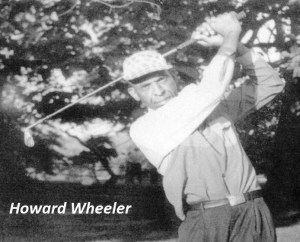
Two of the next three UGA Championships, 1927 and 1929, were won by Robert “Pat” Ball, who had grown up caddying at East Lake Country Club in Atlanta. Maple Dale’s host professional, Porter Washington, won the 1928 tournament. The 1930 and 1931 championships were won by Thomas Edison Marshall from Louisiana. Ashville, North Carolina’s John Brooks Dendy won in 1932. Then Howard Wheeler, a tall Black man from Atlanta playing cross-handed, appeared on the scene taking the 1933 title.

In 1934, Pat Ball won the UGA for a third time, and Alabama’s Solomon Hughes won in 1935. Dendy returned to the winner’s circle with victories in 1936 and 1937. The following year, 1938, Howard Wheeler won for a second time.

In 1939 the tournament was in Los Angeles, with California’s Cliff Strickland the winner. Georgia’s Hugh Smith won in 1940 and Pat Ball won his fourth NGA Championship in 1941. With the United States embroiled in World War II and gasoline being rationed, there were no UGA championships or even tournaments from 1942 to 1945.

With the end of WWII, golf was back. Wheeler, who was now living in Philadelphia and playing his golf at the city owned Cobbs Creek Golf Club, won the first three UGA Championships after the war, 1946, 1947 and 1948. Then a new man named Teddy Rhodes, who was heavyweight boxing champion Joe Louis’ golf pro and chauffeur appeared. Louis paid Rhodes’ expenses and entry fees on the UGA Tour. Rhodes, who had as smooth a golf swing as anyone on any pro tour and dressed better, won the next three UGA Championships, 1949 to 1951. Along with that, at one point Rhodes won six straight tournaments on the UGA Tour.

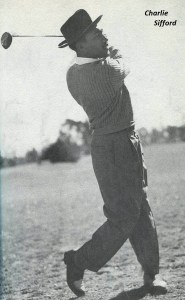
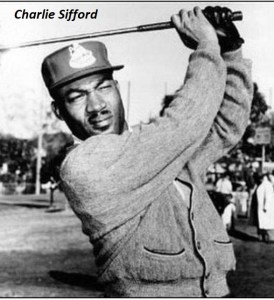
Next it was Charlie Sifford, who had moved to Philadelphia and become Wheeler’s protégé, and by 1952 had taken over the NGA tour. Sifford won the UGA Championship for five straight years, 1952 to 1956. Rhodes grabbed a fourth NGA in 1957 and Wheeler a sixth on in 1958. Someone new to the winner’s circle, a school teacher from Baltimore named Dick Thomas, won in 1959. The next year Sifford won the 1960 UGA to tie Wheeler with six victories. Pete Brown took over in 1961, winning the UGA that year and the next year. And then it was Lee Elder who dominated, winning four NGA’s in five years from 1962 to 1967.

With the assistance of California Attorney General Stanley Mosk, Charlie Sifford had broken through the PGA of America’s “Caucasian Only” clause for PGA membership in late 1961. Black golfers could now become PGA members and try to qualify for PGA Tour tournaments.

Following Sifford and Brown on the PGA Tour with success were; Lee Elder, Calvin Peete, Jim Thorpe and Jim Dent. Elder was born in Dallas and then honed his golf game on the golf course at Fort Lewis, Washington. Elder won four times on the PGA Tour, and then won eight times on the PGA Senior Tour. Peete was picking beans on South Florida truck farms and selling jewelry out of trunk of his car when he began playing golf. Peete won twelve times on the PGA Tour and played on two Ryder Cup teams. Jim Thorpe was introduced to golf as a caddy in Roxboro, North Carolina. The son of a greenkeeper, he won four PGA Tour tournaments and 13 times on the PGA Senior Tour. Jim Dent grew up caddying at Augusta National Golf Club and Augusta Country Club. Dent won twelve times on the PGA Senior Tour.

Except for a professional from Massachusetts and one from Californian, every winner of the 40 UGA Championships began playing golf in a state south of the Mason-Dixon Line. Before they moved to Philadelphia, Wheeler played his early golf as a caddy in Atlanta at East Lake Country Club, and Sifford as a caddy at Carolina Country Club in Charlotte, North Carolina. Rhodes was a caddy at Nashville’s Belle Meade Country Club, and Pete Brown, who also won twice on the PGA Tour, was from Jackson, Mississippi.

It had to be more than a coincidence that most of the Black golfers who had success in tournament golf began playing golf in the South. It may have been because the well-to-do White people had second homes in the mountains or at the beaches, the golf courses were more available to the caddies during the summer months. Maybe the caddies could play more than Monday mornings. Maybe it was the “Great Depression” with many out of work and others working hard to survive that left golf courses open for caddy golf. Or, maybe being restricted from playing golf, made the young Black men even more determined to play the game.   


Why isn’t a back-to-back winner of the US Open not in the World Golf Hall of Fame!

“Did You Know”
Why isn’t a back-to-back winner of the US Open not in the World Golf Hall of Fame!

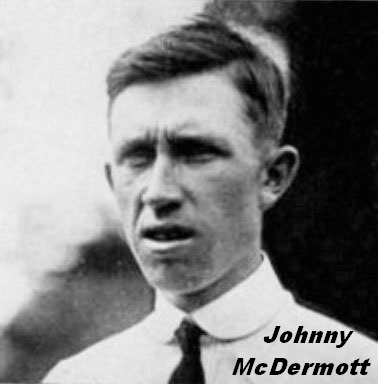
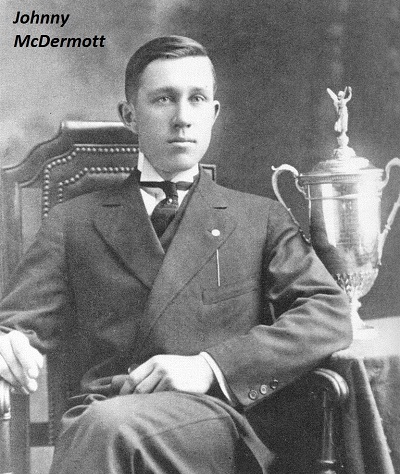
Johnny McDermott was the first American born golfer to win the United States Open. He accomplished that rare feat in 1911 and then he did it again in 1912.

John Joseph McDermott was born in West Philadelphia August 12, 1891. As the age of nine he began caddying at the Aronimink Golf Club, which was then in Philadelphia not far from his home. Walter Reynolds, the Aronimink golf professional, saw McDermott’s potential and taught him the art of making golf clubs. McDermott created some rudimentary golf holes in a field near the course where he practiced with his closest friends.

By the summer of 1907 McDermott was playing in and winning the Philadelphia caddy championship with a scratch handicap. One year later, at the age of 17, he was playing in the 1908 Philadelphia Open as the professional at Merchantville Golf Club. And the year after that, while still only 17, he was playing in the US Open at Englewood, New Jersey, where he made the cut, but out of the money.

In 1910 the US Open was in Philadelphia at the Philadelphia Cricket Club on a Friday and Saturday in the middle of June, with 36 holes each day. The Cricket Club had a new golf professional that year, a four-time US Open winner Willie Anderson.  In 1907 the Club had hosted the tournament amid much criticism. The golf course had been in poor condition, with bumpy greens and ragged cups that caused golf balls to hang on the edges. Playing in his fourteenth US Open and having finished in the top five eleven times, Anderson knew what a US Open golf course should look like. After each round he had the greens and fairways rolled.

With 18 holes to play McDermott held a two-stroke lead, but Alex Smith with a 73 and Alex’ youngest brother, Macdonald caught him with a 71. That left the tournament in a three-way tie for the title. With Pennsylvania’s “Blue Laws” in place there were no organized sporting events allowed on Sundays. (Pennsylvania’s “Blue Laws” were as set of laws that restricted activities on Sundays to allow people to rest and worship.)  An 18-hole playoff was held on Monday at 2:30. Alex Smith put together his lowest round of the tournament, a 71, to win by four strokes. With a 75 McDermott finished second and Macdonald Smith took 77 strokes.

The following year McDermott won the 1911 US Open at the Chicago Golf Club in another three-way playoff.  He successfully defended his US Open title in Buffalo the next year, winning the 1912 US Open. In winning, he became the first person to finish under par for the 72 holes of a US Open. McDermott had now come within one stroke of winning three straight US Opens.

In 1913 McDermott became one of the first two American born golfers to play in a British Open, where he tied for fifth. He returned home in time to play in the 72-hole Philadelphia Open on Merion Golf Club’s new East Course, winning it for a third time. In mid August he finished third in the Metropolitan Open.

The United States Golf Association moved the US Open from June to September in 1913, so the Europeans could enter, and the very best did.  As a preview to the US Open the second annual Shawnee Open was held at Shawnee-on-Delaware, PA in late August. With the great British players in the field, McDermott won by eight strokes.

The US Open, still 72 holes in two days, was at the Country Club in Brookline, MA. For a third time there was a three-way tie for the title. American born amateur Francis Ouimet was the victor over the British greats, Harry Vardon and Ted Ray. McDermott finished four strokes back in eighth place. With soft greens from wet weather, McDermott’s low flight approach shots that usually took one long skip before stopping, stopped on a dime and gathered mud. With cleaning your golf ball on the green not allowed at that time, putting a muddy ball made scoring difficult.

One month later in October McDermott won the 1913 Western Open in Memphis by seven strokes, against a quality field. At that time the Western Open was the second most important golf tournament in the United States. Today it would be called a “Major”. Professionals like Freddie McLeod, Macdonald Smith, Tom McNamara and Tom Brady were there.

In March 1914 McDermott finished second at the North and South Open at Pinehurst to Wilmington Country Club (DE) professional Gil Nicholls, twice a runner-up in the US Open. In June McDermott was in Scotland for the British Open. Through some confusion he missed his starting time for the qualifying rounds. He headed home to the states on the Kaiser Wilhelm II, which in heavy fog struck a grain freighter. The ship made it back to port and McDermott headed home on another ship.

McDermott was home in time to defend his title at the Shawnee Open, but he didn’t enter the tournament, or the Metropolitan Open. In August he played in the US Open in Chicago, tying for ninth. Four days later the Western Open was in Minneapolis where McDermott was the defending champion, but he wasn’t there. In mid September he tied for seventh in the Philadelphia Open.

In October McDermott collapsed in his golf shop at the Atlantic City Country Club with a mental breakdown. Except for an attempted comeback in 1925 when he entered four tournaments without success, his competitive golf was over at the age of 23. The remainder of his life was spent in mental institutions.    

In the short span of four years McDermott won two US Opens, a Western Open, a Shawnee Open and three Philadelphia Opens, along with having high finishes in important tournaments. John J. McDermott was one of the first members of the PGA Hall of Fame.

Johnny McDermott should be in the World Golf Hall of Fame.

US golf pros played an international match 14 years before the first Ryder Cup!

“Did You Know”
US golf pros played an international match 14 years before the first Ryder Cup!

At the United States Golf Association’s annual meeting in early 1913, it was decided to move the US Open, which had been scheduled for June, to September. This change might encourage some of the leading golf professionals from Great Britain and France to make the voyage to the states for our Open. Along with that American professionals could play in The Open, which Americans call the British Open. The Open was scheduled for June.

At that same meeting the USGA accepted an invitation from the Federation Francaise de Golf, to send a team of golf professionals to France to play a match against French golf professionals. French golf was on the rise. The USGA agreed to send a four-man team. This was to be done with no expense to the USGA. It was expected that friends of the professionals would assist with their expenses.

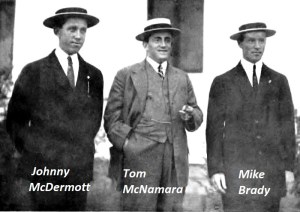
Three homebred American professionals–Johnny McDermott, Tom McNamara and Mike Brady, were selected, with one more to be decided. While there, they would play in The Open before heading to France for the challenge match. Later, Alex Smith, a transplanted Scottish professional who was the professional at Wykagyl CC in Westchester County, New York, was chosen to fill out the four-man team. McDermott and Smith had won the last three US Opens. 

After McDermott won the 1911 US Open, A.W. Tillinghast and George Crump, had collected $300 from their fellow amateurs for McDermott to make the voyage to Europe for the 1912 British Open. They had also presented McDermott with a gold watch and gold chain.

At the 1912 British Open McDermott had failed to qualify by three strokes in what a newspaper described as half-gale winds. McDermott’s biggest problem was putting, with the roll of the smaller British golf ball more affected by imperfections on the greens. One week later, McDermott had a fifth-place finish in the French Open.

Now, having won the US Open for a second straight year in 1912, McDermott was ready to make another attempt at The Open. McDermott may have received some financial help but by now he didn’t need much. He had tournament money, fees from exhibitions and wealthy people were paying money, just to play golf with him.

To ensure his success abroad this time McDermott left early, giving himself every opportunity to acclimate himself to the British weather. He boarded a steamship in New York on May 20 for the voyage which could take ten days. The Open was scheduled for June 24-25, at Hoylake, England, with qualifying the week before.

Tom McNamara and Mike Brady left later than McDermott. Before leaving they played in their home state’s Massachusetts Open, which ended in a tie between McNamara and Brady. So another day was needed for an 18-hole playoff which McNamara won.

McNamara and Brady may have decided to play in the Massachusetts Open because the Massachusetts Golf Association was helping with their expenses for their overseas excursion. Two days later on May 24, they set sail from New York. 

Upon their arrival in Scotland, the American champion golfers were greeted with great interest. Along with McDermott having won the previous two US Opens, McNamara had finished second in two US Opens and was the current Metropolitan Open champion. Brady had lost to McDermott in a playoff for the 1911 US Open. There were invitations to play at many golf clubs along with opportunities for paid exhibitions. 

The American professionals had to be careful not to accept too many invitations. Time was needed for practice and rest. Also practice with the smaller English golf ball was important. A player did not have to play the smaller ball but playing it was necessary to compete on the wind-whipped golf courses near the coasts of Scotland and England. In some conditions the smaller ball went 20 yards farther than the larger American ball. Also putting with the smaller British golf ball was a challenge.   

There were 269 entries for The Open. Everyone, including the defending champion, had to pass a 36-hole qualifying test. There were three 36-hole sessions with the entries divided into thirds. In each session the low 20 and ties qualified for the starting field in the tournament. McDermott drew the first day, June 19. Playing in a driving rainstorm, McDermott passed the qualifying test, but only by one stroke. From the 90 players competing that day, only seven stokes separated the first and last successful qualifiers. McNamara successfully qualified on the third day, but Brady failed to qualify along with four other visiting American professionals who had been born in the British Isles.

With that, Johnny McDermott and Tom McNamara would be the first Americans to play in a British Open.

The Open was played at Royal Liverpool Golf Club with 36 holes a day for two days. On Sunday, the day before the start of the competition, the golf course was closed to all play. The weather had been unusually hot and the forecast was good. Then during the tournament on Monday and Tuesday, June 23 and 24, the weather was about as bad as it could be. On the first day the greens were flooded from rain that began during the night and continued throughout the day. The second day presented gale force winds and drenching rain at times. McDermott had his moments. An opening round 75 was just two strokes off the lead, but an afternoon 80 set him back. On the second day McDermott was one under fours for the first seven holes and after nine holes only three strokes off the lead. But, with problems on the second nine his total for the round was 77. With a final round 83 McDermott tied for fifth, winning seven pounds and ten shillings. With a compact swing, J.H. Taylor had the right golf game for the elements. His 304 total made him the winner of The Open for a fifth time, this one by eight strokes. But, if not for having holed a six-foot putt on the final green of qualifying, Taylor would not have even been in the tournament.

Now the US team of McDermott, McNamara, Brady and Smith were off to France for what the press was calling the Franco-American contest, USA versus France. Smith was the captain and McDermott played number one. The challenge match was played on the La Boulie Golf Links near Versailles on the last day of June and the first day of July. On day one there were two 36-hole four-ball matches. The McDermott/McNamara team lost 3&2 and the Smith/Brady team lost 3&2. Day two was 36-hole singles. At the lunch break McDermott had a lead of two holes, but with putting problems in the p.m., lost 3&2. The Americans lost all four matches, ending up with 0 points to 6 for France. The Americans thought they played well, but the French knew the golf course and played better. Only McDermott had played the golf course before, finishing fifth there in the 1912 French Open.

In September 1913, with some of Europe’s great golf professionals competing in the tournament, Francis Ouimet, an American amateur, won the US Open. It would be nine years before an American, Walter Hagen, would win The Open.

Politics may have influenced the results of the 1913 US Open!

“Did You Know”
Politics may have influenced the results of the 1913 US Open!

The 1913 United States Open held more anticipation than any since 1900, which had been won by the renowned English professional, Harry Vardon. After 12 years of only transplanted professionals and Americans competing in the US Open, some of the great European professionals had filed entries. 

Vardon and Ted Ray arrived in New York on the third Friday of August for a series of exhibitions before and after the US Open. Traveling with them on the RMS Celtic were Englishman Wilfrid Reid and two French professionals, Louis Tellier and Arnaud Massy. Before setting sale for the states Vardon had stated that he did not think the Americans were very strong and he was sure the title would be going home with them.

In late August Philadelphia’s Johnny McDermott set the stage for the playing of the US Open by winning the 72-hole Shawnee Open by eight strokes. Vardon finished fifth.

The US Open was hosted by The Country Club at Brookline, Massachusetts in the third week of September. With the American born, McDermott having won the last two US Opens, there was a record 165 entries.  For the first time prequalifying was needed to trim the field to a manageable number for the two days of the 72-hole tournament. Even McDermott, the two-time defending champion, had to qualify. On Tuesday half the entries played 36 holes, and on Wednesday the other half played 36 holes, with the low 32 and ties making the grade each day. Vardon led the first day. Francis Ouimet, a little-known amateur who had won the Massachusetts Amateur earlier that summer, was second. On the second day of qualifying, Ted Ray led with Wilfrid Reid in second place.    

With qualifying settled, the 72-hole tournament was played on Thursday and Friday. At the end of day one, Wilfrid Reid and Harry Vardon were tied for the lead with 147s. Ted Ray and Herbert Strong were tied for third at 149.  

The foreign professionals were staying at the Copley Square Hotel. After dinner that evening some of the golfers were replaying the day’s golf in the hotel’s café. Conversation between Reid and Ray turned to the English tax system. Reid stated that the wealthy were more favored by the system than the less fortunate. Ray declared that the taxation levy was equitable. Ray said that Reid was from Surrey, and Surrey men lacked the proper understanding to grasp such a situation. Reid retaliated by stating that men of Jersey, Ray’s home, did not amount to very much at best. With that, Ray, who was 6-foot and 220 pounds, delivered two right-hand smashes to the nose of Reid, who was 5-foot-six inches tall. Reid was sent flying backwards over a table. With blood trickling from his nose, Reid rose to his feet and headed toward Ray, only to be separated by the head waiter.

Vardon threatened to withdraw from the tournament, but Reid, a protégé of Vardon, talked him out of it.

The next day Reid’s face was swollen from his nose to his left ear, and he had a terrible headache. The Boston Globe reported that when Reid arrived at the course on Friday it was evident that he was not his usual self. Right from the start he was off his game, which was usually quite good. He was no “one day wonder”, having won important tournaments in Europe. His final two rounds were 85 and 86. At the end of the day Reid had tied for 16th.

On the other hand, Ted Ray was around in 76 strokes in the morning versus a 78 for Vardon. Ouimet, the little-known amateur, was even better with a 74. Now Vardon, Ray and Ouimet were tied for the lead with one round to play. In the afternoon all three took 79 strokes, so there was a three-way tie for the US Open title. Because of rain in the afternoon, the golf balls picked up some mud, making for high scores. At that time you couldn’t clean your golf ball during the play of a hole, not even on the green. If a golf ball was in the line of another player it was lifted but not cleaned. Tellier was 4th and McDermott finished 8th.

In an 18-hole playoff the next day Ouimet shot a 72, defeating Vardon (77) and Ray (78).

If not for the altercation between Reid and Ray, Reid would certainly have played better and maybe well enough to win. Or just maybe, Ray would have had the energy or the concentration to find one stroke somewhere out on the golf course that day, and as a result been the 1913 US Open champion. Of the three, Ray at age 36 and a winner of the 1912 British Open, was more in the prime of his career, than Vardon at 43, and the 20-year-old Ouimet.

While in the states Reid had talked to transplanted Brits about golf in the states. With World War I under way in Europe jobs were becoming scarce. So in 1915 Wilfrid Reid returned to the USA as the professional at the nearly new Seaview Country Club near Atlantic City, New Jersey. In 1916, as the professional at the Wilmington Country Club (DE), Reid tied for 4th in the US Open.

Years later, Reid said that it was he who was at fault for the fracas and he never should have started a conversation about politics with Ted Ray.

Only six golf professionals made expenses on the 1938 Winter Tour!

“Did You Know”
Only six golf professionals made expenses on the 1938 Winter Tour!

The 1938 PGA Winter Tour began with tournaments in Florida and the Bahamas in late December 1937. From there the Tour leap froged the country to the west coast, then back through Texas to Florida again, and from there up the eastern seaboard to North Carolina. Now at its last stop, the Winter Tour was in Augusta, Georgia for the fifth running of the Masters Tournament.

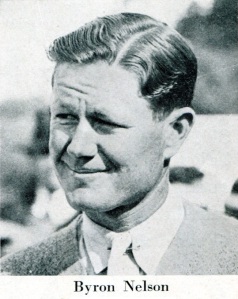
While meeting with the golf writers at Augusta, PGA Tour Manager Fred Corcoran stated that only six golf professionals had won enough money to cover their expenses that winter. Corcoran said that Byron Nelson had started out on December 1 with $1,500 in travelers’ checks thinking he would play as long as that lasted. As of the end of March, Nelson had spent $2,000, winning $2,280 and he was not known to toss any money away. The leading money winner was Johnny Revolta, with $4,390.83. Seventy-five players had lost money, with 20 having borrowed money from Corcoran in order to keep playing. The average professional spent $75 a week. Augusta was an exception for those who had an invite. There was no entry fee, and the players were housed at the swanky Bon-Air hotel with breakfast and dinner for only $5 a day. Still the total purse was only $4,950.

There were a few lucrative tournaments like Miami’s $10,000 and Los Angeles’ $8,000, but most were less than $5,000, and many were only $3,000. Corcoran said that he had to twist the arm of the Bahamas tournament sponsor to boost the prize money up to $3,500. He said the operator of the boat that transported the professionals to the island made out better than they did. Corcoran calculated that prize money on the 17-event winter tour totaled $85,000 and the professionals had spent about $160,000 playing the tour. Tommy Armour said that if he was the commissioner of the PGA Tour, the minimum purse would be $25,000.     

Corcoran was in his second year as the manager of the PGA Tour. Before Corcoran, Bob Harlow held the position. Harlow was more of a publicity man than promoter. He was a newspaper man who switched over to managing Walter Hagen’s exhibition tours until the Great Depression slowed all businesses. In late 1933 the PGA hired Harlow to organize and manage its fledging tour that followed the sun back and forth across the country. Harlow, whose pay was said to be meager, was writing a weekly newspaper article and managing some of the professionals on the side. In late 1936 he was fired by PGA President George Jacobus, who felt that Harlow was not giving his full attention to his position with the PGA. The professionals liked Harlow and complained to the PGA when he was relieved of his duties. From there Harlow moved to Pinehurst, North Carolina to be a publicity man for the Pinehurst resort. In 1947 he founded, Golf World, a weekly golf magazine that had a very successful 67-year run.  

Corcoran was a born promoter. Nearly every day of the week the PGA Tour and its playing professionals were mentioned in the newspapers. In an interview at Augusta, Corcoran stated there would be an increase in the 1939 purses. He said that he was receiving many requests to hold PGA Tour tournaments. To be assured of a date on the PGA Tour schedule, a sponsor would have to put up at least $5,000. He said that he was going to schedule the tournaments nearer each other geographically to save on travel expenses. Corcoran cited Harry Cooper, the leading money winner in 1937, who put 40,000 miles on his automobile and spent $10,000 to win $14,138.

Because he managed some professionals like Sam Snead on the side he was thought to show favoritism. More than once he was punched in the nose by a player.  Corcoran was fired and rehired several times by the PGA, but he was the best man for the job, lasting until 1948. It was Corcoran who saw the benefit of connecting the tournaments to a charity. Local businesses got on board and individuals gave their time to help manage the event. During World War II Corcoran managed charity golf events for the Red Cross. Later he helped found the LPGA. He managed golf events and golf tours along with the financial affairs of many professional athletes. Corcoran escorted professional golfers to 48 countries.

After the Masters, which Henry Picard won, the professionals all headed off to their club professional positions where they were assured a reliable remuneration. Picard was at Hershey CC, Nelson at Reading CC, and Snead the Greenbrier along with Cooper in Massachusetts and Revolta in Chicago.

It would not be until the early 1950s that golf professionals could make a living playing the PGA Tour. Then televised sports arrived in the 1960s and everything changed.

Henry Picard changed his grip and won the 1938 Masters!

“Did You Know”
Henry Picard changed his grip and won the 1938 Masters!

In January 1938, Hershey Country Club professional, Henry Picard, was in California for the beginning of the PGA Winter Tour. Even though Picard won the Pasadena Open late that month, the word in central Pennsylvania was that he was ailing. After losing to Jimmy Demaret in the semi-finals of the San Francisco Match Play in mid February, Picard headed home to Hershey for a rest. His problem was his left thumb and the beginning of arthritis in his hands.  

After a break from the Tour, Picard was in Florida in the second week of March for the Hollywood Open, where he finished in a tie for 31st, 16 strokes behind Byron Nelson, his Reading CC neighbor, who won.  While in Hollywood he happened upon Alex Morrison, a renowned golf instructor, who was teaching golf at the Hollywood Beach Hotel for the winter months. Picard mentioned his problem with the thumb.

Next on the PGA Tour schedule was the International Four-Ball at the Miami Country Club. Picard and Johnny Revolta were the defending champions, having won the tournament three straight years. With 16 two-man teams, all matches were 36-holes. The tournament did not go badly for Picard, but he and his partner lost by 4&3 in the semi-finals. The team that beat them was referred to by the newspapers, as the little-known Ben Hogan and Willie Goggin.    

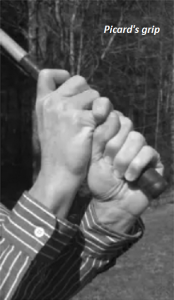
On the way north to defend a pro-am title at St. Augustine, Picard visited Morrison in Hollywood. Even though he had won 14 times on the PGA Tour something had to be done to ease Picard’s discomfort. Morrison showed Picard a way to grip the golf club that would relieve the pressure on his ailing left thumb. Rather than the overlapping Vardon grip, it was an interlocking of the index finger of his left hand and the little finger of his right hand. Some golfers were using an interlocking grip, but this was different. Morrison had Picard place his left thumb behind the shaft of the club, like a baseball player would hold a baseball bat.

The grip wasn’t a new idea, but very few golfers used it. Two great golfers, Gene Sarazen and Jock Hutchison, played with that grip throughout their entire careers.  

In the pro-am at St. Augustine, Picard and his protégée Frank Ford lost in the second round.

The North and South Open in Pinehurst was next on the PGA Tour schedule. Still working on his new grip, Picard tied for 8th, fourteen strokes behind the winner. Two days later the PGA Tour was in Greensboro where a young Sam Snead picked up his first of eight Greensboro Open victories. Picard finished in a tie for 11th, 16 strokes behind Snead.  Newspaper articles mentioned the difficulties Picard was experiencing with his iron shots, and how much time he was spending on the practice tee.

From there the PGA Tour moved to Augusta, Georgia for the fifth running of Masters. The smart money was not on Picard, but then his golf game started to show promise. In a side exhibition on Tuesday, Picard and Sam Snead were to take on Bobby Jones and Augusta National’s professional Ed Dudley, but with the Greensboro Open having concluded the day before, Snead was still in Greensboro. A two-passenger airplane was sent for Snead to deliver him to Augusta. It was Snead’s first time in an airplane. During the flight to Augusta the pilot turned to check on his passenger. Snead was sleeping. In the exhibition Picard and Snead routed Jones and Dudley, who was the professional at the Philadelphia Country Club during the summer months, with a pair of 69s.

The first two rounds of the Masters were scheduled for Friday and Saturday, with 36 holes on Sunday. The field of 44 players began play at 12:30 on Friday. As play began, rain arrived. Even though quite a few played more than nine holes, the first day’s play was wiped off the books. The schedule was revised to 18 holes on Saturday, 36 on Sunday and 18 on Monday.

On Saturday Picard posted a 71, three strokes behind the leader. On Sunday Picard moved into a one stroke lead with two rounds of 72. On Friday Picard had told sportswriter Grantland Rice “I can’t play this golf course”, even though he had finished fourth in 1935. Playing the final round on Monday with 3,000 golf fans in attendance, Picard started birdie-birdie and played the first nine in 32 strokes. He three-putted the tenth and eleventh greens, but from there he chipped and putted his way to a 38. His score of 70 and four rounds of 285 stokes won the $1,500 top money by two strokes.

On returning home to Hershey, Picard sent Morrison a telegram inviting him to stop in Hershey on his way north to his summer employment, to provide more advice on his grip.  Great golfers were always trying to learn more.

The next year Picard was the leading money winner on the PGA Tour with earnings of $10,303 and won six times, which included defeating Byron Nelson in the final of the PGA Championship.

Milton Hershey wanted to have someone on the PGA Tour carrying the Hershey Foods banner, so Picard, with arthritis in his hands and a young family, left Hershey CC at the end of 1940. Picard turned the Hershey CC position over to Ben Hogan, who took over for ten years.

Picard continued to teach golfers the Morrison method at clubs like CC of Harrisburg, Canterbury CC and Seminole GC. A renowned golf instructor, Alex Morrison, was an early advocate of high speed photography for teaching golf, and wrote two books on golf instruction.

The First Great Black Golfer was Bobby Jones’ Caddy Master!

“Did You Know!”
The First Great Black Golfer was Bobby Jones’ Caddy Master!

Howard “Butch” Wheeler was born in Atlanta in 1911. He left school after the sixth grade to become a caddy at Atlanta’s Brookhaven Country Club, where he began playing golf. With limited access to left-handed golf clubs Wheeler played golf right-handed with his left hand on the grip below his right hand in an interlocking grip. This was called a cross-handed grip, which at that time was not uncommon for left-handed men. Wheeler was a beanpole, six-foot-two-inches and so slender that one man said, “Wheeler’s back pockets nearly touched”. As a teenage caddy at Brookhaven, Wheeler’s golf game began to blossom. When Bobby Jones would play at Brookhaven, Wheeler was said to be his favorite caddy.

Before the 1960’s, in the USA, access to golf tournaments for Black golfers was nearly nonexistent.  To play in a USGA championship one had to be a member of a USGA member club, and those clubs rarely had Black members. The PGA shunned Black golf professionals, and in 1934 inserted a clause in its constitution barring non-Caucasian membership.

Even with limited opportunities Black people learned to play golf, and some were playing well. Looking for a way to compete with other Black golfers an organization called United Golfers Association was formed. Tournaments were played during the year at various locations. The UGA’s first championship was held in 1925. Their championship became known as the Negro National Championship.  For some years after World War II; heavyweight boxing champion, Joe Louis, ran a tournament in Detroit.

Before Wheeler there was another Black Atlanta golfer named Robert “Pat” Ball, who had caddied for Jones as well. Ball won two of the first five Negro National Championships, along with two more in later years. By the mid 1920’s he had moved to Chicago and was operating a miniature golf facility in the city. Even though Ball was winning on the NGA Tour, he had not turned pro. In August of 1928, Ball and two other Black golfers were entered the USGA’s Public Links Championship, which was being played at Cobbs Creek Golf Club in Philadelphia. After playing 36 holes, Ball and one of the other Black men had successfully qualified for the match play rounds. They were then disqualified on “made up” violations of the rules during qualifying. A lawyer came to their assistance, obtaining a temporary injunction which prevented the tournament from proceeding. The USGA threatened to move the remaining rounds to New Jersey. Having won their objection and seeing they were not welcome, Ball and the other man simply withdrew. This event was supposed to be the USGA’s championship for amateurs who did not belong to USGA member clubs.

At the age of 20 and playing in his first professional tournament, Wheeler won the UGA’s 1931 Atlanta Open. About that time Wheeler became the caddy master at East Lake Country Club. In 1933 he won the UGA’s Southern Open. In late August, with the financial help of some Atlanta golfers, Wheeler and six other Black golfers left Atlanta for Illinois to play in the NGA Championship.  At the same time the World’s Fair was in progress in Chicago. Wheeler won the 72-hole tournament and $100 first prize by three strokes.

Wheeler resigned as the East Lake caddy master to play the UGA circuit. When he wasn’t playing tournaments, he could always return to caddying or part time caddy master employment in Atlanta.

Wheeler met bandleader Eddie Mallory at a UGA tournament, and in the late 1930’s Mallory hired Wheeler as a chauffeur for his wife and entertainer Ethel Waters. That year Wheeler won the UGA championship for a second time, setting a tournament record. One snowy night near Boston, Wheeler was involved in a three-car accident. No one was injured, but Wheeler moved to Los Angeles, where it didn’t snow, and he could play golf every day.

Not long after Wheeler had moved to L.A., Japan bombed Pearl Harbor in late 1941 and the United States was embroiled in World War II. Tournaments on the PGA Tour continued for some months. One was George S. May’s 1942 Tam O’Shanter Open in Chicago. May was a promoter. If daily tickets hadn’t sold, he would send agents into the streets of Chicago to give out free passes. May invited the Black golfers to enter the qualifying round for his tournament and he made Wheeler exempt from qualifying. Earlier in the summer Black golfers had been barred from playing in the Hale America Open, which had been in Chicago.

Wheeler was able to participate, just before reporting to the US Army. In the practice rounds Wheeler drew the largest following, an estimated 2,000 spectators each day. He teed his golf ball on match boxes and hit prodigious drives that carried over 250 yards. Wheeler made the cut with ease, but missed the money as 30 professionals won money.

From July 1942 to July 1946 Wheeler was in the US Army. The US armed services had been desegregated in 1942, but that was not adhered to in many situations like recreation facilities, and especially military golf courses. Most professional athletes were discharged in 1945 as the war was winding down, but Wheeler was in a year longer.   

With his US Army commitment nearing its end, Wheeler played in George S. May’s tournament in July 1946, missing the cut. Soon after that he was discharged from Fort Eustis, Virginia with the rank of Corporal. It had been four years without competitive golf and little golf of any kind. In September he won the UGA Championship for a third time.

After leaving the US Army Wheeler moved to Philadelphia. There may have been a lady involved. Richie Harris, a Philadelphia Black golfer and a great golf collector said, when he was young he would babysit Wheeler’s stepdaughter.

Wheeler found a home at Philadelphia owned Cobbs Creek GC, which was open to the public. There was a steady supply of money games with Black and White golfers. In 1947 he won another NGA Championship, this one at Cobbs Creek. He won it again in 1948, for three straight, and then one more in 1958, at the age of 47. That made it six NGA Championships, later equaled by Wheeler’s protégé Charlie Sifford.  

The golfers at Cobbs Creek had formed clubs and owned offsite houses. Wheeler joined the Fairview Club. Other clubs were Quaker City, Tioga and Green Ladies. Playing out of the Fairview Club, Wheeler qualified for the 1950 US Open at Merion GC and the 1951 US Open at Oakland Hills near Detroit.

In 1955 and 1956 the PGA Tour was in Philadelphia for the Daily News Opens at Cobbs Creek GC. Wheeler qualified and made the cut both years, but with only 30 money spots he missed the money.  Cobbs Creek’s Charlie Sifford showed his capability by finishing tied for eighth in 1956.

If given the opportunity, Wheeler may have been successful on the PGA Tour like Charlie Sifford, who came after him with a similar record. It would have been interesting.

The 1923 US Open was a marathon!

“Did You Know”
The 1923 US Open was a marathon!

In the second week of July 1923, 360 golf professionals and amateurs came together at the Inwood Country Club on Long Island, New York for the United States Open. It was, by far, the largest entry in the history of the US Open. It was quite a commitment to travel from the western states without being assured a place in the tournament and only 12 money prizes to play for.   

In order to pare down the large number of entries for the championship, the USGA scheduled four days of qualifying. The players were divided into four groups of ninety. Each day, for four days, ninety players played 36 holes, with the low 18 and ties, qualifying for the championship. Even the defending champion, Gene Sarazen, had to qualify.

There was a match between East and the West teams on Saturday to lead off the tournament week. Led by Sarazen and Walter Hagen, the East team defeated the West team 9 to 3. Golf professionals west of Pennsylvania were on the West team. Emmett French, who had grown up working in the locker room at Merion Golf Club and was now working in Youngstown, Ohio, was on the West team.

The following day 200 players were on the course for practice rounds.

The first segment of 90 entries played their 36-hole qualifier on Monday. The defending champion was given the benefit of being in the first day’s pairings. That game him three days of rest before the first day of the tournament. Sarazen stepped right up, playing the two rounds in 148 strokes, which was four better than anyone else that day.

Tuesday was day two of qualifying. Joe Kirkwood, who had recently arrived from Australia, was going along nicely until he made a bogey on the 9th hole. On the 10th hole his second shot clipped a limb and the golf ball ended up under a ten-foot-high wire out-of-bounds fence. But, part of the ball was still inbounds. Kirkwood climbed a tree near the fence and then lowered himself to the ground from a limb. He banged the ball back in play. Then he hitched an automobile ride back to the club’s entrance which was near the 10th tee. His fourth shot reached the green and he holed the putt for a bogey. Kirkwood finished the round in 70 strokes. With a 74 in the afternoon for 144, he finished ten strokes lower that anyone else that day. No one shot lower than 70 that week and there was only one other 70.

On Wednesday Macdonald Smith, who had traveled east from San Francisco, was low at 150, and the next day Jim Barnes and Johnny Farrell were low, also with 150s.

On Friday the first 36 holes of the championship were played. At the end of the day many of the favorites, like Sarazen and Hagen, were already out of contention. Jock Hutchison held the lead at 142. While others were faltering during Saturday’s final 36 holes, a 21-year-old amateur, named Bobby Jones was going along without problems until his last three holes.  Jones finished bogey-bogey-double bogey, for a 76 to go with a morning 76. Still, he appeared to be the winner with a total of 296. Teeing off 90 minutes later than Jones in the last round, Bobby Cruickshank caught fire, playing seven holes on the front nine in 22 strokes. He stood on the 16th tee needing three pars to win. A double bogey on the 16th hole seemed to end his chances, but he finished with a par and a birdie to tie Jones. He had played the last two holes in four strokes less than Jones. Hutchison was third, six strokes back. Lancaster Country Club’s professional Cyril Hughes finished 11th.  

In deference to church services, the 18-hole playoff didn’t begin until Sunday afternoon. Cruickshank had faced far more challenging situations. During World War I he had suffered shrapnel wounds and had seen his brother die right next to him from the shrapnel. Cruickshank later rejoined the conflict and would then spend eight months in a German prison camp, before escaping and rejoining his regiment. But victory was not to be for the Scotsman, who was now a professional in New Jersey. All even with Jones on the 18th tee, Cruickshank hooked his drive into heavy rough, laid up short of a pond with his second, and hooked his third into a greenside bunker, making a six. Jones won, 76 to 78. It was Jones’ first of many major titles.     

After nine days in the middle of July, probably more with early practice rounds, the Inwood CC members got their course back. The USGA had decreed that the playoff, if still tied after the 18 holes, would not go into a second day, but be decided by sudden death.

The following year qualifying for the US Open was held before the tournament at two off site locations-one in the East at Worcester, Massachusetts and one in the West near Chicago, Illinois.

For three straight years the two-day Shawnee Open went 90 holes!

“DID YOU KNOW”

For three straight years the two-day Shawnee Open went 90 holes!

In the early 1900’s, the grand resort hotels played an important role in American golf. In 1910 Charles Campbell Worthington began building a 90-room hotel in Pennsylvania’s Pocono Mountains. He engaged one of Philadelphia’s leading amateur golfers, A.W. Tillinghast, to lay out a golf course on the property. Called Shawnee Country Club, it was Tillinghast’s first of many.

Between 1912 and 1937 Worthington hosted and sponsored 20 Shawnee Opens which, were won by the United States’ greatest golf professionals. Worthington always scheduled his Shawnee Opens close to the time other major tournaments were being played in the northeast.

For three straight years, 90 holes of golf were played in two days to determine a Shawnee Open winner.

n mid-July 1923, the eleventh Shawnee Open was played right after the US Open ended on Long Island. The US Open finished on a Saturday, and Shawnee began on the following Monday. Except for the US Open, the Shawnee Open was now regarded as the most important tournament in the eastern United States. Like all Shawnee Opens, this one was scheduled for two days and 72 holes. Par was (38-36) 74. On the first day Atlantic City CC professional Clarence Hackney held the lead at 141, with Gene Sarazen four strokes back in second place. On day two Harry Hampton, who had just played 72 holes at the US Open and now 72 holes at the Shawnee Open in six days, came to the last hole with a two-stroke lead, only to make a bogey four while New York’s George McLean was making a two. With the two professionals being tied at eight under par 288, the tournament committee decreed that there would be an 18-hole playoff that same day to determine a winner. As he had not qualified for the US Open, McLean was more rested. In the shadow of the Buckwood Mountains they completed their third eighteen of the day with McLean besting Hampton 74 to 76 as darkness closed in. Hackney and Sarazen ended up in third and fourth place. Hampton, who was working in Detroit, would be Hackney’s teaching professional at Atlantic City four years later. First prize was $700, which was $200 more than first place money had been at the US Open earlier that year.

The 1924 Shawnee Open kicked off three days after the Metropolitan Open ended in New York. Again, it was scheduled for 72 holes in two days. The players got a break as the high temperature in the Poconos for the two days was in the low 70’s. In a tightly contested tournament, Joe Kirkwood, who was living in Glenside, Pennsylvania and a member at Cedarbrook Country Club, led the first day, at 143. The second day Detroit’s Leo Diegel and Chicago’s Willie Macfarlane ended up in a tie for first at nine under par 287. As in 1923, the tournament officials sent them back out for an 18-hole playoff. Macfarlane said it wasn’t fair as Diegel was the best twilight golfer in the world. That seemed to be the case. With the sun sinking fast, Diegel put together a 69, which equaled the low round of the tournament, against a 76 for Macfarlane. Kirkwood finished third, one stroke out of the playoff. First prize was $500. In the late 1920s Diegel won the PGA Championship two years in a row, and later was the professional at Philmont Country Club.

The 1925 Shawnee Open was played in mid-July, ending three days before the Metropolitan Open in New York. The Philadelphia Inquirer reported that with the exception of the US and British Opens, the starting field of more than 100 entries was the strongest in the history of golf. New York’s Johnny Farrell, winner of the two-day 72-hole Philadelphia Open the previous week, led by one stroke at the end of the first day, at 141. At the end of day two Willie Macfarlane, with a tournament record 283, appeared to be a sure winner. Beginning his final round at 2 p.m., New York’s Willie Kline played his first nine in 39 strokes to trail Macfarlane by five strokes. But then Kline made an eagle three on the tenth hole, which was followed by birdies and pars. He finished his day with a 20-foot curling putt for a birdie two on the 221-yard eighteenth hole. Kline finished with a seven under par 29 on the back nine, and 68 for the round. He had caught Macfarlane, picking up five strokes on the last nine holes. A two under par 34 on the last nine only earned Macfarlane a tie. For a third straight year the Shawnee Open had ended in a tie, and for a third straight year an 18-hole playoff was held that same day. Marathon golf was the norm for golfers of that time. In June that year the US Open, 72 holes in two days, had ended in a tie between Macfarlane and Bobby Jones. Macfarlane had won out over Jones in a 36-hole playoff the next day, but only after 108 holes in three days. One year earlier at Shawnee Macfarlane had lost to Diegel in a marathon playoff and now he was in another one. This time he was the winner with a 71 versus a 75 for Kline. 

In early 1925 the USGA had made steel golf shafts legal for tournament play, and now Macfarlane had won both the US Open and Shawnee playing with steel.  

With blisters on his hands Macfarlane telegraphed his withdrawal from the Metropolitan Open, beginning in two days, and headed home to Chicago. With steel golf shafts being new, the club makers were still learning how to put leather grips on steel shafts. Later cork under-listings were applied to the shafts as shock absorbers.      

William “Willie” “Bill” Kline’s name was often spelled Klein, even in the USGA record books and sometimes both ways in the same newspaper article. Macfarlane was often spelled MacFarlane, with a capital F.

.    

The best golf shaft of the mid 1920s failed!

“Did You Know”
The best golf shaft of the mid 1920s failed!

In the 1920s Gilbert Nicholls and Cuthbert S. Butchart were two of the most successful golf professionals in the United States. As professionals at some of the country’s leading golf clubs, they won golf tournaments, designed golf courses and taught golf, along with producing top of the line golf equipment.  

Gil Nicholls was born in England in 1878 and immigrated to the USA in 1898. He and his brother Ben, who had arrived in the states earlier, formed a golf company, called Nicholls Brothers. Along with winning many important golf tournaments, Gil Nicholls finished second in the 1904 and 1907 US Opens. From 1909 to 1915 he was the professional at the Wilmington Country Club (DE). From there Nicholls moved to Long Island, New York and then by 1924, Rhode Island.

Cuthbert Butchart was born in Scotland in 1878 and immigrated to the United States in 1921. He had been the professional at clubs in Europe. Cuthbert had given golf lessons to the Prince of Wales, who was later King Edward VII. When the 45-hole Westchester-Biltmore Country Club opened in 1922, Butchart was its first golf professional. While he was the professional there he was also designing golf courses and producing his Butchart Bilt golf clubs. That year, 1922, Walter Hagen won the British Open playing with Butchart Bilt clubs.  

In 1923 Nicholls and Butchart teamed up to create a golf shaft made of laminated strips of bamboo. In the late 1800’s hickory was being imported from America to Scotland for use in axe handles. Club makers in Scotland, and then the United States, began using hickory for golf club shafts, which they found to be better than the various types of wood they had been using.

The bamboo laminated shafts were an improvement over hickory. The shafts could be manufactured with a more consistent flex and weight. Before that, by trial and error, good golfers put together a set of golf clubs that fit their golf swing, a few clubs at a time.

Joe Kirkwood, who was living north of Philadelphia in Glenside, was a great golfer, but he had found that it was easier to make a living putting on trick shot exhibitions, than trying to beat Walter Hagen and Gene Sarazen in tournament play. In February 1924 Kirkwood decided to enter some golf tournaments. He arrived in Texas with a set of golf clubs outfitted with Butchart-Nicholls laminated bamboo shafts. With many of the world’s best golfers entered, over a period of fourteen days Kirkwood won three straight tournaments: Texas Open by seven strokes, Corpus Christie Open by 16 strokes, and Houston Open by five strokes. His 16 stroke margin of victory at Corpus Christie is still the PGA Tour record, tied but not bettered.

Butchart and Nicholls formed a company, Butchart-Nicholls Company. Through his tournament play and having been a founder of the PGA of America, Nicholls knew everyone in golf. Henry J. Topping manufactured the clubs at his factory in Glenbrook, Connecticut. His son, Dan Topping, was later a part owner of the New York Yankees, that won ten World Series titles during his 20 years as team president. On April 26, 1927 Nicholls was awarded a United States patent on the split bamboo golf shaft, and that year there was a Butchart-Nicholls Company public stock offering.

At about the same time the Bristol Golf Company was creating a steel golf shaft. In 1925 the USGA legalized steel shafts for tournament play. The first steel shafts were somewhat heavy, so only the stronger golfers were able to play well with them, and most golfers were used to playing with wood shafts. When Bobby Jones accomplished his “Grand Slam” in 1930, he was still playing with hickory  shafted golf clubs, all sixteen of them.

To promote its golf clubs, in 1929 the Butchart-Nicholls Company ran three Butchart-Nicholls Opens, each with $750 in prize money. The tournaments were in Detroit, Springfield, Ohio, and Philadelphia. The Philadelphia tournament was won by Berkshire Country Club professional Sandy Heron, at the Philadelphia Cricket Club’s Flourtown course.

Two things happened in 1929 that eventually led to the demise of the Butchart-Nicholls laminated wood golf shaft. The American Fork & Hoe Company came out with the True Temper golf shaft, a seamless steel tube with tapered steps. The shafts were lighter in weight than the Bristol shafts and were offered in various flexes. In addition, the “Great Depression” arrived later in the year.   

In the 1930s Gil Nicholls was the professional at Seminole Golf Club in Florida. Cuthbert Butchart wound up working at Pine Valley Golf Club in the mid 1940s, where he made golf clubs for golfers all over the world.  At times there was a nine or ten month backlog of orders. Some called him a genius at making golf clubs.

Maybe the game of golf would be better if it was still being played with laminated wood shafts.

In 1944 the Philadelphia Inquirer had money!

“DID YOU KNOW”
In 1944 the Philadelphia Inquirer had money!
The newspaper put up the second largest purse on the PGA Tour!

With the country at war there had been only four tournaments on the PGA Tour in 1943, but PGA President Ed Dudley had paid a visit to Washington DC. In Washington he had met with the chairman of the War Manpower Commission, who gave his approval for wartime golf. That meant professional golfers could purchase gas for travel to tournaments. 

In 1944 the PGA Tour was back with twenty-three events. One was the $17,500 Philadelphia Inquirer Open. That prize money was only exceeded by the Tam O’Shanter Open’s $30,000 purse. There were two tournaments that year with purses as low as $5,000.

The tournament, held at Torresdale-Frankford Country Club in the second week of June, was managed by the Philadelphia Inquirer Charities Inc., with the proceeds going to the newspaper’s charities. Admission was $1.50 on weekdays and $2 on the weekend.

D-Day, June 6, was the Tuesday of tournament week. US military troops were invading the beaches at Normandy. In deference, all scheduled competitions, like long drive, putting and par three contest, were moved to Wednesday.

On Wednesday there was a Pro-Am along with a side exhibition. Byron Nelson and amateur Eddie Lowery took on Philadelphia Country Club professional Jug McSpaden and amateur Woody Platt. Lowery was that young boy who had caddied for Francis Quimet thirty-one years before, when Quimet won the 1913 US Open. Lowery went on to win the 1927 Massachusetts Amateur. Platt was the holder of the Golf Association of Philadelphia Amateur Championship, since he had won it in 1942 and none had been played since. Along with that there was a driving contest. Mal Galletta, recent winner of the North and South Amateur at Pinehurst, won with a drive of 247 yards. Craig Wood, winner of the 1942 US Open and still the holder of the title, was second at 238 yards. Two thousand golf fans showed up to see the golf that day.

With little tournament golf in 1943 and a large purse, golfers showed up from everywhere. Golf professionals, serving in the military like Jimmy Demaret-US Navy, E.J. Dutch Harrison-US Army, George Fazio-US Navy, Lew Worsham-US Navy, Vic Ghezzi-US Navy and Henry Ransom-US Marines had negotiated furloughs. Amateur Skee Riegel, a Philadelphian, was entered out of Miami where he had just completed Emery Riddle University’s flight school.

Most of the Philadelphia area club professionals were working in defense plants, but many found a way to be playing in the tournament. Nelson was classified 4-F by his Draft Board due to his blood being slow to clot. McSpaden was 4-F due to severe sinus problems. McSpaden had been rejected once, but in February 1944 the Philadelphia Draft Board summoned him from the PGA Tour, where he was winning money every week. He must have appeared to be a healthy person. After two days of tests he was classified 4-F for a second time. During the war years Nelson and McSpaden played more than 100 exhibitions for wartime charities.

One hundred thirty-eight professionals and amateurs teed off in the first round of the tournament on Thursday. With the first group of three teeing off at 10 a.m. and all players teeing off from the first tee, there didn’t seem to be any problems with slow play. At the end of 36 holes, Sam Byrd (66-67) led Craig Wood by three strokes at nine under par 133.

On Saturday there were continuous cloud bursts. Some players fared better than others. Byrd posted a 69. With one round to play Byrd led by 7 strokes. It might have been closer. Wood got caught in one of the worst storms of the day, finishing bogey, double bogey, bogey, for 73. In Friday’s round, on the 13th hole, Byrd’s drive hit the O.B. fence and stayed in bounds. Then on the same hole his downhill putt for a birdie, hit the back of the hole, then sat on the back lip for a moment before falling into the hole.

Byrd’s first prize was a bit more than 38 percent of the purse, $6,700 in US War Bonds. Demaret finished 22nd, picking up the $125 last place money. During World War II the professionals were paid in US War Bonds and US War Stamps. If the professional wanted US currency instead, he received 75 percent of the face value of the bond.

Byrd had been a former major league baseball outfielder for eight years and a backup to Babe Ruth with the New York Yankees. When Ruth was traded to the Boston Braves Byrd turned to golf. He was a teaching pro at Philadelphia Country Club for three years (1937-39) and at Merion Golf Club for four years (1940-43). In early 1943 Byrd received a letter from his Draft Board to report for a physical. He was 36 and would be 37 before the year was over. He was not drafted. Now he was the head professional at a club in Detroit.

The 1951 Ryder Cup took a day off for football!

“DID YOU KNOW”
The 1951 Ryder Cup took a day off for football!

The 1951 Ryder Cup was played on Pinehurst Country Club’s No. 2 course in early November. Earlier dates would have been better for the resort. It was “High Season” in Pinehurst. The 425-room Carolina Hotel had to turn away 600 potential reservations. While the Ryder Cup was being played, the other three golf courses would be open for guest play.

Each of the US and GB&I teams was composed of ten professionals. Non-playing captain Arthur Lacey and his selection team had the option to choose anyone for the GB&I team but went with the top eight from the British PGA “Order of Merit”. Those eight were announced on the last day of July. The News of the World newspaper assisted with the finances for the GB&I team, so the two finalists in its World Match Play tournament in late September were added to the team.

The US team was selected in early October through a system of points accrued on the PGA Tour over two years. Sam Snead led the points list by a large margin. Banged up from his automobile accident and playing a limited schedule, Ben Hogan was fifth on the list. By a vote of the PGA officers, Snead, a former member of the Philadelphia PGA, was named playing captain.

Richard Tufts, owner of the facility and a future president of the USGA, took golf and the Ryder Cup seriously. No. 2, the championship course of its four golf courses, was usually closed for the summer months. Now it was November, and no one had been allowed to play the course yet. To make the 7,007-yard golf course play as difficult as possible, Tufts, and Pinehurst’s golf professional Donald Ross had the fairway grass mowed at a higher height than usual. With cool, damp weather and heavy fairways, many of the par-four holes would be two full wood shots.

In the south, college football in early November came before golf, even an international golf match, so the Ryder Cup was scheduled for Friday and Sunday. On Friday the US team won 3 of the possible 4 points in the foursomes (alternate strokes) matches. On Saturday the golf professionals attended the University of North Carolina/University of Tennessee football game, as guests of UNC. Number one raked Tennessee won 27-0.

Another story was Stewart “Skip” Alexander, a member of the US team and a member of the 1949 team. He had been fifth in money earned on the 1949 PGA Tour, and was eighth in September 1950. After a fifth place finish at Kansas City in late September, Alexander was ready for a break and anxious to get home to his wife and young daughter in North Carolina. Alexander was offered a lift by three Civil Air Patrol officers on a flight to Louisville, which he accepted. Nearing Evansville, Indiana the airplane’s reserve fuel tank malfunctioned. The pilot tried to land the plane at the Evansville Airport, but crashed at the edge of the airfield. The plane was in flames. With his clothes on fire and a broken ankle, Alexander made it out of the plane just before the reserve gas tank exploded and the plane disintegrated, killing the three Civil Air Patrol officers.

With burns on his face, hands, and legs, along with an ankle broken in three places, and a broken arm, Alexander spent more than three months in an Evansville hospital. It took more than ten surgical procedures before he was well enough to leave in early January. As a Christmas present Wilson Sporting Goods renewed his contract as a PGA Tour staff member.

More surgeries were needed. In early February he checked into Duke University’s hospital, where he had graduated from college. More skin grafts were done and there was an operation on his hands. His fingers were stiff and pointing in different directions. The doctors broke his fingers and then shaped them into permanent curves for griping a golf club.

At the time of the airplane accident Alexander was in fifth place in Ryder Cup points and an assumed lock to make the 1951 team. But now late in 1951 he needed to earn some additional points. Later in the year Alexander returned to the PGA Tour to see what he could do. A tie for 20th at the Reading (PA) Open in mid September garnered some points. When the team was finalized, he was the 10th and last man by the small margin of 6 points.

On the first day of the Ryder Cup Alexander and Dutch Harrison, who was down with the flu, were held out by Captain Snead. Snead believed that anyone who made the team should play one session if they were able. When Snead asked Alexander if he could play, he said he had not walked 36 holes since the final day of the 1950 US Open at Merion, but he would like to play. Having won the 1941 North and South Amateur at Pinehurst, Alexander was familiar with the course.

Alexander drew John Panton, one of Britain’s best players. As it turned out Alexander didn’t have to walk 36 holes. At the break for lunch Alexander was five-up. After 27 holes Alexander was eight holes to the good. He lost the 10th hole when he took three putts and then won the next hole to close out the match 8&7. The US team won 9-1/2 points to 2-1/2 for GB&I.

Later that year the Philadelphia sports writers honored Alexander as the “Most Courageous Athlete” of 1951.

In January 1952 Alexander was back at Duke University for more surgeries, and in May he began what would be a 34-year career as the head professional at Lakewood Country Club in St. Petersburg, Florida.


An amateur golfer saved the Ryder Cup!

“DID YOU KNOW”
An amateur golfer saved the Ryder Cup!

First contested in 1927, the Ryder Cup was interrupted by World War II, and postponed twice. With war in Europe and then World War II, there were no meetings of the teams from 1939 to 1946. That could have been the last of the Ryder Cup if not for an amateur from Portland, Oregon.

With the United States at war there were only four tournaments on the PGA Tour in 1943. Byron Nelson and Jug McSpaden, who were judged to be unfit for military service and classified 4-F, were playing exhibitions for wartime charities. At Portland, Oregon they were introduced to Robert A. Hudson, the president of Portland Country Club. Hudson, a fruit grower and canner, asked them how much it would cost to host a Portland Open on the PGA Tour. They replied that there had been tournaments on the 1942 PGA Tour with purses as little as $5,000. Hudson said that he would do better than that.

In 1944 the PGA Tour was back with nearly a full schedule. Hudson sponsored a Portland Open with $13,600 in prize money, which was only second to the $17,500 Philadelphia Inquirer Open that year. In 1945 he sponsored a Portland Open again and raised the prize money to 14,500. The next year Hudson spent $25,000 of his own money hosting the 1946 PGA Championship with $17,950 in prize money. All of the other tournaments on the 1946 PGA Tour were played for less money.

With World War II over, Hudson decided the Ryder Cup should be revived. Hudson contacted the PGA of America to say that his club would host the match and he would provide whatever finances were needed.

Hudson paid the travel expenses for the Great Britain & Irish team on the Queen Mary. He met them in New York upon their arrival. They were wined and dined at the Waldorf Astoria, before boarding a train with Hudson to travel on the three-day cross-country trip to Portland. Hudson paid for the GB&I Team’s housing, meals and everything else. To help the GB&I professionals make up for lost income while away from home, the PGA of America arranged paid exhibitions.

Hudson’s friends had told him he was crazy to host the Ryder Cup in Portland during what was their rainy season, but he did. Played on November 1 & 2, Portland had record rain in October and it rained for seven straight days leading up to the match. At midday of the first round more deluges of rain arrived. Sunday was a high of 58 degrees with light rain. The players were allowed to lift their golf balls from the wet, but they could not clean them. When dropped over their shoulders, the balls would plug slightly. A member of the GB&I team referred to the golf course as slop. He said that if it was in England they would not have played.

After years of war in Europe the GB&I team was not prepared for “world class” golf. The American Team swept the foursomes (alternate strokes), with Wilmington, Delaware’s Ed Oliver and Lew Worsham winning by 10&9. All matches were 36 holes. With playing-captain Ben Hogan benching himself for the eight singles matches, the GB&I won its lone point. Oliver won his singles match by 4&3. The feature singles match was Sam Snead versus GB&I captain Henry Cotton. It was reported, for the 32 holes the match lasted, neither player spoke to the other one and neither conceded a putt. Two-down after 9 holes, Snead won 5&4. The final score was USA 11-GB&I 1.

Hudson spent another $70,000 hosting that Ryder Cup. At Christmas Hudson sent food baskets to the GB&I team and the PGA officials who had accompanied the team. He continued to do that for many years. He is often referred to as the “The Savior of Ryder Cup” or “Ryder Cup Angel”.

In 1949 the US Team was off to England for the Ryder Cup with its non-playing captain Ben Hogan, who was recovering from his near fatal auto accident. The US team was properly fed. They left New York with 600 steaks, 6 hams, 12 sides of beef and 4 boxes of bacon. No one said it, but everyone assumed the meat was provided by Hudson.

With the 1951 Ryder Cup back in the states at Pinehurst, North Carolina, Hudson, a co-sponsor of the match, paid all of the travel expenses for the GB&I team from the time they arrived in New York to Pinehurst. Four years later he sponsored the 1955 Ryder Cup at the Thunderbird Golf & Country Club in Palm Springs, California, where he had a winter home. Just as before, Hudson paid the expenses for the GB&I team; travel, lodging and meals. Then, Hudson decided that he would like to host the 1959 Ryder Cup at another one of his Palm Springs clubs, the newly opened Eldorado Country Club. Again Hudson paid all expenses for the GB&I Team, including travel from England.

Hudson’s title while with the US Ryder Cup team was, “Ryder Cup Secretary”. In 1951 Hudson was made a vice president to the British PGA, the first American to hold that position.    

Ryder Cup eligibility is not a new quandary!

“Did You Know”
Ryder Cup eligibility is not a new quandary!

What the New York Times referred to as the Ryder Cup was first played in 1926 at Wentworth Golf Club near London, England. Five of the ten members of the US team were immigrants to the United States. The US team, which included Walter Hagen and Jim Barnes, was soundly beaten 13-1/2 to 1-1/2. The encounter was sponsored by Sam Ryder, a wealthy British seed merchant.  Even though the match was unofficial the NY Times applied the name. 

A year later, Sam Ryder put up a cup, similar to the Walker Cup, for the professionals from Great Britain to compete for against the US PGA professionals. The first official Ryder Cup was held at Worchester, Massachusetts in 1927. There was an unwritten agreement that all the team members would have been born in the country they represented. The US won 9-1/2 to 2-1/2. Two years later, back in England, the US lost the cup 7 to 5. On the second day 200 officials and 50 policemen tried to control the fifteen thousand spectators who turned out for the final day. 150 years later it was the British versus the United States again, but on the golf course. It took one-half hour for the last hole of some matches to be played.

US captain, Walter Hagen, said you don’t win all the time in golf and the US loss would be good for golf. It would make the future matches more interesting.

In 1931 it was now official, team members had to be born in the country they represented. Along with that, they had to be domiciled in the country they represented. The British PGA thought that two-time PGA champion Leo Diegel should not be eligible. Diegel was employed in Agua Caliente, Mexico, but when he showed that he had an apartment in San Diego 21 miles away, he was allowed to play. Three GB professionals who been on the victorious 1929 team were out. Two were working as club professionals across the English Channel on the mainland of Europe. Their best player, Henry Cotton, pulled out refusing to equally split any exhibition money he and the team members might earn while in the states. Cotton attended the Ryder Cup, working for a British newspaper. When Hagen held tryouts at Scioto CC, the host club, a US professional who played in the first two Ryder Cups failed to show, saying he was too busy at his club. It was thought that he might not have been born in the states. The US won 9-3.   

When the 1933 Ryder Cup rolled around, Cotton was absent for another reason. He was holding down a club professional position in Belgium. When Denny Shute three-putted the last green, GB won 6-1/2 to 5-1/2, even without Cotton. One week later Shute won the British Open.

For 1935 the matches were moved to the fall in answer to GB professionals concerns about having to play in the US summer heat. To save the players having to make two trips a year, the matches had been scheduled close to the playing of the US and British Opens. Cotton was still based in Belgium and absent again. Played in late September, the US won 9-3.

In 1937 the US won the Cup on foreign soil for the first time. Then there was war in Europe and no Ryder Cup matches. When the Ryder Cup was resumed in 1947, Great Britain was not competitive due to little tournament golf for nearly 10 years. From 1947 to 1977 the US won all but two times; one loss and one tie.    

Prior to the 1931 Ryder Cup the PGA of America had instituted a three-year apprentice program. Later it was increased to five years. In the US a touring pro had to make 26 cuts on the PGA Tour in one calendar year to knock one year off his apprenticeship. Players like Julius Boros, Cary Middlecoff, Arnold Palmer, Billy Casper, Lee Trevino and Jack Nicklaus were not eligible for the Ryder Cup until they had completed their apprenticeships and became PGA members. However, it did not have much bearing on the results as the US was winning without them.  

In the 1950s the PGA of America instituted a requirement. For participation in the Ryder Cup, PGA members had to play in the two previous PGA Championships. With the PGA Championship being seven rounds of match play, three being 36 holes, some chose to skip it. Due to that Cary Middlecoff and Julius Boros were not eligible for the 1957 team. One year later, the PGA Championship, which was at Llanerch CC near Philadelphia, was changed to stroke play.

In order to make the matches more competitive it was decided in 1979 to include all European professionals and make it Europe versus the USA. That changed everything.  It was much more competitive. Europe began to win more than the US.

To bolster the US team, in 1995 the PGA of America made all PGA Tour players, like Phil Mickelson, who was still an apprentice, PGA members–no more apprenticeships for PGA Tour members. They were given a special PGA classification. That move also cleared up confusion in the golf world about US PGA membership.

Once again in 2023, eligibility is a question. In 2022 some professionals from both sides defected to a professional tour financed by Saudi Arabian oil money. Defectors were banned from both the PGA Tour and the European Tour, which each own one-half of the Ryder Cup.

The European defectors are not eligible even through the captain’s picks. The defectors in Europe do have the option of returning to the European Tour by paying their fines. That was settled by binding arbitration.

Since 1968 the PGA Tour has been owned by the tour players. PGA Tour members also pay dues to the PGA of America. The PGA of America, composed of club professionals, owns the PGA Championship and the other half of the Ryder Cup.

In order to give the situation with the Saudi backed tour time to get sorted out, in 2022 the PGA of America granted the defectors PGA memberships for two years. By not having access to the PGA Tour, the defecting professionals have not been able to earn Ryder Cup points for the last two years. They are only able to play on the US team by receiving one of the captain’s six picks.

The Ryder Cup is being held in Rome this year. It was 1993 when the US last won the Ryder Cup on foreign soil.

Skee Riegel’s Walker Cup record was 4 wins and 0 losses!

Did You Know”
Skee Riegel’s Walker Cup record was 4 wins and 0 losses!

Born in Pennsylvania in 1914, Robert Henry “Skee” Riegel did not play golf until he was 23 years old. He attended Lafayette College and West Point before graduating from Hobart College. At West Point he was on the football team, and at Lafayette College he captained the football and baseball teams.

In 1937 he married Edith who was a good golfer. Edith had taken golf lessons from great golfers like Craig Wood. While on their honeymoon in Reno, Nevada, Edith suggested that Skee should take a golf lesson. Once Skee began playing golf Edith stopped. Edith said that one golfer in the family was enough.

Skee and Edith moved to California where Skee took a shot at being a freelance movie writer. He played golf nearly every day and within six months he had broken 70. By 1940 he was playing in amateur and professional tournaments all over the United States. Edith seemed to have enough money to make all that possible. Three years after his first golf shot, he qualified for the 1940 US Amateur. He qualified as a member of the Oakmont Country Club in Glendale, California. Skee said the owner allowed him to enter from his club, but he never played the course.  

When the United States declared war on Japan and Germany, Skee and Edith moved to Miami. Skee enrolled in Emery Riddle University’s flight school. While in Florida, Skee won the 1942 Florida State Amateur Championship. During the war he taught flying for the US Army Air Corps in Arkadelphia, Arkansas.

When the war ended the US Amateur was resumed in 1946. Skee was the on-site medalist at Baltusrol GC with a record setting 136-a record that held for more than 30 years. He was selected for the 1947 Walker Cup Team for its biannual match against Great Britain and Ireland. The resumption of the matches should have been played in the states, but the British did not have the resources for the trip. The match was played on St. Andrews Links’ Old Course. 

Skee won his singles and foursome matches without ever reaching the 17th hole of the second 18. All matches were 36 holes. The US won 8-4. One-week later Skee won four matches at the British Amateur before losing one down in the fifth round.

On June 2, Skee and Edith, along with most of the Walker Cup Team, sailed for home on the Queen Elizabeth. One evening Skee and Edith were having dinner with the ship’s captain. There was some celebrating taking place. The Walker Cup was being passed around and everyone was drinking from the cup. Sometime during dinner Skee shimmied up a tall pillar that was supporting the deck above. Skee said that everyone thought it was funny except Edith, and the president of the USGA. After descending, he left the room. Fearing that Skee might jump overboard, there was a search for him. He was found asleep in a lifeboat.  

Later that year Skee won the 1947 US Amateur at the Pebble Beach Golf Links. The next year he won the Western Amateur and the Trans-Mississippi Amateur for a second time.

In 1949 Skee was selected for the Walker Cup Team again. Francis Quimet, winner of the 1913 US Open and two US Amateurs, was the team captain for the sixth consecutive meeting of the teams. Skee was always saying what a great person Quimet was. He would say, “I wish you could have met Francis.”

Winged Foot Golf Club hosted the matches on its West Course. Again, all matches were 36 holes.
Skee and Ted Bishop won their foursome match by the count of 9&7. Then Skee defeated Irishman James Bruen by 5&4. Skee said that Bruen, who had a backswing so upright it made Jim Furyk’s backswing look orthodox, was the best player he ever faced in a Walker Cup. Skee was the longest driver on the US Walker Cup Team and Bruen was by far the longest on the British team. The US won 10-2.

That fall, at the age of 35, Skee turned pro. He played in 16 US Opens, 11 consecutive Masters Tournaments, and 9 PGA Championships. At that time, one had to be a PGA member to play in the PGA Championship. With the five-year apprenticeship to become a PGA member, Skee was 40 when he became eligible for the tournament. As a professional he finished second in the 1951 Masters to Hogan and second in the 1952 Insurance City Open.

In 1954 Skee returned to Pennsylvania as the professional at the Radnor Valley Country Club on Philadelphia’s Main Line. In his early 50s he was still out playing the PGA Winter Tour. Skee was just a great athlete. He could walk on his hands as easily as he walked on his feet. One time at a PGA Tour tournament, with the urging of his fellow professionals and some free beer, Skee walked on his hands down the stairs from the locker-room and then down the first fairway, without breaking stride.  

13 years older than Skee, Edith walked every tournament golf hole with him until she was in her 70s. She was a great friend of the wives of the golf professionals, like Valerie Hogan. In retirement, Ben Hogan would always say to people from Philadelphia “Be sure to say hello to Skee and Edith for me”. In Edith’s later years she would still be in attendance at the Philadelphia tournaments. She would sit in their big Cadillac, with their dog, reading her Christian Science books. The golf professionals would stop by the car to say hello.

Sam Snead and Ben Hogan were members of the Philadelphia PGA in the early 1940s!

“Did You Know”
Sam Snead and Ben Hogan were members of the Philadelphia PGA in the early 1940s!

For a few years in the early 1940s, two of the greatest golfers of all time, were members of the Philadelphia PGA.  In early 1940 Sam Snead signed with the Shawnee Inn and Ben Hogan began his employment with the Hershey Country Club in 1941. Born just three months apart in 1912, Snead was a natural golfer and Hogan was self-made. Though the same age, their arrivals in the Section were quite different.

Snead had begun his career as a caddy at the Homestead Hotel, near his home in western Virginia. After high school he began working in the golf shop at the hotel course. In the summer of 1930 Snead was put in charge of the hotel’s Cascades Course, a couple of miles away. It was the “Great Depression”. His compensation was a sandwich and a glass of milk for lunch along with $2 for any lessons he might give, and tips. Luckily, he was living with his parents. The biggest benefit was the golf course wasn’t busy so he could hit 100s of practice balls off a plot of turf not far from the golf shop. In September 1935 the hotel hosted a $2,500 Cascades Open where Snead finished third to 1931 US Open winner Billie Burke. Later that day a man who managed the golf at the Greenbrier Hotel in West Virginia, just an hour away, approached Snead. He offered Snead a job as a teaching and playing pro. He would be paid $45 a month plus one-half his lesson income, with free room and board in the hotel. When the Greenbrier golf pro unlocked the golf shop door the next morning Snead was standing there reporting for work.

After six years Snead was making progress. He could make some money and play more golf, especially tournament golf. A year later he won the 36-hole 1936 West Virginia Open by 16 strokes.

Snead didn’t have an automobile reliable enough to travel the 1937 PGA Winter Tour, which began on the West Coast. Then Johnny Bulla offered him the opportunity to travel with him. They would share expenses. Snead won the second tournament he entered, the Oakland Open. Even with his duties at the Greenbrier he won five times on the PGA Tour that year and was the second leading money winner. The next year Snead was runner-up in the PGA Championship, played at the Shawnee Inn in Pennsylvania’s Pocono Mountains.

As 1939 was coming to an end Snead had not signed a new contract with the Greenbrier. Shawnee’s touring professional, Jimmy Thomson, the longest driver in professional golf and a bridesmaid in a US Open and a PGA Championship had resigned. He was going to be playing exhibitions for Spalding promoting their golf equipment. The owners of the Shawnee Inn signed Snead as their touring pro. Now he could play the full PGA Tour schedule.

Then World War II arrived. Two days after winning the 1942 PGA Championship at Seaview CC near Atlantic City, Snead joined the US Navy.

Hogan, on the other hand, at the age of 12 began caddying at the Glen Garden Country Club in Fort Worth, Texas. It wasn’t much of a course, 18 holes and 5,277 yards with greens that had just been converted to grass from sand. But, the money was good. Byron Nelson, the same age as Hogan, started there the same year. Hogan quit school his senior year, and entered the Texas Open as a professional at age 17, withdrawing after 36 holes. In 1932 he tried the Winter PGA Tour, went broke, and had to wire home for money to get home. He tried the Winter Tour a couple of more times with the same results. He was the pro at nine-hole golf courses and worked various odd jobs, like oil fields and gambling houses. He spent any money he had on shag boys to pick up his practice balls.   

With his wife along, Hogan played much of the 1937 PGA Tour and on to the West Coast in January 1938, winning barely enough to keep playing. Looking for a teaching pro, Century CC, near New York City, hired Hogan. His pay was $500 for the summer (May to September) along with his lesson money, and he could play some of the summer PGA tournaments. He was at Century CC for three years. In the spring of1940 Hogan broke through with his first individual victories; North and South Open, Greensboro and Asheville in succession. He was the leading money winner on the PGA Tour that year.

A winner of the Masters and the PGA, Henry Picard was the professional at the Hershey CC in Hershey, PA. With a family of four boys, his wife wanted him to spend more time at home. Also, at the age of 34 he was developing arthritis in his hands. Picard resigned as the professional at Hershey and bought a farm in Oklahoma. As one who always believed in Hogan, Picard recommended him for his position to Milton Hershey, whose Hershey Chocolate Company owned the club.  In March 1941 Hogan signed on.

By late 1941 the United States was at war. Snead had joined the Navy and Hogan had enlisted in the Army Air Corps. Nelson was 4-F because his blood was slow to clot.

With gas rationing there was no PGA Tour in 1943, but by 1945 the Tour was back with a nearly full schedule of 38 tournaments. Out of the Navy early with back problems, Snead was back competing, but he broke a bone in his wrist playing in a hometown softball game and missed eight weeks of the summer tournaments. Early and late, he won six times. Nelson went on a tear, winning 11 straight tournaments and 18 in all. After being discharged from military service in early September, Hogan won five times. In all Nelson, Snead and Hogan won 29 of the 38 tournaments.

At the end of 1945 Nelson, who had been the pro at the Reading CC from 1937 to 1939, agreed to one more year as the pro at the Inverness Club, Hogan was back on the Hershey payroll and Snead returned to the Greenbrier, now as the head professional.

It would have been interesting if Hogan, Nelson and Snead, in their prime years, could have been going head-to-head in what turned out to be war years instead.

For more than 100 years the golf ball has been a concern!

“Did You Know”
For more than 100 years the golf ball has been a concern!

The first golf, which began in Scotland, was played with wooden balls. Then for 300 years it was played with leather covered balls that were stuffed with goose feathers. A person could only make three or four golf balls a day. That made them quite expensive, so golf was mostly played by persons of means.

In 1846 the gutta percha golf ball, made from Malaysian Sapodilla tree sap, was created. The ball went farther, was more durable and less expensive. If the ball was damaged it could be heated and remolded.

With more golfers and more industry, gutta percha was becoming scarce by the late 1800s. The best golf balls were selling for $3.50 to $4 per dozen. 

Coburn Haskell, a Cleveland businessman, now known as the inventor of the modern golf ball, was visiting the Goodyear Rubber Company in Akron, Ohio in 1898. Seeing some strips of rubber he began winding them around a ball. When dropped on the floor it bounced back up. That gave him an idea. With the assistance of the Goodyear Company, Haskell formed a business manufacturing golf balls. The “Haskell golf ball” revolutionized the golf ball. The Haskell ball went 20 yards farther than the Guttie, making many of the golf courses 500 yards too short and obsolete. The first Haskell ball was somewhat difficult to control. Some named it the “Bounding Billie”. Haskell made several improvements to the original ball, like improving the cover.    

Then, Walter Travis won the 1901 USGA Amateur Championship, Laurie Auchterlonie won the 1902 US Open and Sandy Herd won the 1902 Open at Royal Liverpool GC, all playing the Haskell golf ball. Auchterlonie was the first to win the US Open with all four rounds in the 70s. The Haskell ball was now fully accepted.

On September 1, 1918, the USGA announced that it would take whatever steps it considered necessary to limit the golf ball in regard to distance.

In 1908 a dimple pattern for the golf ball was invented. Rather than pimples or bumps, the golf ball had dimples. This improved the aerodynamics and the golf ball traveled another 20 yards farther. For the next 60 plus years every golf ball had the exact same number of dimples with the same shapes. The golf companies concentrated on improving the core along with the golf ball’s other materials.  

Two years later, in 1920, the USGA set limits on the size and weight of the golf ball. It could not be greater than 1.62 ounces and not less than 1.62 inches in diameter.

In spite of the standardization of the ball, the manufacturers continued to find ways to make a golf ball go farther. In 1924 the USGA invited some good players like the U.S. Amateur champion Max Marston to test various golf ball designs at Jekyll Island, Georgia. (Jekyll Island was also where secret meetings had been held in 1910 that created the Federal Reserve.)

It took seven years, but the USGA was finally ready with mandatory changes to the golf ball for the beginning of 1931. The new regulations called for a larger and lighter golf ball. The golf ball now had to be at least 1.68 inches in diameter, and no more than 1.55 ounces. That year at the US Open the contestants’ golf balls were measured at the first tee.  

Ed Dudley, in his third year as the professional at the Concord Country Club south of Philadelphia, found the ball to his liking. He won the Los Angeles Open and the Western Open along with compiling the lowest scoring average on the PGA Tour for 1931. Most golfers didn’t like the ball. The lighter ball was difficult to control in the wind. Also at times the light ball would not stay in place on the greens when it was windy. Some frustrated golfers referred to it as the “Balloon Ball”.

On September 15 of that same year, just nine months after putting the ball in play, the USGA pulled the plug on the lighter ball. The 1.68-inch size stayed but the ball could now weigh up to 1.62 ounces. In 2023, those are still the USGA’s required measurements for the golf ball. When Dudley tried out the new ball he said it was so good the golfers would soon be shooting scores in the 50s.  

In 1939 the USGA announced that they were working with the manufacturers to stabilize the golf ball at its present length. They said that there were no plans to make any change in the ball, but some kind of safeguard was needed to prevent someone from bringing out a ball that would go 25 or 50 yards farther than the present one.

At the 1940 U.S. Open, the USGA collected golf balls from various contestants. A rumor was going around that a new hot ball was being used by some of the entrants. A spokesman for the USGA said that tests on the balls would be done later in Chicago.

In late June 1941 the USGA announced limitations on the speed of the golf ball. The new regulation would go into effect on January 1. The limit placed on the ball was that its velocity could not be greater than 250 feet per second when measured on the USGA’s driving machine. The USGA stated that it would standardize golf courses by controlling a factor that could distort the whole game.

The Spalding Golf Company came out with a two-piece golf ball in 1968. The ball had a solid core and a synthetic cover made of a DuPont material called Surlyn, which was very durable. You could say golf was back to the Guttie ball of the late 1800s, only much improved. That soon evolved into the Top Flite golf ball. The better golfers still played with wound golf balls, which performed better around the greens.  

The next improvement to the golf ball was in the early 1970s. The golf companies began experimenting with new dimple patterns for the golf ball covers. That resulted in golf balls that carried farther, flew straighter, and were less affected by the wind.

In mid March 1976, the USGA announced that new distance standards had been set for the golf ball. The amended rule stated, “A golf ball shall not cover an average distance in carry and roll exceeding 280 yards plus a tolerance of 8 percent”. Testing involved a mechanical golfer on an outdoor range. No golf ball on the market was affected.

In the second week of October, 2000, the PGA Tour was in Las Vegas, Nevada. Titleist had just introduced a new three-piece solid golf ball called the Pro V1. The secret to its success was that the harder it was struck the less it spun, and when it was struck softly, like a pitch shot, it had spin. Thus, it went and it stopped. Earlier in 2000 only 20 percent of the players at that Las Vegas tournament had used solid balls but that week 64 percent of the field played with solid golf balls. The winner was playing the Pro V1 ball. Spalding had had a solid golf ball on the market for 30 years, but now Titleist had perfected it.

In May 2002, the USGA and the R&A issued a joint statement that the golf ball and distance was a problem. Since that joint statement, the average drives on the PGA Tour have increased 20 yards.

In early March 2023, the USGA and the R&A announced at a joint press conference that they were considering implementing a golf ball for elite competitions that would decrease the distance by 15 to 20 yards, perhaps more. The golf ball for recreational play would not be affected. Any change would not take place until 2026.

For more than 100 years golf’s R&D people have been ahead of the R&A and the USGA.

The Philadelphia Inquirer paid Byron Nelson for a 1939 US Open interview!

“DID YOU KNOW”

The Philadelphia Inquirer paid Byron Nelson for a 1939 US Open interview!

With the 1939 US Open coming to the Philadelphia Country Club, The Philadelphia Inquirer gave its golf writer Fred Byrod an assignment. He was to enlist Byron Nelson for an interview at the completion of the tournament. Byrod was given a dollar starting point, with orders not to exceed a certain amount. Nelson signed on. That proved to be a stroke of genius.  

Via two 18-hole playoffs, Nelson won the tournament on a Monday. After Nelson completed his interviews with the press Byrod followed him back to Reading, where he was holding forth as the professional at the Reading Country Club. Byrod sat on Nelson’s front porch interviewing him, while Jug McSpaden waited impatiently in his automobile for Nelson to finish. They were headed to Toledo for the Inverness Invitational Four-Ball as partners, where Nelson had already agreed to be the professional for 1940. Due to the two days of playoffs they were leaving later than planned. 

Byrod gleaned enough information for lengthy articles in the Inquirer on Monday, Tuesday, and Wednesday. The articles covered Nelson’s time in golf from being an amateur to winning the US Open.

The following are excerpts from Fred Byrod’s interview with Byron Nelson:

As an amateur I was a very poor driver and usually drove with a brassie (2-wood). I’m a three-quarter swinger and that seems to work with my strong wrists. My tee shots still have plenty of distance. After high school I worked as a file clerk at a railroad station for two years. With the Great Depression and having the least tenure I lost my job. I didn’t mind as I didn’t like working the same hours day after day.

I then turned pro and landed a position as the professional in Texarkana as the head pro. After two years there I left be an assistant to PGA President George Jacobus at Ridgewood CC in New Jersey. At Ridgewood I was able to play in some of the big golf tournaments in the northeast like the 1936 Metropolitan Open, which I won. After two years at Ridgewood, Reading CC hired me as their head professional.

I started the US Open playing very poorly, five over par after eight holes. I was closing the clubface on my long-irons at the start which made me hook badly. I felt like six over par 284 would win or tie, so I stuck in there. With about 22 holes to play I began to make some putts.

I’ve worked hard on my golf game, but not so much on putting. I think putting is more a matter of concentration. Now driving is the best part of my game. The weakest part of my game is my short irons. I tend to be a little loose with my wrists at times, and don’t put much backspin on the ball. Some of the older pros like Ed Dudley and Leo Diegel have been very helpful to me. If I don’t rush my backswing, I never miss a shot by very much.

I would never want to play tournaments full time. I will probably only play six more tournaments this summer, along with about 50 exhibitions. I enjoy teaching but couldn’t do it ten or twelve hours a day. After watching so many hooks and slices you are afraid to hit a ball yourself.

Winning the US Open isn’t worth as much as many people think. If anyone wants to guarantee me $10,000 for this year I will take it, except for what I make at Reading Country Club.

When I was a young caddy in Texas, I always dreamed about winning the PGA or the US Open. I am glad I was 27 before I won something big like this US Open. Two or three years ago I don’t think I would have been experienced enough to handle the success. I hope I can conduct myself as should a champion.

A great friend and promoter of the PGA professionals, Fred Byrod is a member of the Philadelphia PGA Hall of Fame. When Ben Hogan won the 1950 US Open at Merion GC he said he was too tired to speak to the press. Then he relented and said he would only speak to Fred Byrod and the press could then talk to Byrod. Known for the accuracy of his reporting, Byrod was the sports editor of The Philadelphia Inquirer from 1958 to 1976.

Byron Nelson made 2 eagle twos in the 1939 US Open!

“DID YOU KNOW”
Byron Nelson made 2 eagle twos in the 1939 US Open!

The 1939 US Open was played at the Philadelphia Country Club’s Spring Mill Course in the second week of June. The defending champion was Texan Ralph Guldahl who had won the last two US Opens, in 1937 and 1938.

The Spring Mill Course, a par 71, measured 6,786 yards. William Flynn, the original architect of the course, had been brought in to tighten up the course for the US Open. In the 12 years since the course had opened Flynn’s design had been softened some for member play. Flynn added new bunkers and some length to the course. For the tournament the United States Golf Association changed two of the five par-five holes to par-fours, with play from a forward tee box on those two holes. With only one par-five, the 18th hole (now 3rd), it made par 69. With that, six of the par-four holes were 450 yards or more in length. It appeared that the USGA was determined to keep the winning score from being under par.

Early Thursday June 8, 136 professionals and 29 amateurs began play teeing off in 2-man pairings at 5 minute intervals. At the end of the day Sam Snead was the only one who broke par. He led by one stroke with a 68. A second round 71 kept Snead in front by the same one stroke.

At that time the US Open had a 36-hole Saturday finish. For management of the gallery the leaders were off at various times. Snead, paired with the host professional Ed Dudley, was off at 8:50, and with a break for lunch, off at 12:50 for the final round. Their starting times were 1 hour and 20 minutes earlier than the final pairing.

On Saturday Byron Nelson shot a 68 in the final round for a four round total of 284. He was the low man in the clubhouse, but probably not a winner. Snead, playing two groups behind Nelson, was two strokes nearer par than Nelson with two holes to play. But then, Snead finished with a bogey 5 and a triple bogey 8 on the last two holes for 286. Later in the afternoon Craig Wood and Denny Shute also finished with 284s to end in a three-way tie with Nelson.  

There was an 18-hole playoff on Sunday at 2 p.m. The three players were asked, if the playoff ended in a tie, did they want to go to a sudden-death playoff or play another 18 holes. They chose to play another 18. With Philadelphia’s “Blue Laws”, no Sunday sporting event could start until one hour after church services ended. Nelson and Wood tied with 68s. Shute, with a 76, was eliminated. At 9:30 Monday morning there was a second 18-hole playoff. On the 4th hole (now 17th), Nelson holed out a 1-iron from 200 yards for an eagle 2. That carried him to a 70 and a three-stroke margin of victory.

Byron Nelson was the first to win the US Open not wearing a tie. Because the tournament lasted so long Nelson just ran out of clean dress shirts.

Most golfers have heard about Nelson’s eagle on the fourth hole that helped him win a playoff for the 1939 US Open, but very few know that he had made another eagle 2 earlier in the tournament in the third round. Playing with Olin Dutra, Nelson had holed out an 8-iron second shot on the par-four 3rd hole (now 16th).

Not only did Nelson make two eagle 2s during that US Open, but during the six rounds that included two 18-hole playoff rounds, his second shots from a 1-iron to an 8-iron on the par-4s, struck the flagstick six times.

Even with today’s golf ball that goes farther and straighter, the great golfers don’t seem to finish as near the hole with their second shots as the champion golfers of 75 years ago.

Bob Shave, Jr. taught Sam Snead how to putt croquet style!

“DID YOU KNOW”
Bob Shave, Jr. taught Sam Snead how to putt croquet style!

In late May 1960 Bob Shave, Jr. left Florida State University after one year of graduate school to give the PGA Tour a try. The next stop on the Tour was the Memphis Open. A 65 in the first round put him in a tie for first. After three rounds Shave was six under par at 204, one stroke out of a first place tie. On Sunday Shave shot a 78, winning $25 for a tie for 35th.

On Tuesday Shave qualified for the US Open in Detroit. He skipped Oklahoma City and headed t Cherry Hills CC in Denver for what is our Open. With one round to play Shave was in a tie for 12th and one stroke ahead of Arnold Palmer. In the final round that afternoon Palmer shot a 65 and won the US Open by two strokes. Shave shot a 77 and tied for 27th. When not at his best, Shave’s chipping and putting were not good enough to save the round.

One year later Shave was back at the Memphis Open. After three rounds he was in a 9-way tie for 22nd. On Sunday he shot a course record tying 63 and tied for fourth. He won $1,700, but the big pay checks were not coming as often as needed. Hauling an Airstream trailer around the USA with a wife and three young daughters added to the challenge.

Bob’s father was a golf professional who was good enough to have played in PGA Champion-ships. Bob, Sr. leased a Donald Ross designed golf course near Cleveland and gave Bob, Jr. a choice. He could work on the golf course at $1 per hour, or hit golf balls at $1 per hour. He hit golf balls by the hour. He won numerous golf tournaments, like the Ohio Open 3 times, but not on the PGA Tour, where he had 21 top ten finishes.

By the end of 1963 Shave knew he needed to change something. He had seen Bob Duden putting croquet style on the PGA Tour. Shave had met Chico Miartuz, an Argentina pro, on the Tour, who had a talent for designing golf clubs. To make ends meet Chico was giving golf lessons at a public golf course in Miami, and making golf clubs at night. Chico had hooked up with a metallurgist who worked as a lifeguard at a Miami hotel pool by day. At night Chico designed golf clubs and the lifeguard created the club heads. The Northwestern Golf Company in Chicago, the largest producer of golf clubs in the USA at that time, sold Chico’s Rake sand wedges and Tomahawk putters.

At the suggestion of Shave, Chico designed a croquet style putter for him, which Shave named “The Last Straw”. Shave played the 1964 PGA Tour using his new putter, but did not finish in the top 60 money winners for a full 1965 exemption.

In December of 1964 there was a two-day pro-am at the Boca Raton Hotel & Golf Club, hosted by Sam Snead. A perk for playing was a two-night stay at the posh hotel. After a practice round some of the professionals were hanging around the practice putting green waiting for the dinner hour when Snead appeared. He asked Shave to show him how he putted with his croquet type putter.

Four months later Shave was working at the Philadelphia Country Club giving golf lessons. Nineteen months later, Snead, now 54 years old, was leading the 1966 PGA Championship at Firestone CC at the halfway point. At 139, he was the only player under par. Playing on the lead in the third round Snead missed a 20-inch putt on the 6th green. On the 10th green he double hit his second putt of two feet. The ball found the hole, but with a one stroke penalty for the double hit, his score was five. On the 11th green when Snead putted he bent over holding the putter grip with his left hand and the shaft just above the hosel with his right hand, and rolled his putt toward the hole. Snead must have felt tremors and been practicing with this sometime before. With a near miss that found the pond fronting the 16th green Snead finished with a 75. Byron Nelson, who was standing behind the green, said “One more foot and it would have been a sure birdie.” A 73 in the last round left Snead in a tie for sixth. Al Gieberger finished at even par 280 and won by four strokes.

At the 1967 Masters, Bobby Jones told Snead, “What you’re doing doesn’t look like golf.” Several players on the PGA Tour had been putting croquet style, but now that a big name golfer like Snead was doing it people took notice, especially the USGA.

Later that year the USGA banned croquet style putting as of January 1, 1968. A golfer could no longer straddle the intended line of the putt or even touch the line with either foot.

The United States Air Force saved Ben Hogan’s Life!

“DID YOU KNOW”
The United States Air Force saved Ben Hogan’s Life!

Ben Hogan began 1949 with two victories on the PGA Winter Tour. At the Phoenix Open Hogan holed a tricky four-foot putt to tie Jimmy Demaret for first place. One week before that Hogan and Demaret had finished in a tie for first at the Long Beach Open, with Hogan winning an 18-hole playoff and the $2,000 first prize.

The Phoenix Open tie was also settled with an 18-hole playoff that began on Monday at 12:30 p.m. Demaret won the $2,000 top money with a 67 against a 70 for Hogan. Demaret was heading to the next tournament, the Tucson Open, but Hogan citing the need for a break, was heading home to Fort Worth. He said it wasn’t the golf but the travel that wore him out.

The next day, February 1, Hogan and his wife Valerie drove 550 miles to Van Horn, Texas, which was a little more than half of the 1,000 miles to Fort Worth. They stayed at the $4.50 a night El Capitan motel.

Wanting to get home at a decent hour, the Hogans were on the road at 8 a.m., Ground Hog’s Day. There was an early morning fog so Ben drove 20 or 30 miles an hour. As they were crossing a culvert with a walled bridge, four headlights loomed in front of them. With no place to leave the road Ben, dove across the automobile’s bench seat in front of Valerie. A 19,500-pound Greyhound bus that was passing a truck collided head on with their automobile, ramming the steering wheel through the driver’s seat.

After some time an ambulance was located. The Hogans were driven 119 miles back west to a hospital in El Paso. Valerie was only bruised, but Ben had a double fracture of his pelvis, broken ankle, broken collar bone and broken rib, along with internal injuries.

Driving east later that morning, Herman Keiser and Dutch Harrison arrived at the scene of the accident. Keiser said, “That looks like Ben’s Cadillac.” On learning that Hogan had been taken to an El Paso hospital, they headed back west to check on him. When they entered Hogan’s hospital room, Ben motioned for Keiser. Keiser had won the 1946 Masters, when Hogan three putted the last green from 15 feet. Ben said, “Herman would you check on my golf clubs?”

At first Ben seemed to be doing well. He was moved to a larger room to accommodate all of the guests and flower arrangements. But sixteen days after arriving in the hospital Ben complained of a pain in his chest. It was blood clots. Blood thinners were tried, but he was losing strength and weight. Surgery was needed. The Mayo Clinic was contacted. His El Paso doctors were told the best vascular surgeon in the country was in New Orleans.

With bad weather in Louisiana airline flights were being canceled. Ben’s brother, Royal, called the El Paso Air Force Base and asked the commanding officer for help. During World War II Ben had been a captain in the Army Air Force. The commander dispatched a B-29 bomber to New Orleans, which returned to El Paso with Dr. Alton S. Ochsner.

Eight hours after Royal’s telephone call to the El Paso Air Base Ben was under the knife of Dr. Ochsner. The doctor tied off some of Hogan’s major arteries, blocking the blood clots from reaching his heart. The smaller veins now had to handle Ben’s blood flow, which would cause cramping and swelling in his legs for the rest of his life.

On April 1, nearly two months after his auto accident, Ben was well enough to leave the hospital and travel to his home in Fort Worth by train. He had to learn to walk again, at first only being able to take a couple of steps with a walker.

Hogan was named non-playing captain of the US Ryder Cup team, and was well enough to travel by ship to England for the matches in mid September. On December 11 he played his first 18-hole round since the auto accident. He filed an entry for January’s 1950 Los Angeles Open, where he tied for first only to lose an 18-hole playoff to Sam Snead. In June he won the US Open at Merion Golf Club.

Some details for this article have been taken from Curt Sampson’s book, “Hogan”.

Ben Hogan was the professional at the Hershey Country Club from 1941 to 1951. When he was not on the PGA Tour or in the Army Air Force Hogan was at the Hershey Country Club during the golf season. Ben and Valerie had an apartment in Hershey. When Hogan was in Hershey, he was either practicing or playing a fast round of golf with Milton Hershey. Hogan had great assistants managing the golf shop.

A missing wedge at the Masters may have made Sarazen’s double-eagle a shot for the ages!

“DID YOU KNOW”
A missing wedge at the Masters may have made Sarazen’s double-eagle a shot for the ages!

The 1935 Masters, which was still the Augusta Invitation, was played in the first week of April. It became the Masters when sports writers like Grantland Rice began calling it by that name.

The betting favorite was Gene Sarazen at 6 to 1. The host, Bobby Jones, who was retired from competitive golf, was 8 to 1. It was five years since his famous “Grand Slam.” It was reported that the hometown money was pouring in on Jones. Eight entries were 10 to 1. That included the defending champion Horton Smith, US Open defender Olin Dutra, and Henry Picard.  

There were contradictions as to how Bobby Jones should be listed, amateur or professional. The Augusta National hierarchy thought of him as an amateur, but he certainly wasn’t. He had been paid to film a golf instruction series and Spalding was selling Robert T. Jones signature golf clubs. That was solved by not listing anyone in the program, scoreboard or pairings as a professional or amateur. In the Masters Media Guide which shows the round by round scores of every contestant, Jones is still listed as an amateur.

Thinking it was some land promotion, Sarazen didn’t even play in the inaugural tournament the year before. On the first day of the 1934 tournament Sarazen and Joe Kirkwood, Sr. had boarded a boat in Miami and headed to South America for a series of exhibitions. Sarazen did not play in Jones’ tournament even though several times Jones had helped out Sarazen by playing in the Miami Open where Sarazen was paid to recruit the best golfers. Sarazen was now aware that this was a real golf tournament.

Picard, with four wins, was the hottest golfer on the winter tour. In the last three weeks he had won the Charleston Open, finished third at the North and South Open and on Monday he had won the Atlanta Open with a last round 65. Along with that he was the leading money winner on the winter tour.

Even with a bogey five on the 18th hole, Picard led the Masters field the first day with a five under par 67. Sarazen and Willie Goggin posted 68s. Tommy Armour, who was paired with Sarazen, said he had never seen better golf. Armour said he had played with Vardon and Hagen many times and this was the best he had ever seen. He said, “It looked like Sarazen was using a rifle off the tee, it should have been a 62”.

On Friday it was more Picard, with a 68. The Atlanta Constitution reported “Candy Kid Leads Augusta.” Picard had been named professional at Hershey Country Club on November 1, 1934. Now the golf writers had hung that nickname on him. (Picard would spend 10 years in the Philadelphia PGA Section as a head professional.) Picard at nine under par (135), had a four-stroke lead. Sarazen and Ray Mangrum were tied for second with 139s.


On Saturday the weather turned bad. It was reported that the wind was “whipping hard and the rain was driving in sheets.” When Picard began to warm up, he saw that his sand-wedge was missing. Hoping that his club would be located and sent out to the golf course he played Saturday’s round without a sand-wedge, or any wedge, which was a major disadvantage. In bad weather a golfer misses more greens in regulation and needs a sand-wedge even more often. Picard’s choice of clubs was: driver, brassie, #4 wood, #2 to #9 irons, sand wedge, chipper, and putter.

Picard began his Saturday round in the height of the storm and took 76 strokes. He said the missing wedge cost him two strokes on the 3rd hole and another shot on the 4th hole and maybe another on the 5th. Later in the day the worst of the weather subsided and there were some decent rounds. Craig Wood shot a 68 to take the lead. It was the only sub 70 round of the day. Jones shot a respectable 73, but was now tied for 16th.

Later on Saturday Picard’s sand-wedge was found in the golf bag storage room. If it was just there in the bag-room why wasn’t it found earlier in the day!  Could all of that money wagered on Sarazen and Jones had something to do with its temporary disappearance? Picard said that from now on his clubs would be locked up after golf. 

Jones was at 146, but there weren’t that many players between him and Picard. A first nine 33 on Friday had sent his backers expectations soaring. Along with parimutuel betting, there had been a calcutta auction on Wednesday evening at the Bon Air Hotel, where the players had been sold to the highest bidders. The Augusta members had an unwritten agreement that Jones would bring the highest price. 

On Sunday the golfers faced near freezing weather and a rain soaked golf course. No one would break 70 that day. Craig Wood, the leader by one stroke over Dutra, was paired in the middle of the field. At that time the leaders and big names were spread out for gallery control as there were no spectator ropes. Wood was off at 1 p.m. with Picard and Sarazen at 2:24 with Hagen. When Wood posted a 73 he was the apparent winner at 282. Having lost his momentum, Picard took 75 strokes for 286.

The only player on the golf course with any chance was Sarazen, who was standing on the 15th tee needing to play the last four holes in three under par to catch Wood. After a good drive Sarazen holed out his second shot with a fairway wood for a double-eagle two. With that shot he had picked up those three needed strokes. Pars on the last three holes for a 70 put him in the clubhouse at 282, tied with Wood. Dutra was third at 284, with Picard fourth at 286. Picard had been nine under par after 36 holes and now six under par was playing off for the $5,000 Augusta Invitation title. First prize was $1,500. Jones tied for 25th.

A 36-hole playoff was held on Monday, which Sarazen won with a 144 against 149 for Wood. If Picard’s sand-wedge had not been missing on Saturday, Sarazen’s world famous double eagle might have been just a great golf shot that put him in a tie for second, in what is now known as a major championship.

Honesty and a 3-stroke penalty cost a future PGA president a championship!

“DID YOU KNOW”
Honesty and a 3-stroke penalty cost a future PGA president a championship!

In September 1972 the Tamiment Resort and Country Club in Pennsylvania’s Pocono Mountains was hosting the Philadelphia PGA Championship.

Playing in the first round of the 54-hole tournament Dick Smith, Sr. was on the par five 16thhole. Smith’s second shot was in the right rough near an embedded rock. Smith walked up toward the green to check the position of the flagstick. He returned only to find his golf ball in a different location, away from the rock. Smith asked his caddy what happened and said that was not how he played golf. His caddy said that the golf bag fell and moved the ball.

At that time the Philadelphia PGA had a bare-bones staff with no paid rules officials. On tournament days members of the Section’s tournament committee were on the golf course helping with rulings, when they were not playing their own rounds.

Smith lifted his ball and placed it back where it had been. At the completion of his round and before turning in his scorecard, he reported what had happened to the person working the scoreboard. He had shot a 73. Someone from the tournament committee said it was a one stroke penalty. A 74 was posted for Smith.

Skee Riegel, winner of the 1947 US Amateur and runner-up in the 1951 Masters, was a member of the Section’s tournament committee. Riegel knew the rules of golf as well as anyone at the USGA, and better than some, it turned out. When Riegel completed his round he was apprised of the Smith situation. Riegel said that the penalty was three strokes.

Chaired by Merion GC head professional Bill Kittleman, the tournament committee met that evening. Three strokes seemed excessive for someone making an honest mistake. Riegel had left for Stroudsburg where he was staying in a motel. Riegel was called and he said it had to be three strokes.

The next morning Riegel called the USGA and someone told him the penalty was two strokes. Riegel maintained that it was three, not two. P.J. Boatwright, executive director of the USGA and the leading expert on the rules of golf in the United States, was not available. Smith teed off for his second round with the two stroke penalty and a 75 on the scoreboard. Smith posted a 70 in his second round.

When Smith arrived at the course on Wednesday for his third and final round of the tournament he was met by Riegel, who told him a decision would be made at the end of the day. With that Smith teed off not sure how he stood in the tournament.

After Riegel completed his round he called the USGA again. This time he was able to speak to Boatwright, who said the penalty was three strokes. Boatwright said it was one stroke for accidentally moving the ball and two strokes for lifting a ball in play. Boatwright said that Smith could be disqualified for having played his shot from the wrong place. But, Boatwright said the tournament committee had the leeway to not disqualify Smith. (A few years later the USGA changed the rule concerning a golf ball moved accidentally. Now the ball was to be returned to its original position with a one stroke penalty.)

Smith played his third round in 70 strokes. When he came to the scoreboard he was informed by Riegel that he had spoken to Boatwright and the penalty was three strokes. With the three stroke penalty applied to day one, Smith’s rounds for the three days were now 76-70-70. Smith was tied for first with Dick Hendrickson at 216.

On Sunday Hendrickson, who was playing the PGA Tour, had flown in from St. Louis where he had made the cut and missed the money. He had rented a car and driven to Tamiment, posting a 68 in the first round. His next two rounds were 75 and 76. Smith had picked up six strokes on Hendrickson in the third round, to finish in a tie.

An 18-hole playoff was delayed due to scheduling conflicts. Having made the cut at St. Louis, Hendrickson was in the next tournament. After completing his third round Hendrickson was on a plane to Illinois. Fourteen days later, during a down week on the PGA Tour, Hendrickson won the playoff with a 73 against a 75 for Smith. Smith had worked for Hendrickson as his assistant in 1965.

Smith would go on to win the Section Championship five times, along with winning many more important Section events and competing in U.S. championships that are considered to be majors. He would go on to be president of the Philadelphia PGA and the PGA of America. Smith was the kind of person you would like to have as the professional at your club. 

Full access to the PGA Tour for Black golfers was a 28-year odyssey!

“Did You Know”
Full access to the PGA Tour for Black golfers was a 28-year odyssey!

When the PGA of America was founded in 1916 there was a haphazard schedule of golf tournaments around the USA for white male golf professionals only. By 1930 the program had become organized into what was known as the PGA Tour.

With no access to the white tournaments the Black golfers formed the United Golfers Association in the 1920s with a series of tournaments. They initiated a Negro National Open in 1926, which later had a trophy donated by Albert Harris, a Black Washington DC lawyer. Howard Wheeler and Charlie Sifford, two Black golf professionals who played out of Philadelphia’s Cobbs Creek Golf Club, each won the tournament six times.
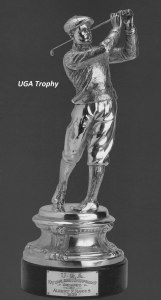
In 1934 Chicago’s Robert “Pat” Ball, a Black golf professional, played in the PGA Tour’s St. Paul Open. He didn’t finish in the money, but he did have some decent scores that included a 72 in the second round. In September Ball won the 1934 Negro National Championship for a second time.

At its national meeting in November 1934 the PGA added a “Caucasians Only” clause to its constitution, concerning membership in its association.

In 1942 George S. May invited Black golfers to enter his tournament in Chicago, the Tam O’Shanter Open. The prior week seven Black golfers had been barred from playing in the Hale America Open, also held in Chicago.  With a sponsor’s exemption, two-time Negro National Champion Howard Wheeler did not have to qualify for Tam O’Shanter. Six of the other Black entries, including Pat Ball, made it through Monday qualifying for the tournament. Three, including Wheeler, made the cut but didn’t finish in the money. An estimated 2,000 spectators followed the long driving Wheeler, who played with a cross-handed grip. In the following years Black golfers continued to play in PGA Tour events at Tam O’Shanter.  

 Howard Wheeler was allowed to attempt to qualify for the 1947 Philadelphia Inquirer Open, which he did with ease. He made the cut but missed the money. The tournament was in its fourth year, but this was the first time a Black golfer was given the opportunity to qualify in Philadelphia. The following year Wheeler qualified again for the Inquirer Open, once again making the cut and missing the money. Charlie Sifford, who like Wheeler played out of Cobbs Creek, made his first appearance in a PGA Tour event, qualifying and missing the cut.

Beginning in 1945 the Los Angeles Open had begun to accept the entries from Black golfers. Ted Rhodes and Bill Spiller had some success, qualifying and making the cut several times.

Spiller, who had attended college and had a teaching certificate, had taught school in a rural Texas town for $60 a month. He moved to Los Angeles to work as a Red Cap at the Union Station (RR) where he could make more money. It was there that he took up golf in 1942 at age 29. Four years later he was beating nearly everyone. Twice he qualified for the Los Angeles Open as an amateur.  

At the 1948 Los Angeles Open Ted Rhodes and Bill Spiller finished 23rd and 31st. The PGA Tour guidelines stated if a player finished in the top 60 at a PGA Tour tournament they were eligible to play in the next tournament, without having to qualify. Next up was the Bing Crosby Pro-Am. With 70 pros and 70 amateurs playing on one course, Cypress Point, there was no space for non exempt players who had been in the top 60 at L.A. Instead, their eligibility shifted to the next week’s Richmond (CA) Open.

Spiller and Rhodes filed entries for the Richmond Open and played a couple of practice rounds, only to be informed that they were not eligible to play, because they were not PGA “Approved Players”. Along with its members, the PGA had “Approved Players” cards for outstanding players who had turned pro but were not yet PGA members. They were all Caucasians.

At that time the PGA had a “PGA Co-sponsored” contract which was presented to each tournament sponsor to sign. In signing that contract the sponsor paid the PGA $1,500 to run the tournament. The sponsor had to put the total purse dollars into an escrow account, which guaranteed the players would be paid. The PGA would run the tournament from beginning to end, including scoring and rules. Along with that, the PGA would stage a golf clinic on Wednesday afternoons where 12 or so players demonstrated golf shots for the fans. Some sponsors, like Tam O’Shanter or Los Angeles, didn’t sign the contract. They just told the PGA they would run the tournament on their own. Due to offering more prize money than most other tournaments, the PGA stepped aside.    

Before the Richmond Open was completed a San Francisco lawyer had filed a $315,000 lawsuit against the PGA of America and the Richmond Golf Club on behalf of Rhodes and Spiller, who were not allowed to participate. The Richmond winner, Dutch Harrison, was issued a blank check because the law suit had frozen all funds.

Six weeks later PGA officials informed Spiller and Rhodes that something would be worked out for the future. They withdrew the lawsuit. Nothing changed. Then Spiller applied to the PGA for an “Approved Players” card. Two PGA members from California singed his application as sponsors. Three years later Spiller’s application was still being processed. To avoid any challenges some tournaments went as far as changing their names from Open to Invitation.

In 1952 after failing to qualify for the L.A. Open, Spiller and a Black amateur, Eural Clark, filed entries to the next full field PGA tournament, the San Diego Open. Due to a clerical error, they were assigned lockers and starting times for the qualifying rounds. With this tournament being PGA co-sponsored they were then denied the right to play. At the same time the San Diego sponsors had invited recently retired heavy weight boxing champion Joe Louis, who was Black and an amateur, to play in the tournament.

Under protest, Spiller and Clark played in the qualifying rounds. Spiller qualified. PGA President Horton Smith was in Pebble Beach playing in the Crosby Pro-Am. When contacted by the press, Smith stated he needed to confer with his PGA Executive Committee and would make a ruling when he arrived in San Diego.     

When Smith arrived he held a meeting with his seven man PGA tournament committee. Spiller barged into the meeting and stated his case before being forced to exit.  After a meeting that lasted two hours Smith ruled that Spiller couldn’t play. He said Spiller was not a PGA member or a PGA Tour “Approved Player”. Smith said that Louis could play, as an amateur did not fall under PGA by-laws. Spiller was quoted as saying “That Horton Smith, he can talk the paint off the wall.”

At first Louis refused to play saying the tournament should be called off. Louis stated that he would double the $2,000 that the tournament sponsors had promised a charity. Louis said, “This is the biggest fight of my life.” Louis, who had been sponsoring a tournament in Detroit for the Black golfers for several years, compared Horton Smith to Hitler.

Walter Winchell interviewed Louis on one of his radio broadcasts that was heard by 20 million people. Jackie Robinson sent a telegram to Louis stating his support. Louis agreed to play in the tournament, saying he hoped it might help the cause of Black golfers. When it was time for the first pairing to tee off in the tournament Spiller stood on the first tee refusing to let anyone tee off and making a statement. He was removed from the tee and play began. Some Black golfers called it the single most important event in their fight. Louis was criticized by some for agreeing to play when the other Black golfers were barred.

Before the tournament was over, Smith called another meeting of the tournament committee. After the meeting Smith announced an amendment to the PGA Tournament Regulations. It was called Approved Entries. The Sponsor already could invite 10 players who did not have to qualify to play. Now they could also invite ten from an Approved Entries list, which could be Black golfers, but they had to compete in Monday qualifying. Approved Entries participation was entirely up to the sponsor and the host course. A committee was created to screen Black golfers that could be Approved Entries. The chairman was Ted Rhodes with Joe Louis as co-chairman. The other three were Bill Spiller, Howard Wheeler and Eural Clark.

Smith went on record, saying the Caucasian Only clause would be critically analyzed at the PGA’s annual meeting in November with a view to modification or elimination. It probably was discussed, but it was not on the record. Everything stayed the same.
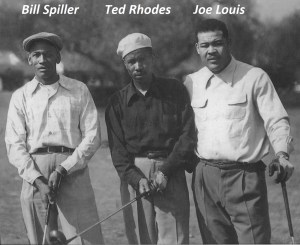
The following week at the Phoenix Open six Black golfers, including Joe Louis, were entered in the qualifying round. The six Black golfers were paired together in the first two groups off the tee. When the first group arrived on the first green and removed the flagstick to putt, they discovered the cup was filled with human excrement. There was a 30-minute delay for green keepers to clean up the mess and cut a new cup. Rhodes, Spiller, Clark and Sifford qualified.  Rhodes made the cut. The PGA had kicked the can down the road. There was some opportunity for Black golfers, but limited, as it was only at northern venues or the west coast.

One week later, Joe Louis played in the Tucson Open and easily made the cut with a (69-72) 141. Frank Stranahan and Philadelphia’s Skee Riegel held the lead at the end of 36 holes at 132. Louis posted a 78 in the third round and pulled out of the tournament after nine holes of the final round. He had made a case for Black golfers competing in professional golf tournaments. Fleetwood Pennsylvania’s Henry William, Jr. won the tournament.   

In 1955 and 1956 Black golf professionals played in the Philadelphia Daily News Open held at Cobbs Creek Golf Club. Charlie Sifford showed his capability, tying for sixth in 1956.   

In 1960 it was announced that the 1962 PGA Championship would be held in Los Angeles. Spiller mentioned to someone that California Black golfers like Charlie Sifford could not play in the tournament. Sifford had played in the US Open that year and finished in the money. Spiller’s man contacted California attorney general Stanley Mosk and Mosk informed the PGA that its championship would not be held in California unless Sifford was in the tournament. To play in the tournament, Sifford as a non PGA member had to be in the top 25 money winners on the PGA Tour. With limited access to the PGA Tour, he wasn’t.

The Southern California PGA Section presented a resolution at the 1960 national meeting that would eliminate the Caucasian Only line from the PGA’s constitution. The resolution did not receive the required 2/3 vote to pass. The PGA moved its championship to Aronimink Golf Club in Philadelphia.

At the 1961 PGA meeting the PGA’s Board of Directors presented the same resolution to remove the Caucasian Only clause. It was seconded by several PGA Sections and passed 87 to 0. Twenty-seven years after the Caucasian Only clause was put into its constitution it was finally removed. Black golfers could now be PGA members with full privileges.  

Robert “Pat” Ball, competing in the 1934 St. Paul Open, may be the reason why the PGA added the Caucasian Only clause to its constitution. Then it was Bill Spiller who worked the hardest and achieved the most success to overturn it. By the time it happened, Spiller’s window of opportunity had closed.

For more information on the history of the Black golf professionals, the three books listed below might be of interest to you.

Forbidden Fairways, by Calvin H. Sinnette, 1998
Just Let Me Play, by Charlie Sifford and James Gullo, 1992   
Uneven Lies, by Pete McDaniel, 2000

A golf professional with a bad hip was the father of the modern golf swing!

“Did You Know”
A golf professional with a bad hip was the father of the modern golf swing!

J. (James) Douglas Edgar was born in Heaton, England in 1884. At age 15 a golf course was built near his hometown, so he quit school and began caddying to provide money for his family. He soon began a four-year apprenticeship under the golf professional. At the age of 19 he became the head professional at the nearby Northumberland Golf Club.

That year, 1904, Edgar entered the British Open for the first time but missed the cut. His golf game kept improving and he set course records at many golf courses. For ten years he played in the British Open, even playing well several times, but never able to challenge the winners.

In his twenties his right hip began to deteriorate, which limited his ability to turn freely. Because of that he experimented with a shorter back swing while turning his hips very little, which alleviated the pain. He still rotated his shoulders. His golf shots became straighter and longer. At that time the great golfers rotated their hips nearly as much as their shoulders. Edgar practiced and practiced, hitting thousands of golf balls.

In 1914 he tied for 14th at the British Open in late June, which Harry Vardon won for a sixth time. A few weeks later Edgar won the French Open by six strokes over an entry that was nearly as strong as the British Open. Vardon finished second, Ted Ray third. Vardon, who was known to be quite reserved, was quoted as saying “This is the man who will one day be the greatest of us all.”

On August 4 England declared war on Germany. Edgar enlisted in the Royal Army Medical Corps but was discharged due to his hip problem. During the war years he played many exhibitions to raise money for the Red Cross and other wartime charities, at times defeating the greatest golfers of the British Isles. There were four years of no golf tournaments on the British Isles.  

J. Douglas Edgar 2

Northumberland Golf Club began having differences with Edgar. It was thought that he was too popular with the women. He gambled for more money than he could afford and imbibed in some alcoholic beverages at times. In 1918 Edgar and the Club parted ways.

Edgar had been hearing about lucrative club professional positions in America. In the spring of 1919 he left for the states where he soon found employment in Atlanta with the Druid Hills Golf Club.

The family of a 17-year-old golf phenomenon named Bobby Jones belonged to Druid Hills and East Lake Golf Club which was nearby.  Jones played many rounds of golf with Edgar, often 36 holes a day. Jones said he always learned something playing with Edgar. Edgar would tell people that Jones was going to astound the golf world.   

Edgar’s wife and his two children came to visit, but the heat and humidity of Atlanta was so different from England they didn’t stay long.

In June 1919 Edgar finished a disappointing tie for 21st at the US Open near Boston.

Sectional qualifying for the PGA Championship was in early July. With Georgia being in the Southeastern PGA Section at that time, along with all the states on the Atlantic Coast up to Pennsylvania, Edgar had to travel to Maryland to qualify. He won the third and last spot.

Three weeks later he was in Hamilton, Canada for the Canadian Open. Edgar put together a world record score, by five shots. His 72-hole total of 278, (72-71-69-66) won by sixteen strokes. Bobby Jones, Jim Barnes and the defending champion, Karl Keffer, tied for second. The sixteen strokes margin of victory is still the largest in a PGA Tour event, only tied by Bobby Locke in 1948.

At the PGA Championship on Long Island in September, Edgar lost in the quarter-finals.

The following year, 1920, the US Open, PGA Championship and Canadian Open were held on three consecutive weeks in August.

In July Edgar was in Philadelphia to qualify for the PGA Championship. Vying for one of four spots at Philmont Country Club he was the low man. The next week he tied for 13th at the Shawnee Open.

At the US Open in mid August Edgar tied for 20th. The next week he nearly won a major championship losing to Jock Hutchison in the 36-hole final of the PGA Championship, one-down. A week later he was in Ottawa to defend his title at the Canadian Open, which he accomplished by finishing in a three-way tie for first and then winning an 18-hole playoff.

In October at East Lake CC, Edgar won the Southern Open, with Bobby Jones second by two strokes. Jim Barnes and Atlantic City’s Clarence Hackney tied third.

In mid December 1920 Edgar left Atlanta to visit his family in England. He had planned to be back in Atlanta by spring but stayed overseas to play in the British open in late June, tying for 26th.

Perhaps due to being away from Druid Hills for so long, on his return he did not show up to defend his Canadian Open title and did not enter the US Open, which were in July.

Sometime after 11 p.m. on August 8, 1921, Edgar was found on Atlanta’s Peachtree Street in a pool of blood. He died a few hours later. At first it was thought to have been a hit and run auto accident, but the coroner determined that Edgar was not stuck by an automobile. His death was caused by bleeding from a deep stab wound on the inner side of his left leg which severed his femoral artery.  

His murder was never solved. It was said that he had been seen with a women, whose husband had been charged with a previous murder, but had been acquitted. The woman was later seen visiting his grave site. Some said that there was hostility against Edgar in Atlanta because on several occasions he defeated Jones in golf matches where large sums of money had been wagered on Jones. He was pressured at times to throw contests, like the 1920 Southern Open, where he could have easily finished second behind Jones, an amateur, and still collected the top check of $1,050. It was questioned why he waited until July to return to his employment at Druid Hills?

In 1960 Tommy Armour called J. Douglas Edgar the father of the modern-day golf swing. Tommy Armour said that he took golf lessons from many great players but Edgar was the greatest and taught me the most.  

In 1920 Edgar wrote a book on the golf swing titled “The Gate to Golf”. It can still be purchased online. 
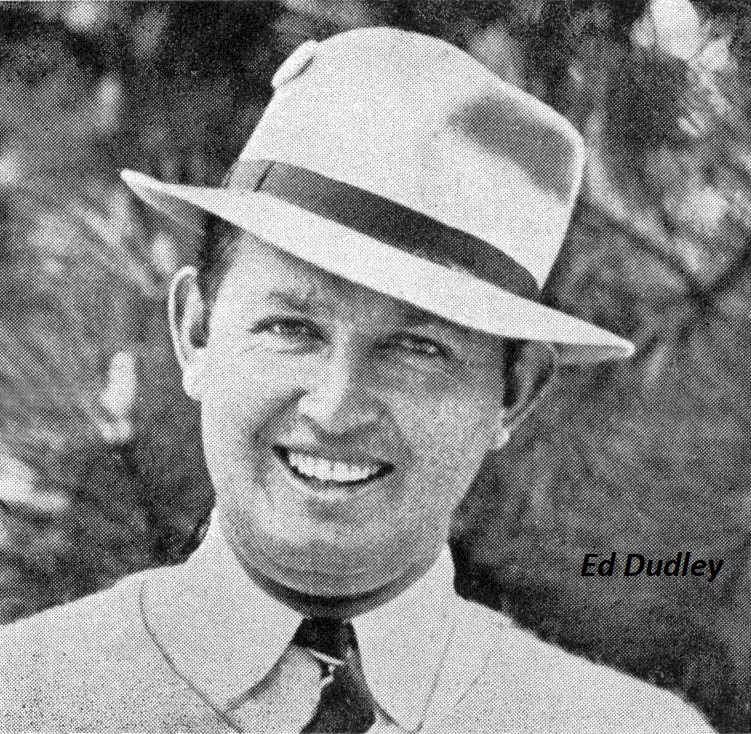


While on PGA suspension in 1961 Tommy Bolt made out well on TV’s All Star Golf!

“Did You Know”
While on PGA suspension in 1961 Tommy Bolt made out well on TV’s All Star Golf!

Tommy Bolt, who won the 1958 US Open, was known for his temper. He had nicknames like “Thunder” and other similar ones, and he earned them.

In early August 1961 Bolt was playing in the PGA Championship in Chicago. When an osteopathic doctor could not be provided to treat his 43-year old aching back, he used profane language in the presence of Olympia Fields CC members. The PGA suspended Bolt indefinitely. He was already on PGA probation for failing to fulfill a commitment to play in a New York charity tournament the day after winning the 1958 US Open.  

All Star Golf-1961 x

All Star Golf, a series of prerecorded golf matches, was in its fifth year. The matches were head-to-head between two PGA professionals with the winner moving on to play another professional. After filming several matches in New York’s Catskill Mountains in early August, the production crew of 52 moved to Pocono Manor Resort, in Pennsylvania’s Pocono Mountains.  

Five matches were scheduled for Pocono Manor, Monday through Friday. Summer weekends at those resorts were too valuable to give up. For Monday’s match, Tommy Bolt, who had defeated Frank Stranahan on the last day in the Catskills, was playing Jack Burke, Jr.

The PGA had a rule that the PGA Tour members could not play in tournaments at the same time a PGA Tour event was being played, unless they were being held in the PGA Section where the professional was a member. But, the professionals, like Burke, could participate in All Star Golf because these were exhibitions, not tournaments and All Star Golf was not the PGA Tour. The PGA Tour was in Maryland for the Carlings Open that week, with a top prize of $5,300.

With All Star Golf coming to Pocono Manor, the resort decided to charge the spectators an admission fee of $1, with the money going to the Stroudsburg General Hospital. For the previous four years All Star Golf had been on CBS, but now it would be on NBC and filmed in color for the first time. The producers asked the ladies to dress in colorful attire for the filming.

The filming took all day, beginning at 9 a.m. and finishing at 4:30 in the afternoon. Cameras were transported around the golf course on golf carts and small trucks and had to be reset for each shot. The colorful Jimmy Demaret was the announcer. Pocono Manor was a quirky golf course that presented plenty of challenges to the touring pros. One of its great holes was a downhill 77-yard par 3 that had a creek fronting a green that sloped from back to front. There was only one bunker on the 6,500-yard golf course, that being just a splash of sand near the 18th green.

On Monday Bolt shot a three under par 69 to easily defeat Burke. The match became so uneven many spectators left to follow Sam Snead who was playing a practice round for the next day on another part of the course. On Tuesday it was Bolt versus Snead, which was somewhat closer, but Bolt turned in another 69 to win by four strokes.

At the beginning of the week Art Wall, who represented Pocono Manor on the PGA Tour, was scheduled to play on Wednesday against Tuesday’s winner, but instead on Wednesday it was Cary Middlecoff versus Bolt. The Pocono golf fans were not pleased. They thought that Wall had been moved to a later day due a perceived unfair knowledge of the golf course. With Wall now moved to Friday he would have only one chance to win a match at Pocono Manor.

The Bolt-Middlecoff match was tightly contested. It was only when Middlecoff overshot the par three 18th green and made a bogey, that Bolt prevailed with a 68 against Middlecoff’s 69. Bolt’s next victim was the 1953 PGA champion, Walter Burkemo, who shot a 70 only to lose to Bolt’s 67. On Friday Art Wall got his opportunity, and Bolt’s winning streak came to an end; Wall 69-Bolt 70.

Art Wall had to wait until September for a chance to win a second match, when the production team would resume filming in Las Vegas.  

For the six days Bolt picked up $12,500, $2,000 for each victory, and $1,000 for his loss to Wall, plus bonus money paid for 3 consecutive birdies. Not bad for a golf professional on suspension. Earlier in the month Jerry Barber had taken home somewhat less, $11,000, from winning the PGA Championship.

The matches had drawn about 2,500 spectators each day with the largest turnouts on the days that Snead and Wall played.

The next week, on the eve of the American Golf Classic in Akron, Ohio Bolt appeared before the PGA’s Executive Committee with his lawyer, to appeal his suspension. After a 90 minute hearing, Bolt was given a retroactive one-month suspension dating back to July 30, with no fine. Bolt told the reporters that he thought the decision to be a fair one, and he was heading home to Crystal River, Florida to rest his ailing back.   

1910 Philadelphia Open had the smallest but strongest field!

“DID YOU KNOW”
The 1910 Philadelphia Open had the smallest but strongest field!

The Philadelphia Open, which is still being played, had its smallest but strongest field in 1910. Hosted by the Philadelphia Cricket Club in August 1910, the US Open had been at that same venue two months earlier. The US Open was 72 holes in two days and the Philadelphia Open was 36 holes in one day.

First played in 1903 and called the Open Championship of Philadelphia, it was sponsored by the Golf Association of Philadelphia. The tournament was open to professionals and amateurs from Golf Association of Philadelphia clubs and other USGA member clubs.

The tournament was played on the second Monday of August. The entry fee was $5, and the GAP added $100 to the purse. There were only 12 entries: 10 professionals and 2 amateurs. With it being August some leading professionals from outside Philadelphia were in New England playing exhibitions and others may have decided that one day of 36 holes in the mid-August heat was not enticing. Also, in 1910 the $5 entry fee was equivalent to $156 today and the caddy fee added a few more dollars to the expense of participating.

Though small in numbers, many that entered were or would soon be the leading playing professionals in the country.

The Western Open was a major championship at that time. In total, 6 of the 10 professionals in the 1910 Philadelphia Open won 6 US Opens, 5 Western Opens and had 6 second place finishes in major tournaments along with winning 4 Philadelphia Opens and 1 Pennsylvania Open.        

Willie Anderson, host pro, won 4 US Opens, won 4 Western Opens, 1 Western Open RU.
Johnny McDermott, Merchantville Field Club, won 2 US Opens, won 1 Western Open,
       1 US Open RU, and won 3 Philadelphia Opens.
Gil Nicholls, Wilmington CC, was RU in 2 US Opens and won 1 Philadelphia Open.
Emmett French, Merion Cricket Club (Merion GC), was RU in the 1922 PGA Championship.
Jack Burke, Sr., Aronimink GC, tied for 2nd at the 1920 US Open.
James R. Thomson, Philadelphia Country Club, won the 1913 Pennsylvania Open.

The American Golfer magazine gave the tournament nearly a full page of coverage, written by Albert W. Tillinghast under the pen name “Hazard”. A member of the Philadelphia Cricket Club, Tillinghast was still a few years away from the start of his golf course architecture career.

McDermott (Sheppard) 1

Tillinghast wrote that the tournament was an “unqualified success”. “The going was even more remarkable than that in the National event which was decided over the same course” (just two months earlier). (In June, Johnny McDermott had ended up in a three-way tie in the US Open, losing to Alex Smith in an 18-hole playoff.) “Young McDermott again demonstrated that he is a natural player of astonishing ability. His morning round of 74 was followed by one in the afternoon, which was two strokes better, and his total of 146 just nosed out Willie Anderson (74-73), the home pro, by a single stroke. Anderson’s 5 on the home hole in the morning proved his undoing and a six on the eleventh, in both rounds, was really quite inexcusable.” (Par was 73)

Tillinghast continued, “Whether he (McDermott) will show to the same advantage over a longer route remains to be seen, but I am rather inclined to think that he will prove a hard nut to crack anywhere. He is only a youth, and it is to be hoped that his phenomenal success in each of the two Open events at the Cricket Club, may not chance to spoil a brilliant golfing future.”

With the entry fees and the added money coming to $160, McDermott collected $80. Four professionals won money, with the purse being divided: 50, 25, 15 and 10 percent.

Two months later (October 25, 1910) Willie Anderson died at the age of 31. The Philadelphia City Archives gave the cause of death as epilepsy.

Walter Hagen played golf with Johnny McDermott at his psychiatric hospital golf course!

“Did You Know”
Walter Hagen played golf with Johnny McDermott at his psychiatric hospital golf course!

In 1914, only two years after winning the US Open for a second consecutive year, 1911 and 1912, Johnny McDermott suffered a nervous breakdown.  His two sisters were forced to commit him to a private institution. But, with limited resources, he was moved to Norristown (PA) State Hospital for the insane at just 24 years of age. He was diagnosed with chronic schizophrenia. Another reason for the move was loses in the stock market, which had taken a toll on McDermott’s finances.   

Norristown State Hospital had a six-hole golf course, which had been built for the staff. The hospital course covered 1,232 yards, with some of the fairways crisscrossing. It worked because the course wasn’t busy. The longest hole was 287 yards and the shortest 132. Most days McDermott would play the course.

8 J. McDermott (2)

With the exception of a failed comeback attempt in 1924, and his sisters driving him to local golf courses on weekends where he would visit golf professionals he had known, he spent the remainder of his life in that hospital until his death in 1971, just eleven days shy of his 80th birthday.

On Sunday October 23, 1923, Walter Hagen and Joe Kirkwood, the world’s greatest trick shot artist, were playing a 36-hole exhibition at Gulph Mills Golf Club.

While playing the exhibition, Hagen learned that the psychiatric hospital where Johnny McDermott was confined was not far from Gulph Mills. After golf, Hagen and his wife were driven to the hospital by a trustee of the hospital to visit McDermott.

Late that Sunday afternoon Hagen played the course with McDermott. Hagen reported that despite not playing any competitive golf for nine years, McDermott had lost little of his old prowess.

While sitting on a bench with Hagen, McDermott remarked several times “I don’t think I ever saw a more beautiful view, than from here. I think it is fine. Tell the boys I’m doing well.”  

300 players teed off in the first round of the 1973 Pennsylvania Open!

“Did You Know”
300 players teed off in the first round of the 1973 Pennsylvania Open!

The 1973 Pennsylvania Open was hosted by the Oakmont Country Club. The PA Open had not been at Oakmont since 1924, so many of the pros and amateurs in Pennsylvania had never played there. The entries kept coming, topping out at 300. The two-round tournament was scheduled for a Monday and Tuesday in August.    

The Pittsburgh golf professionals, where the Pennsylvania Golf Association was located, told the PAGA officials that it was not possible to get that many players around Oakmont in one day. But entries were accepted and starting times assigned. Even the Pittsburgh Press stated in its Monday newspaper, “The last starting time on both the No. 1 and No. 10 holes is 3:54. With sunset due at about 8:05 there will be a bit of difficulty in getting everybody finished today.”

On Monday, August 20 the 300 plus entries were at Oakmont for round one. Players went off in fours on holes #1 and #10 at 7a.m. A steady drizzle set in before play began. It was always said that Oakmont was the only golf course where the greens speeds had to be slowed for major tournaments. This was not a major, and the greens were rolling at their fastest pace. With the rain, the greens were like wet panes of glass. On holes 1 and 10, where the greens slope from front to back, nearly every golf ball rolled to the back collar.    

With slick greens, rain, and four-man pairings, play moved at a snail’s pace. The early starters were taking two and a half hours to complete nine holes. Even with that, when the players made the turn, they were held up for their second nine as the tee wasn’t open due to slow play backing up the golf course. By the time the morning pairings were completing their rounds it became apparent that nearly half the field would not complete 18 holes.

The PGA officials went to plan “B”. The first round was washed out and the players were re-paired in fours for a morning and afternoon shotgun start on Tuesday. With some no-shows and a few who could not stay for a Wednesday finish, the field was down to a bit under 288 players.  

On Tuesday play began at 7a.m., with two four-man pairings on each tee. The morning round took six hours. At 2p.m. the second wave began play with two four-man pairings on each tee. Six hours later they were completing their rounds.

The plan had been for the field to be cut to the low 60 players and ties, but with Oakmont having a golf outing scheduled for Wednesday and all play needing to be off the No. 1 tee by 10a.m., the field was cut to the low 40 players and ties. There were 30 money places, but less than 30 professionals had made the cut at 78 strokes or less.

Perla, Tony (TGH) (2)

On Wednesday Philadelphia’s Sunnybrook Golf Club professional, Tony Perla, shot an even par 72 to go with a first round 72. His 144 total won by one stroke, and for a second time Perla was the Pennsylvania Open champion. First prize from the prize pool of $6,000 was $1,200.

The professionals who had finished among the top 30 professionals, but missed the cut, did not receive any money. Some wrote letters to the PAGA, but received no answers.  

The Pennsylvania Golf Association probably made more money that week than the winner, Tony Perla.     

Arnold Palmer never won the PA Open, even with help from the PA Golf Association!

“DID YOU KNOW”

Arnold Palmer never won the Pennsylvania Open, even with help from the PA Golf Association!

Arnold Palmer played in the Pennsylvania Open two times and finished second both times.

While serving in the United States Coast Guard in Cleveland, Yeoman 3-C Palmer played in the 1952 Pennsylvania Open. The one-day 36-hole tournament was played at Gulph Mills Golf Club and St. Davids Golf Club on the second Monday of October. Still an amateur, Palmer was given leave from his Coast Guard duties in Cleveland to play in the tournament. Even though he was not a resident of Pennsylvania, his entry was accepted by the Pennsylvania State Golf Association, which was then being managed out of the Western Pennsylvania Golf Association office, located in Pittsburgh. Palmer was the only player in the field not residing in Pennsylvania. If Palmer had been a professional, there might have been some grumbling from the Pennsylvania professionals. Playing Gulph Mills first, Palmer posted rounds of 71 and 72 for an even par 143 which put him in a tie for the title with George Griffin, Jr., assistant to his father at Green Valley Country Club. With an 18-hole playoff scheduled for Tuesday, Palmer had to call his commanding officer for another day of leave. In the playoff the next day, which was at Gulph Mills, Griffin won with a 73 against a 76 for Palmer. Now in 2022, for some reason Palmer is not listed in the PSGA records, instead Ken Gibson who finished third is listed as the runner-up.  

Fifteen years later in 1967, Palmer entered the PA Open again, for only the second time. The tournament was being held near his home at Laurel Valley Golf Club, where Palmer was a founding member. It may be that the Laurel Valley members talked him into entering. Palmer at age 37 was still near the peak of his game, winning four times on the PGA Tour that year.   

The tournament was played on a Monday and Tuesday in the third week of August. The tournament had been in Hershey at the Hershey Country Club for the past fourteen years. Laurel Valley was just ten years old and had hosted the PGA Championship the year before. 192 pros and amateurs entered.

In the first round Palmer shot a four over par 75, but he was only four strokes behind the leader, and there were only six players with better scores. No one broke par. Two thousand fans turned out to follow Palmer. There was a cut to the low 70 and ties after the first round.

Due to what was described as a social commitment in New York, where he was headed to play in the Westchester Classic, Palmer was first off the tee the next day. Instead of playing late in the day with the leaders, Palmer was putting on freshly mowed greens with no spike marks, paired with players out of contention. When the professionals saw Palmer teeing off first there was plenty of grumbling about favoritism by the state golf officials.

Even though he made bogies on the 16th and 18th holes, he shot a 69 and appeared to have a good chance of being the winner. Palmer said that if he ended up in a tie for first, he would forfeit. As Palmer was finishing his round the leaders had just begun their rounds.

Ross, Bob 3 (TTT)

Bob Ross, the professional at the Philadelphia Cricket Club, had been on a hot streak. On Saturday he had won the 3-day Philadelphia PGA Championship. Earlier that summer Ross had begun using an aluminum shaft driver. Like Palmer he had shot a 75 in the first round. Playing in one of the final pairings, Ross birdied five of the first seven holes and then made two more birdies on the back nine. He made pars on the last two holes for a 68 and a two-day total of 143, to win by one stroke.

First prize was $800. Palmer donated his $500 second place money to the Pennsylvania State Golf Association to promote its state open, whatever that meant. None of the professionals who finished behind Palmer saw any of that money.

There was a time when the golf professionals went “all in” to promote the PGA Tour!

“Did You Know”
There was a time when the golf professionals went “all in” to promote the PGA Tour!

The PGA of America came into being in 1916. Along with trying to place golf professionals in the clubs that were the best fit for both the clubs and the golf professionals, there was also a desire to create competitive playing opportunities for the golf professionals. At first the competitions were quite haphazard. Golf resorts like Shawnee in Pennsylvania’s Pocono Mountains, and cities like Miami and Los Angeles, who wanted to promote their mild weather, would host tournaments.   

By the late 1920s, what had been a collection of various tournaments was beginning to develop into what people were referring to as the PGA Tour. Then the Great Depression arrived, followed by World War II. Even though money was tight and travel was difficult, the Tour continued on. It only survived because the public wanted to see those great golfers. Each week hundreds of volunteers took time off from work to host a PGA Tour tournament.

Purses were small, even for that time in US history. The norm was a $10,000 to $15,000 total payout. Less than thirty players even cashed a check each week, usually about twenty-five. Most pros lost money playing the Tour, but they loved the competition. If nothing else, they wanted to prove something to themselves, and if their name was in the newspapers a few times they might parlay it into a better position as a home pro.

Each week the entry fees were $1 per thousand dollars in the purse. A $10,000 purse equaled a $10 entry fee. The entry fees went to paying the salaries and travel expenses of the tournament manager, rules officials and scoreboard operators. There was also an advance man who was one week ahead of the Tour. He managed the entries and made sure the rough was cut at a reasonable height along with the hazards and ground under repair being properly marked. His role was to assure that the facility was ready to host the PGA Tour. The entry fees did not cover all those expenses, so some money from the PGA dues of the home professionals was needed as well. Some PGA professionals felt that it was money well spent, like advertising. You could call it the PGA of America’s “Lost Leader”.  

The playing professionals did what they could to help the cause. If invited, they would speak to civic clubs or any organization that was interested.

On Tuesday evenings some of the best players entered that week would put on a driving contest and a golf clinic. The players weren’t paid for participating in the clinic but were doing what they could to make the tournament a success.

Each week one of the professionals would be chosen to serve as the Coordinator/MC for the clinic. He would select twelve or so professionals to assist with the clinic. The MC would commentate, and the pros would speak about the fundamentals of the golf swing, along with demonstrating shots from the driver to the sand wedge.

The picture you see below is from the 1949 Reading (Pennsylvania) Open. In the middle with the clipboard is Lawson Little, MC for that week’s clinic. Little won both the US Amateur and the British Amateur back-to-back in 1934 and 1935 along with winning the 1940 US Open. Everyone in the photo won at least three times.

From L to R: Lloyd Mangrum (36 PGA Tour wins), Chick Harbert (7 Ws), Jackie Burke (16 Ws),
Toney Penna (4 Ws), Henry Ransom (5 Ws), Lawson Little (8 Ws), Sam Snead (82 Ws),
Fred Haas (5 Ws), Dave Douglas (8 Ws), Ed Furgol (6 Ws), Johnny Palmer (7 Ws),
Cary Middlecoff (39 Ws), Skip Alexander (3 Ws)

Middlecoff won that 1949 Reading Open, edging out Snead by one stroke. The total payout of $15,000 had a top prize of $2,600. Twenty six professionals made the money with last place $110. Middlecoff’s win moved him to the top of the money list for 1949 with $18,749.57, just ahead of Snead. Ben Hogan was at home recovering from his near fatal auto accident.

1949 Reading O Clinic 4

Lew Worsham won the 1947 US Open with two putters in his bag!

“Did You Know”
Lew Worsham won the 1947 US Open with two putters in his bag!

Lew Worsham won the 1947 US Open in an 18-hole playoff with Sam Snead. Worsham and Snead came to the par four 18th hole still even. Both were near the hole, putting for pars. Deciding to finish out, Snead addressed his putt, but Worsham said he thought he was farther away. A measurement determined that Snead was away. Snead putted and missed. Worsham then holed his putt to win the US Open, using one of the two putters he had in his golf bag, a Ted Smith hickory shaft mallet head. Usually someone playing with two putters had a putting problem, but not Worsham.

Who was Ted Smith?
Ted Smith was born in Philadelphia in 1906 to Hungarian immigrants who had Americanized their name to Smith. Later they moved to Chicago. At age 12 Smith asked for golf clubs for Christmas because he had seen a picture of John D. Rockefeller playing golf. Smith began playing golf, caddying and working for the golf professionals at a public golf course. He asked so many questions of the golf professionals, they called him “Questionnaire”.

At age 18 he went to work at Seaview Golf Club near Atlantic City, NJ as an apprentice club maker. After stints as a club maker in California and Illinois he became a salesman for the MacGregor Golf Company out of Dayton, Ohio. Smith covered the states east of the Mississippi and Toney Penna covered everything west of the Mississippi.

Smith and Penna told the MacGregor Company management that they could make better clubs than they were being given to sell. With that Smith began designing the irons and Penna designed the wood clubs. MacGregor became the most successful golf club company in the US. Byron Nelson, Ben Hogan and Tommy Armour, represented MacGregor playing the clubs on tour.

When World War II broke out the MacGregor factory was taken over by the US government for the defense of the country. Smith made dummies used in testing experimental ejection seats for fighter planes. The government became aware of Smith’s talents and sent him to Camden, NJ to work on the Navy supply ships. Smith helped create a new type of propeller for the ships that made them more efficient, thus transporting the supplies to Europe more quickly.

After the war Smith decided to stay in the Philadelphia area and opened the Ted Smith Putter Company in Upper Darby, PA. He worked out of the basement of his home making the putters.

Smith, Ted-1963 Jan 22 xx

When Smith opened his business in 1946 there was a pent-up demand for domestic goods like automobiles, which used steel. The big golf companies were buying all of the steel shaves that were available so Smith put hickory shaves in his putters. As it turned out the hickory shafted putters were very popular, though more expensive due to the time needed to make them. He turned out about 2,000 putters a year. Eventually he had 30 different models for sale, which he designed himself.

In one of those ironies of life, the Japanese, who Ted had helped defeat in World War II, became his biggest and best customers. With the World Amateur Team Championship being played at Merion Golf Club in 1960, Smith put 50 of his hickory-shafted putters in Merion professional Fred Austin’s golf shop on consignment. Each member of the Japanese team bought one of his putters. One member of the Japanese team was affiliated with an import/export firm in Japan. He began importing Smith’s putters. By 1971 sixty percent of Smith’s putter sales were in Japan, and he could have sold his total output there. With each order came a letter of credit and three days after the putters were shipped, Smith was paid by a local bank.

Due to his success in Japan Smith only sold putters in the US to keep the Ted Smith Putter name alive, and as a precaution in case the market in Japan ever dried up.  

The modern version of the PGA Tour was formed at Whitemarsh Valley CC in 1968!

“Did You Know”
The modern version of the PGA Tour was formed at Whitemarsh Valley CC in 1968!

The PGA of America came into being in 1916. In the early days of what became known as the PGA Tour it was a loose arrangement of professional golf tournaments. To create interest in hosting tournaments, wives of PGA professionals would write letters to the Chamber of Commerce of large cities, golf resorts and regional golf associations. It became obvious to the PGA professionals that it would be better if it was organized by someone.

In 1930 the PGA hired it first tournament manager, Bob Harlow, a former newspaper man who was managing exhibitions for Walter Hagen and Joe Kirkwood. His job was to sell and promote the tournaments as well as manage them. He set up the starting times and fined the players if they were late. The players were often displeased with how the tournaments were managed by Harlow.

The PGA Tour usually lost money and some years nearly one quarter of the PGA members’ dues had to go to operating the Tour. Many of the home professionals were unhappy as well. Harlow reported to the PGA officers and board. On the side Harlow managed some of the players, which led to his demise in late 1936 due to complaints about favoritism and not spending his full time on tournaments.

He was followed by Fred Corcoran, another manager of athletes, who proved to be no more satisfactory. He was hired and fired several times but due to World War II, he lasted until late 1947. On more than one occasion Corcoran was punched in the nose by a disgruntled playing professional. During Corcoran’s tenure, Ben Hogan, as the leader of a players group, made an unannounced appearance at the 1946 annual meeting of the PGA. He presented a proposal for establishment of a seven-man player constituted board. The board would arrange schedules, control the PGA Tournament Bureau and punish absenteeism. Eventually much of that was accepted to various degrees.

George Schneider, who would also play the PGA Tour at the same time, followed Corcoran. The players were happy, but the PGA felt he sided with the players on most issues, so he was let go in early 1950. That year a Players Board constituted by four players and the three PGA officers was instituted. Schneider was followed by men who were either accused of playing favorites in making rulings or were successful but unhappy with life on the road. In 1964 the PGA hired Jack Tuthill, an ex FBI man, who handled the position to the satisfaction of the PGA and the players.

When a player signed an entry form to play in a PGA Tour event, a paragraph in the form committed him to play his next tournament on the PGA Tour, unless it was a tournament in his PGA Section. As an example, a member of the Philadelphia Section PGA like Art Wall or Al Besselink could play in the Section Championship or Philadelphia Open at the same time a PGA Tour tournament was being played in another part of the country.

In February 1951 Jimmy Demaret and eight other PGA professionals, which included Al Besselink, Stan Dudas and Willie Polumbo from the Philadelphia PGA, played in the Mexican Open which was being held at the same time as the PGA Tour’s Rio Grande Valley Open in Harlingen, Texas. Demaret had a $500 guarantee from the Mexican Open. The PGA fined Demaret $500, and most of the others $200, and stated they were suspended until the fines were paid. The next PGA Tour event was the Houston Open, Demaret’s home town. The chairman of the Houston Open threatened to cancel the tournament unless Demaret was in the starting field. Demaret threatened to sue the PGA for all the money it had and threatened to punch PGA President Horton Smith in the nose. In the end a wealthy oilman gave Demaret a check to cover the fines of Demaret and the others who wished to play at Houston. Demaret handed the check over to the PGA and played under protest. Demaret teed off wearing a Mexican sombrero.

More money began coming to professional golf in the mid 60s due to television. Frank Sinatra offered to sponsor a $200,000 tournament in Las Vegas in 1968. Not wanting to be associated with gambling, although legal, the PGA of America turned it down, which incensed the players. Many of the Tour’s players now had college educations. They presented the PGA with a list of grievances over the day-to-day operation of the tournaments. When not much changed the players stated they wanted complete control of what was now a $5.6 million tour. In 1950 the professionals had played for $541,950.

The players put together a 13-man organizing committee and hired a lawyer. They called themselves the “American Professional Golfers Inc.” The evening before the first round of the Philadelphia Golf Classic, August 21, 1968, the players held their first official meeting at the Whitemarsh Valley Country Club. All players were invited. Gardner Dickenson was elected president, with Jack Nicklaus vice president, and Billy Casper treasurer. 205 players agreed to join.

The new organization announced that they would honor all PGA Tour contracts for the rest of the year but had begun negotiating for tournaments and television contracts for 1969. The PGA of America and the new players’ organization were both scheduling tournaments for 1969 and both ran qualifying tournaments for new players.

Fraser, Leo 2 (TGH) x

In November Atlantic City Country Club owner/professional Leo Fraser was elected president of the PGA of America. Led by Fraser, the PGA of America made peace with the players in December. The Tournament Players Division of the PGA was created. Its Board was made up of the three PGA officers, four tournament players and three non-PGA independent directors.

The players have owned and managed the PGA Tour for 54 years. There was a time when the lesser players were organizing for more money, like paying everyone in the starting field each week. Now in 2022 the players own the PGA Tour, Champions Tour, Korn Ferry Tour and Latinoamerica Tour. Prize money on the PGA Tour has increased from $5.6 million in 1967 to $427 million in 2023, along with bonus money and a profit sharing plan, but there are some who are dissatisfied, even though it is their tour, and there are millions of dollars to be made.

At one time the golf professionals had to play with a marker in the U.S. Open!

“DID YOU KNOW”
At one time the golf professionals had to play with a marker in the U.S. Open!

At one time, the USGA assigned markers to the golf professionals in the U.S. Open. Because the professionals were playing for money they were not trusted to keep their own scores, not even by a fellow competitor. A non-competitor walked with each professional recording his score on each hole, while the amateurs were trusted to report their own scores.

On January 17, 1916, a group of 75 golf professionals and leading amateurs, like Francis Quimet and Albert W. Tillinghast, met in New York City at Wanamaker’s Taplow Club to explore the formation of a national organization of golf professionals.  

Tillinghast

Philadelphia’s Albert W. Tillinghast, a fine amateur golfer and golf course architect, spoke at length on the need for the golf professionals forming of a national organization.

He related a story from the 1915 Pennsylvania Open at Shawnee Country Club. Tom Anderson, Jr. was on the green of the final hole with a one stroke lead and a short putt to win the title. His golf ball had come to rest in a cupped lie. As the president of Shawnee and architect of the course, Tillinghast was the referee for the Anderson pairing. With his golf ball in the line of his fellow competitor, Anderson was requested to lift his ball. At that time a golf ball was simply lifted and not cleaned.  A ball marker was not used to assist in replacing the ball.    

Tillinghast stated “When he replaced, Anderson put the ball religiously back into the cupped lie, although he was certain to miss the putt and did, owing to the bad lie. How many amateurs” asked Tillinghast “would not have been tempted to give the replaced ball a good lie? I know that the rules are observed no more honestly by any golfers than the pros. It is the amateurs who take liberties with the rules.”

Tillinghast said it was time for the golf professionals to become more independent of the USGA. Until then the USGA had served as a clearing house for golf professional and green keeper positions. Tillinghast added that the golf professionals should have the ability to handle their own affairs. If organized, the professionals would be treated with more respect.

When Rodman Wanamaker offered to put up the money for a championship the PGA of America was founded On April 10, 1916.

By missing that putt in the 1915 Pennsylvania Open, Anderson ended in a tie with Eddie Loos. That same day they played an 18-hole playoff which ended with them still tied. On the 55th hole of the day Anderson won with a par.

Later in 1915, while learning to drive with the assistance of an instructor, Tom Anderson, Jr. died at the wheel of the automobile at age 29. His brother Willie, winner of four US Opens, had died in 1910 at the age of 31.

A bottle of red wine brought Bobby Locke to the 1947 Philadelphia Inquirer Invitation!

“DID YOU KNOW”
A bottle of red wine brought Bobby Locke to the 1947 Philadelphia Inquirer Invitation!

Having won the 1946 British Open, Sam Snead was invited to South Africa in early 1947 to play a series of exhibitions with their leading golfer, Bobby Locke. Locke had finished tied second at that 1946 British Open. Snead was guaranteed a percentage of the gate receipts or $10,000, whichever was larger, along with his expenses.  During the time that Snead was away he would have only collected $17,250, if he had won every tournament. During February and March, Snead and Locke met up twenty times, with Locke, coming out ahead fifteen times to three for Snead, even though Snead averaged close to 70 strokes per round. Two were tied.

With that, Snead encouraged Locke to give the US PGA Tour a try. On April 1 Locke and Snead flew into New York in route to Augusta, Georgia for the Masters Tournament. From New York they boarded a train to Columbia, South Carolina and then were driven to Augusta. In meeting up with Snead at Augusta, his agent Fred Corcoran said “I see you kicked a field goal.”

On his first venture to the states Locke had little time to prepare for a tournament, which began on April 3. He was able to get in one practice round. Locke tied for 14th. Snead was farther down, tied for 22nd, one stroke out of the money. The winner was Jimmy Demaret.

Fred Byrod, the Sports Editor of the Philadelphia Inquirer, was in Augusta covering the Masters. The Philadelphia Inquirer Invitation was scheduled for the fourth week of May and Byrod was recruiting for the tournament. One evening during the week of the Masters, Byrod had dinner with Locke. With the assistance of a bottle of red wine, or maybe two, he sold Locke on committing to play in Philadelphia.

With no more tournaments on the PGA Tour until the second week of May, Locke played a series of exhibitions in the southeastern states. In his second start in the USA Locke won the Houston Open by five strokes. Next it was the Colonial Invitational in Fort Worth where Hershey CC’s professional; Ben Hogan, won and Locke tied for third.

1947 Inq Inv-Cedarbrook CC 2

From there the tour moved to Philadelphia for the Inquirer’s tournament at Cedarbrook CC, just north of the city at that time. After a rainout on Thursday 36 holes were scheduled for Sunday. On Sunday nine thousand spectators turned out in a misty rain and wind for the final rounds. Locke put together a pair of 70s to overcome a five stroke lead by Hogan and won by four strokes. Philmont CC’s professional Matt Kowal and Lloyd Mangrum tied for second. Hogan ended up in fourth place.

Locke won again the following week in Boston. After that he finished third at the US Open and then won three more times. When 1947 came to a close Locke was second to Demaret on the 1947 money list with $24,327 to Demaret’s $26,536. Demaret had played in 29 tournaments versus 16 for Locke. They both won six times.

Playing a limited schedule Locke won four more times in 1948 and 1949. In 1949 Locke was banned from the PGA Tour by the PGA of America for not appearing at tournaments and exhibitions when he had committed. Locke chose not to defend his Canadian Open title when the sponsor wouldn’t give him a $1,000 appearance fee. He withdrew from a tournament after 36 holes, saying he had to leave for the British Open which was still 16 days away.

In 1951 the PGA ban was lifted but Locke only returned to the states on a few occasions. During his career he finished third or better in half the tournaments he entered on the US PGA Tour.

Locke had to be one of the twenty best golfers of all time, winning 4 British Opens and a total of 85 professional tournaments world-wide.

Battles with prize money for the attention of professional golfers are nothing new!

“DID YOU KNOW”
Battles with prize money for the attention of professional golfers are nothing new!

In 1931, both Florida and California were staging tournaments for the professional golfers in January. Florida was offering the Miami Open and several other tournaments totaling $25,000 in prize money. There had been a sudden drop in the stock market in late 1929, but many thought it was only something temporary.  

At that time there was no official PGA Tour. What amounted to a professional tour was a loose arrangement of money tournaments across the country. These tournaments might be staged by a local chamber of commerce promoting its city, or a resort selling itself to the world of golf. Even the wives of the golf professionals sent letters to cities in Florida and California extolling the benefits of holding a professional golf tournament. 

As the 1931 Miami Open was coming up in the first week of January, the Miami Chamber of Commerce was feeling the pinch. It announced that it would not be able to fund the $2,500 purse, like it had in 1930. Only through donations by local golf enthusiasts, $2,000 was finally put together to play for.  The tournament director announced that entries would be accepted up until the last player teed off in the first round. Two hundred and four professionals and amateurs entered.

On learning that, three-time defending Miami Open champion Gene Sarazen bolted from his winter home in New Port Richey, Florida for the West Coast and the Los Angeles Open with its $10,000 purse.

The L.A. Open began on January 8 with 291 professionals and amateurs qualifying on six golf courses for 91 open spots in the starting field of 130. Thirty nine were exempt from qualifying. Played at Wilshire Country Club, the three-day tournament finished with 36 holes on Monday, due to rain. Concord Country Club’s professional Ed Dudley came from six strokes back on the final day to win the $3,500 first prize. Former Philadelphia Cricket Club head professional Eddie Loos and Al Espinosa tied for second.

Dudley, Ed 13

The next tournament required a drive south to Mexico for the $25,000 Agua Caliente Open and its $10,000 first prize. Two-time winner of the PGA Championship, Leo Diegel, was the host professional and Sarazen was the defending champion. There was qualifying. The starting field of 114 was advertised as the strongest of the year. Ryder Cupper Johnny Golden won the tournament in an 18-hole playoff over George Von Elm. Second prize was $3,500. Checks were distributed after play at the Agua Caliente Race Track.

In March there were two tournaments in Miami, with total prize money of $20,000. In a one week period there was the $5,000 International Four-Ball and the $15,000 LaGorce Open with a first prize of $5,000.

After LaGorce it was time for most golf professionals to return to their club jobs in the north. To survive at that time, most golf professionals had to be club professionals, and most of the best paying positions were in the north where the industrial cities were located. For those who were interested, there were two more enticing stops on the way north in late March. There was a $5,500 North and South Open in Pinehurst and a $5,000 Southeastern Open in Augusta, Georgia with first prizes of $1,500 and $1,000.

That summer the Western Open, which Dudley also won, had a first prize of $500 with total prize money of only $1,650. Walter Hagen finished second and Sarazen tied for third. The US Open put up $4,550 with its usual top prize of $1,000.  The PGA had a first prize of $1,000 and total money of $7,200 for its championship. At that time the Western Open was nearly as major as the US Open and the PGA Championship. Even though most of the professionals had to take time off from work to be there, there was lasting prestige in winning any of those tournaments, so the best players showed up. 

In August 1945 a golf tournament for the U.S. troops was played in France with one ball!

“DID YOU KNOW”
In August 1945 a golf tournament for the U.S. troops was played in France with one ball!

With the end of World War II in Europe in May 1945 the U.S. military was still needed there, but the troops were able to relax a little. There were baseball games, swimming, archery, horse shoes and even golf tournaments. 

In early August there was a golf tournament at St. Cloud Country Club in St. Cloud, France for the U.S. military men, amateur and professional. It was called the E.T.O. Tournament, standing for European Theater of Operations. There were 88 professionals and 90 amateurs entered. One thousand had attempted to qualify for the tournament at various sites. Each entrant was issued identical seven-piece sets of clubs; driver, 3-wood, 4 irons and a putter. Each day the players were provided with one golf ball. The tournament was 72 holes, and a player could easily be left without a ball to finish the round. After their round was over some golfers went out on the course to see if they might find an extra golf ball. If that was not enough challenge, the golfers had to contend with bomb craters. Also, there were pill boxes to play around or over, that had been installed on the golf course to protect France from the German invasion.

Lloyd Mangrum, who won two Purple Hearts during the war, won the tournament. One Purple Heart was given from being wounded at the Battle of the Bulge, and the other was a broken arm suffered in a jeep accident. His arm was so badly damaged the doctors thought he would never be able to return to tournament golf. While in training for the war he was offered the head professional position at the Ft. Meade (MD) military base golf course, but declined the offer, deciding to fight the German Army.  

Mangrum won the tournament by five strokes with a four-round total of 291. Two professionals who would be a force in tournament golf in the Philadelphia PGA after the war finished second and third in the pro division. Matt Kowal, who served four years in the war, was second, and Rod Munday, who also had won a Purple Heart, finished third. Atlantic City’s Leo Fraser, who would go on to be president of the PGA of America, also played in that tournament. Jimmy McHale, who had been an assistant at the Philadelphia CC, but was now an amateur, defeated William Campbell in an 18-hole playoff for the amateur title.  

Kowal, Matt (TTT)

Earlier that year Kowal had won the Third Army Championship, with Mangrum finishing second.

Later in 1945 there was a tournament in Biarritz where the same three, Mangrum, Kowal and Munday, finished one, two, and three. Then the Army Special Services sent the three of them, along with Horton Smith, on a tour of Europe playing exhibitions for the G.I.’s.

With the war over, Mangrum returned to the PGA Tour, winning the U.S. Open in 1946, to go with a total of 36 PGA Tour tournaments.

Kowal, a native of Utica, NY, returned to the states as the pro at Philmont CC. Kowal won a Philadelphia PGA Championship and a Philadelphia Open. At the 1947 PGA Tour’s Philadelphia Inquirer Invitation, played at Cedarbrook CC, Kowal finished second to Bobby Locke.

Munday, Rod (TTT)

A Californian, Ronald “Rod” Munday returned as a head pro in Ohio in 1946. He tried a year in the business world, 1947, but when Dutch Harrison left the CC of York to play the PGA Tour full time, he was more than ready to get back into golf, succeeding Harrison at York. As the pro at York, Munday, who always struggled with his putting and might use four different putting grips in one round, won the 1951 Philadelphia PGA Championship.  

The Philadelphia PGA and the Maxwell Award for football have a connection!

“DID YOU KNOW”
The Philadelphia PGA and the Maxwell Award for football have a connection!

The Philadelphia PGA held its first Section Championship on June 12, 1922, with the winner having his name engraved on the Evening Public Ledger Cup. The cup, a silver old-English urn, had been donated to the Philadelphia PGA through the efforts of the newspaper’s sports editor Robert W. “Tiny” Maxwell and his golf writer, Percy Sanderson, who wrote under the penname Sandy McNiblick.

Public Ledger Cup TTT

Maxwell, who stood six foot-four and weighed 270 pounds, had been an All-American football lineman at the University of Chicago, playing for the famous coach, Amos Alonzo Stagg. After two years at the U of C, he showed up at Swarthmore College near Philadelphia, where he was again named to an All-American team. Swarthmore lost only one game in 1905 and that was to the University of Pennsylvania (11 to 4) in what was later remembered as one of the most brutal games in the history of college football.

President Theodore Roosevelt demanded changes be made to college football to make it less dangerous. Eighteen college players had died that year. The forward pass was made legal, and the yards required for a first down were doubled from five to ten.

The next year Maxwell played on Philadelphia’s Jefferson College football team, which was his fifth year of varsity college football. 

After college he found employment writing sports for a Chicago newspaper and played some pro football. Then he turned to officiating football games. Due to his integrity and football knowledge, he found himself in demand for the most important games, mostly college but some professional. 

Maxwell began writing about sports for the Evening Public Ledger in 1914,and within two years he was the sports editor for the Public Ledger newspaper. As the sports editor he was a stalwart promoter of all Philadelphia sports.

On June 26, just 14 days after the Philadelphia PGA Championship, Maxwell along with Sanderson, Sanderson’s wife, and another couple were traveling in Maxwell’s $6,000 vehicle. They were on the way home to Philadelphia from a social visit west of Norristown. Sometime after midnight, with Maxwell at the wheel, they came upon a vehicle stalled in the highway near the intersection of Egypt and Trooper Roads. Maxwell swerved to pass the stalled vehicle, crashing into an oncoming six-ton truck, before he was able to apply the brakes. The truck was transporting 23 Boy Scouts who had been attending a dance and were returning to their campsite near Betzwood.

All of the passengers in Maxwell’s automobile were injured, some critically. Sanderson appeared to be the most serious, with a fractured skull. Maxwell had a broken leg, fractured ribs, and broken hip. They were taken to Montgomery County Hospital in Norristown. None of the Boy Scouts or other occupants of the truck were hospitalized.

Maxwell contracted pneumonia four days later and died later that day at age 38. The Maxwell Football Club was founded in his memory. Each year the Maxwell Award is bestowed on a college football player the club members deem to be most deserving.

Sanderson, who was still unconscious when Maxwell died, recovered to write about golf again, but it was a slow process. Leading golf professionals played exhibitions to assist with Sanderson’s hospital bills.

For more than 35 years the Philadelphia Section members competed for a one-year possession of the Evening Public Ledger Cup.

The Philadelphia PGA was founded on December 2, 1921

“DID YOU KNOW”
The Philadelphia PGA was founded on December 2, 1921

The PGA of America, at its 1921 national meeting, decided to turn its seven PGA Sections, which covered all of the 48 states, into more Sections. With that, the golf professionals in the Philadelphia area began to formulate a plan for a more regional association than the Southeastern Section, of which it was then a part. 

The prime movers to create this new PGA Section were Bob Barnett, the professional at Tredyffrin Country Club in Paoli, Pennsylvania and Stanley Hern, a PGA member who was managing the St. Mungo Golf Ball Company in Philadelphia. They began by putting on a Main Line Open golf tournament at Tredyffrin CC on the first Monday of November. Tredyffrin CC put up $250, and with a $5 entry fee there was more than $500 in prize money.

Jim Barnes, who had won the first PGA Championship in 1916 as the professional at Whitemarsh Valley Country Club near Philadelphia, was entered. Due to the strength of the field, the tournament was later considered to be the equivalent of a PGA Tour event. Due to a missed train connection, Barnes did not arrive until nearly noon. On a cool day with an icy wind, Barnes, playing with Hern, toured the first 18 holes in one hour and 45 minutes. Barnes put together a two over par 72, which broke the course record by one stroke. Barnes took 77 strokes in his afternoon round, which took 2 hours and 10 minutes. His 149 total won the $200 first prize by five strokes, and he picked up another $25 for the low round of the day.

That evening the golf professionals met and began formulating plans for their PGA Section. Hern was appointed to draw up plans for an organizational meeting.

At 10 a.m. on Monday November 21, 1921, the PGA members in the Philadelphia region met at 715 Denckla Building, which was at Eleventh and Market Streets in Philadelphia. Temporary officers and temporary committees were appointed, along with plans for another meeting. St. Davids Golf Club professional Bill Byrne was nominated as the temporary president.

PPGA Crest 1920s x

At 8:30 on a Friday evening, December 2, 1921, the first official meeting of the new PGA Section was held. Most of the golf clubs in the Philadelphia area were represented as thirty PGA members gathered at A.G. Spalding & Bros.’ building at 1210 Chestnut Street in Philadelphia. Officers were elected. The president was Barnett. They named their PGA Section, Philadelphia PGA. The boundaries went from Philadelphia to Harrisburg and north to Williamsport. It included Wilmington, Delaware and a few clubs just across the Delaware River in South Jersey. The dues were $5 per year, which went to defray the expenses of maintaining the organization, and promoting tournaments.

Later the Section included all of eastern Pennsylvania, all of southern New Jersey south of the 40th parallel, the state of Delaware and a few golf facilities in northern Maryland. Of today’s 41 PGA Sections, it is still the only one named for a city.

President Warren G. Harding’s schedule changed the dates of the 1921 Philadelphia Open!

“DID YOU KNOW”
President Warren G. Harding’s schedule changed the dates of the 1921 Philadelphia Open!

At the Golf Association of Philadelphia’s annual meeting in early 1921, it was announced that its Philadelphia Open would be played in southern New Jersey at the newly constructed Pine Valley Golf Club. The Pine Valley officials said that the GAP should be ready with a back-up plan as there were four unfinished holes on the course. As the year wore on it became apparent that Pine Valley would not be ready by the July tournament dates, so Whitemarsh Valley Country Club agreed to host the tournament.  

On July 10 the Philadelphia Inquirer reported that the starting date of the US Open, which had been scheduled to begin on Monday July 18, was being moved to the 19th due to US President Warren G. Harding’s schedule. The US Open was being hosted by the Columbia Country Club in Chevy Chase, Maryland. The USGA wanted to have President Harding play the first tee shot of the tournament, and then be in attendance on the last day for the closing ceremony, to present the trophy to the winner. 

With that, the GAP had a problem. Their plan had been for the two-day Philadelphia Open to begin the day after the US Open ended. The players could hop a train at the conclusion of the US Open and travel north to compete in the Philadelphia Open the next two days, a Friday and Saturday. Now the GAP needed both a Saturday and Sunday in July from Whitemarsh Valley. The Club’ officials said no to that. The tournament could not be held the next Monday and Tuesday as the Met Open was beginning on Tuesday near New York.

Harding, McLeod, Barnes 1921

At the US Open, President Harding drove off the first tee shot on Tuesday the 19th and awarded the trophy to the winner Jim Barnes on Friday the 22nd. Barnes, the professional at Whitemarsh Valley from 1914 to 1917, won by nine strokes over Walter Hagen and the host professional, Fred McLeod, who tied for second. The USGA was fortunate that there was no 18-hole playoff needed, as President Harding had another conflict. That next morning President Harding left the White House and traveled to western Maryland to spend the weekend on a 200-acre farm, camping with Thomas Edison, Henry Ford and Harvey Firestone. They referred to themselves as the Vagabonds.

The Philadelphia Open was played on the first Monday and Tuesday of August. Despite having a first prize of $225 and a total purse of $575, the starting field was composed of mostly local players. Held over two windy days, New York’s Willie Macfarlane (1925 US Open champion) won by 13 strokes. Whitemarsh Valley member Woody Platt finished second, and Jack Campbell, a three time winner of the tournament, was third.

If the tournament could have been played at the brand new and highly anticipated Pine Valley Golf Club, there probably would have been a world class field. Sometimes the best of plans doesn’t work out.

The 1963 Whitemarsh Open, richest yet, wasn’t even on the PGA schedule January 1!

“DID YOU KNOW”
The 1963 Whitemarsh Open, the richest yet, wasn’t even on the PGA schedule on January 1!

On March 8, 1963 Whitemarsh Valley Country Club member Anthony Cimino and his construction business partner Don Amato, who said he had just learned that a golf ball was round, announced that they would be sponsoring a PGA Tour Whitemarsh Open in the first week of October. The prize money would be $125,000; $15,000 more than the Cleveland Open, scheduled for June. The announcement made it into newspapers all over the United States.

Cimino said that he was confident that 55,000 daily tickets would be sold at an average price of $5. Along with television, a pro-am, parking, concessions and a program book, there would more than enough receipts to cover the tab. Twenty percent of the gross would go to charity. He was hoping the charity connection would encourage the amateur golfers to purchase spots in the pro-am and promote the sale of daily admission tickets. The 1962 PGA Championship at Aronimink Golf Club had drawn 67,000 and Cimino thought Whitemarsh could top that.

The Ryder Cup was being played in Atlanta one week after the Whitemarsh Open. The tournament director said that the British PGA had promised that their players would be playing at Whitemarsh. It was also hoped that most of the United States team would be entered.

Tournament expenses would be around $300,000. Whitemarsh Valley was charging Cimino $25,000 for the use of the course. Daily ticket prices would be Monday and Tuesday $2; Wednesday, Thursday and Friday $5; Saturday and Sunday $6. A ticket for the week, which included grounds, clubhouse and parking, was $35. Grounds and clubhouse was $25. A grounds only pass was $17.

The tournament would be competing for attendance and attention with college football, baseball’s World Series, which was still being played in the afternoons in 1963, and the Philadelphia Eagles would be playing the Dallas Cowboys at home that Sunday.

The second week of August was available, as the $35,000 Eastern Open in Baltimore had recently been canceled. The sponsors told the PGA that after 13 years of the Eastern Open being unprofitable; it was time for better dates. In August the Baltimore golf courses were in poor condition and many local people were vacationing. Even though the August dates were available, WVCC would not give up that week to the Whitemarsh Open.

The 1963 PGA Tour schedule had been planned with a two week gap between the second West Coast swing of the year and the Ryder Cup. But with the offer of $125,000, the Whitemarsh Open was now in that second week.

In July Carling Brewery announced that they would be holding a $200,000 tournament at Detroit in 1964. The Whitemarsh Open tournament director retorted that Whitemarsh would be $210,000 next year.

No one had to enter Whitemarsh, but the money was enticing. Pros that had not been seen on the PGA Tour in years showed up. Just like the 1940s, 1944 PGA champion Bob Hamilton and 1946 Masters champion Herman Keiser drove in together. PGA champions had lifetime exemptions on the PGA Tour. Former PGA champions Jim Turnesa 1952, Walter Burkemo 1953, and Chandler Harper 1950 were entered. Jimmy Demaret, a three time winner of the Masters (1940, 1947, 1950), had entered as well. All 10 members of the US Ryder Cup team were in the field, but no one from the British team was there. They were in Atlanta practicing for the Ryder Cup match, which the US would win 23 points to 9.

With the tournament being played in October the weather was cool and breezy, which made scoring difficult. A five under par 67 led the first round and a pair of 138s led after 36 holes. 151s made the cut. On Saturday Arnold Palmer, who had started with rounds of 70 and 71, put together a 66 to take a three-stroke lead into the final round. On Sunday Palmer had an up and down round of 74. His 281 total edged out 1957 PGA champion Lionel Hebert (282), by one stroke. 51-year old Sam Snead shot a 66 on Sunday to tie Al Balding for third at 283. Palmer picked up the largest check of his career to that time, $26,000, and paid his local Whitemarsh Valley caddy $1,500. Last money was $170, as everyone who made the cut won money. It was Palmer’s lone PGA Tour victory in his home state of Pennsylvania.

Whitemarsh scores

The professional golfers made out well. Gary Player, who was traveling with his wife, three children, a nanny and 22 pieces of luggage, made a profit. His expenses for the week were $2,300.  

But the tournament was not a financial success for the sponsors. There was no TV contract and only 48,500 paying customers turned out. However 20,500 were there on Sunday, which led to an announcement by the sponsors that the tournament would be back in 1964 with better dates and a purse around $200,000 (1964 was again $125,000). The tournament lasted for 18 years, 1963 to 1980, with different names and different sponsors.

The 1929 US Ryder Cup Team had to go back to playing with their wooden shaft clubs!

“DID YOU KNOW”
The 1929 US Ryder Cup Team had to go back to playing with their wooden shaft clubs!

The Ryder Cup match was being contested at the Moortown GC near Leeds, England in 1929. The US team had won the first, of what would become be a long history, on home soil at Worcester CC in 1927.  Now they were headed to England where they were going to have to go back to competing with their wooded shaft golf clubs.

The United States Golf Association had ruled in early 1925 that the golfers could use steel shaft clubs in tournament play. It was now 1929, but the Royal & Ancient GC which made the rules of golf for the entire world, except the USA and Mexico, had not yet made steel shaft clubs legal. Another challenge for the US players was that they would be playing with the smaller British golf ball.

The US team members knew this well in advance of the match. During the 1929 winter tour all members of the US team, except Walter Hagen, Leo Diegel and Horton Smith, had gone back to playing with wooden shafts. At age of 36 and 27 respectively Hagen and Sarazen had plenty of experience with wooden shafts. It was Smith the team was most worried about.  At age 20 he had played most of his life with steel. Smith had been the sensation of the winter tour with seven victories, but at Bellaire, Florida he had tried wooden shafts and finished out of the money.   

It wasn’t only the Ryder Cup in late April where the US golfers would be playing with wooden shafts. Next it was the British Open. Then they were headed back to Moortown for a tournament, followed by a French PGA tournament and the German Open in late May, before heading home. Before the team embarked for England April 11 on the steamship Mauretania, team Captain Hagen had Smith out on a Long Island golf course practicing with wooden shafts.

For the voyage to England Hagen had Smith rooming with Ed Dudley a native of Brunswick, Georgia, who was the new professional at Concord CC, south of Philadelphia. In 1924 as a 15-year-old in Joplin, Missouri, Smith and Dudley had first met when Dudley had come there to be the professional at a club in town. Before the ship had even set sail, Dudley had Smith in the ship’s golf store looking to see if there might be a wooden shaft driver that appealed to him. 

1929 Ryder Cup TTT

The Ryder Cup match was played on April 26 and 27 with all matches scheduled for 36 holes. The weather was very cold with hail and even heavy snow at times. There were ten men on each team, and two had to sit out each day. For the first day’s four foursomes (alternate strokes), Hagen sat Smith as the US took a 2-1/2 to 1-1/2 points lead. Dudley and Sarazen lost 2&1.

 It was Hagen’s belief that if one was good enough to be on the team then he should play. For the eight singles the next day Hagen sat Dudley and Johnny Golden. Smith played and won his match, but only one other American won and one managed to half his match. By a count of 7 points to 5 Great Britain captured the Cup, while their captain was benching the same two players both days.

Hagen told his team “You can’t win them all.” Hagen had lost by 10 & 8, to their captain George Duncan. Hagen said that the British victory would be good for golf, with even more interest at the next Ryder Cup in 1931. There were 10,000 spectators the first day and 15,000 the second day.  

Two weeks later playing with his wooden shafted clubs, Hagen won the British Open by six strokes. Americans Johnny Farrell and Leo Diegel finished second and third. England’s Percy Alliss, who sat on the Ryder Cup bench both days and would sit on the bench both days again in 1931, tied for fourth.

The 1949 Ryder Cup had great golf and controversies!

“DID YOU KNOW”
The 1949 Ryder Cup had great golf and controversies!

Having been revived in 1947 following World War II, the 1949 Ryder Cup was being held during September in Yorkshire, England at the Ganton Golf Course. The US team was led by non-playing Captain Ben Hogan, who was recovering from a February near fatal automobile accident. On September 3rd the team sailed for England aboard the RMS Queen Elizabeth.

Golf had returned to normal in the United States following the war, but even by 1947 that wasn’t the case in the United Kingdom, which had been devastated by the war. No one was sure if a Ryder Cup would be played again. Robert A. Hudson, a fruit grower, canner and packer decided to revive the competition by bringing the 1947 Ryder Cup to his club, Portland Golf Club. Hudson paid the travel expenses for the British Team on the RMS Queen Mary. On their arrival, Hudson met them in New York. The Brits were wined and dined at the Waldorf Astoria by Hudson, before he boarded a train to travel with the team on a three and one/half-day cross country trip to Portland. Hudson paid for the British Team’s housing, meals, everything. He spent $70,000 hosting the event. The US won 11 points to 1.

1949 Ryder Cup voyage Lyons

When it came time for the US team to travel to England for the 1949 Ryder Cup, Hudson was with them, along with the title, Ryder Cup Secretary. Still suffering the after effects of the war, Great Britain was on meat rationing. To be safe, the US team took along 600 steaks, 6 dozen hams, 12 sides of beef and 4 boxes of bacon. No one ever said that the meat was Hudson’s idea, but it seemed like it must have been. During the days leading up to the match on September 16-17, there were endless articles in the British press about the Americans bringing along a half ton of meat, which the US Team shared with the British Team. Hogan told the British press that for 12 days he had been reading articles mostly about the US Team’s food, and very little about the Ryder Cup itself.

Something that could have been a problem for the US professionals was that they had to play with the smaller British golf ball. The British ball was smaller, 1.62 inches in diameter vs. 1.68, but weighed the same as the US ball. It played better in the wind but being smaller, it did not sit up as well on the turf. Hogan said that during the voyage his team had been hitting the British golf balls into the ocean off the deck of the ship every day. He figured it would take about three days on the Ganton course for his men to adjust to the smaller ball. 

On the eve of the matches Captain Hogan filed a complaint with the British captain concerning the depth and spacing of the grooves in some of his players’ irons. Hogan said that 1939 British Open champion Dick Burton’s whole set of clubs should be disqualified. Burton had drilled small holes in his wedges for better control of the ball on greens that were baked out from a warm summer. British team member Charlie Ward said that if British Captain Henry Cotton had not been so nasty in 1947, we wouldn’t be having these problems. At the 1947 Ryder Cup, Cotton had forced most of the American team to file down the faces of their wedges. Cotton had made the team in 1949, but declined to play.

World famous British golf writer Bernard Darwin, grandson of biologist Charles Darwin, and Ed Dudley, honorary US Captain and past PGA President, were chosen to oversee the adjustments to the Brit’s clubs. Darwin stated that there was nothing that a little filing would not correct. After all that, the British players agreed to play with the same grooves as the US Team.

Despite missing most of 1949 due to his auto accident, Hogan still had plenty of points to be a playing member of the team. Though not fit to play, he was not replaced with another player, so the US had just nine healthy players. All matches were scheduled for 36 holes. The first day of foursomes left the US in a 1 point to 3 points deficit. The US team got a break when overnight rain softened the greens after round one, which made them more like what they were accustomed to. The next day in the singles, the US won 6 of the 8 matches, for a 7 to 5 victory.

While on the Wilson staff, Sam Snead played with an Izett driver for more than 30 years!

“DID YOU KNOW”
While on the Wilson staff, Sam Snead played with an Izett driver for more than 30 years!

When Sam Snead first ventured out to play some tournaments on the PGA Tour, he could drive a golf ball so far, he even amazed the touring professionals. But where it ended up was quite often a problem.

With fall’s arrival in 1936, a 24-year-old Snead decided to give the PGA winter tour a shot. The winter tour began at Pinehurst that year with the PGA Championship being played in November. Not being a PGA member yet, Snead was not eligible for the PGA Championship. The next stop was the Augusta Open, then the Miami Open and Nassau Open. Snead cashed once, a $100 check for a 16th place tie at Miami. (That year there was an Augusta Open at the Augusta CC and Forest Hills CC, as well as the Masters at Augusta National GC in April.)

After Christmas, Snead headed to California with Johnny Bulla for the west coast swing. Preparing for the Los Angeles Open, Snead met up with Henry Picard on the practice field. Picard mentioned that he had heard Snead was having problems with his driver. Picard told Snead that with his power he needed a driver with a stiffer shaft. Picard went to his car and returned with a driver for Snead to try.

Snead hit three drives and right then he knew that was the driver for him. It was an Izett driver that Ardmore, Pennsylvania club maker George Izett had made for Picard. The club had eight degrees of loft and a stiff shaft that weighed five ounces. The driver weighed fourteen and one-half ounces. When Snead asked Picard how much he wanted for the driver, Picard said five-fifty ($5.50). Snead later said that he would have paid more.

 With his new Izett driver Snead finished sixth at LA winning $400. The next week he won the Oakland Open and picked up another $1,200. Snead won four more times that year and ended up second on the money list with $10,243.73. When his one-year contract with Dunlap expired that year he left Dunlap and signed a contract with Wilson Sporting Goods.

George Izett was born in Scotland and grew up playing golf on the Children’s Course at the Gullane Golf Course. He came to the United States in 1928 to work as a clubmaker at Merion Golf Club. When it came to making golf clubs Izett was a master craftsman. In 1930 when Bobby Jones was completing his Grand Slam, the insert in the face of his driver had cracked during his semifinal match. That evening Izett put a new insert in the driver. Jones won.

Izett, George TTT

For the public to think Snead was playing with a Wilson driver, the driver was shipped to Izett with a Wilson soleplate and a Wilson decal for the crown. Due to the differences in the soleplates, George had to do some carving to make it fit properly.

For more than 30 years Snead played most of his tournament golf with that Izett driver, winning more than 80 times on the PGA Tour, including seven majors.

George Fazio’s first foray into golf architecture was at Cobbs Creek Golf Club in 1955!

“DID YOU KNOW”
George Fazio’s first foray into golf architecture was at Cobbs Creek Golf Club in 1955!

George Fazio, winner of the Philadelphia Open five times, was one of the best golfers to come out of Philadelphia. Fazio learned to play golf as a caddy at Plymouth Country Club in Norristown. A playing pro is what he wanted to be, but in his time only a few could make a living just playing tournament golf.

Like most golf professionals in the 1930s, he started out as an assistant pro. In 1940 he was the head pro at Glendale GC in Havertown, but the next year he was at Cedarbrook CC as the playing pro so he could enter more tournaments. He spent 1946 and 1947 as the pro at Hillcrest CC in Los Angeles, only to leave to play the PGA Tour full time.  Then he was in Maryland as Woodmont CC’s professional in 1950, but even that year he was 20th on the PGA Tour money list. Being a club professional was not what he wanted in life.

For a while he had a scrap iron business, and through the generosity of William Clay Ford he owned a Ford automobile dealership in Conshohocken. He leased and operated semiprivate golf courses in the Philadelphia suburbs; Flourtown CC and Langhorne CC. Along the way he won the 1946 Canadian Open and tied for first at the 1950 US Open, only to lose the playoff.

In December 1954 Fazio was awarded a one-year $12,000 contract by the Fairmount Park Commission to make the city of Philadelphia’s five public golf courses profitable. The five courses had experienced a combined loss of $57,000 for 1954. First he had the tees at three courses regrassed with the more durable U-3 Bermuda grass. Then he negotiated the hosting of the Daily News Open, a PGA Tour tournament, at the jewel of the city’s courses, Cobbs Creek GC. With Cobbs Creek hosting the PGA Tour, Fazio knew some changes were needed. He relocated the 18th green and redesigned the 17th hole. Along with that, he added 500 yards to the course. The tournament was held two years, 1955 and 1956.

In 1960 he was asked to assist with the design of Atlantis CC in Ocean County, NJ. He created a routing for the course. Because he did not do a total design of the course he never claimed it, but Atlantis still advertises it as a George Fazio design.

Fazio, George TT 2

That year Fazio heard that Bob Hays, the University of Pennsylvania golf coach, was planning to build a golf course near Phoenixville. He called Hays to say he was going to build his golf course. Hays said he already had someone lined up to do that, but Fazio insisted he was going to be the one. Hayes agreed to have lunch with Fazio. Fazio showed up at the lunch with four framed designs for the course. He had hired an airplane with a photographer to take pictures of the property. Fazio had designed 18 holes by sketching on tracing paper over the photographs. With that, Hays agreed that Fazio to be the architect of his Kimberton GC.

At that time there were few construction companies that built golf courses. Bill Elliott, a friend of Fazio, and a member of both Pine Valley GC and St. Davids GC, put up the money for the equipment and labor to build the course. Fazio completed the whole project, from moving the dirt, to drainage, irrigation and grass.

After that Fazio and Elliott built Squires GC on their own, which they sold to some men as it was nearing completion. They then built Moselem Springs GC for Hawley Quier, who owned the Reading Eagle newspaper. Next it was Waynesborough CC, which opened in the fall of 1965. Elliott’s vision was a golf course with a hotel catering to corporate outings and meetings during the week, with weekend golf memberships. Before they could finish the project a group who wanted to have a private club purchased the project from Fazio and Elliott, while paying them to complete the course.

In 1968 the USGA held the US Women’s Open at Moselem Springs. Within a few days Fazio and Elliott were inundated with offers to build golf courses from the Caribbean to Hawaii.

Struck by lightning at the Philadelphia Open, Ed Dudley should have been the winner!

“DID YOU KNOW”
Struck by lightning at the Philadelphia Open, Ed Dudley should have been the winner!

The 1931 Philadelphia Open, sponsored by the Golf Association of Philadelphia, was hosted by the Manufacturers Golf & Country Club in the second week of August. The tournament was scheduled for 72 holes over two days and attracted professionals from New York and the Middle Atlantic states.

On Monday morning more than 100 plus professionals and amateurs teed off in the first round and played in perfect sunny weather, but no one was able to even equal the par of 71. Concord Country Club professional Ed Dudley posted a 72 to lead the field by one stroke.

During the second round of the tournament that afternoon, severe storms swept across the course. Those players with decent scores from the morning round continued on, while many headed for the clubhouse. Some of the greens were so flooded the golfers had to use lofted irons to hole out. No one from the tournament’s committee appeared on the course to stop play.

At about 6:30 p.m. Dudley, paired with Clarence Hackney and Felix Serafin, was approaching the 18th green, which was near the clubhouse high above most of the course. With his umbrella over his head and putter under his arm, lighting struck nearby. Electricity reflected off Dudley’s steel shafted umbrella and putter temporarily paralyzing his right arm and leg. After a few minutes rest he putted out, finishing with an 81. Just after he putted out another bolt of lightning struck nearby. Dudley threw his putter into some bushes. 43 players turned in a score for the second round.

Dudley, Ed TTT

Dudley was examined at a hospital where he was found to have some red marks on his leg and his right arm and leg were stiff. He seemed to be alright other than that and was sent home. Due to Dudley being a member of the 1929 Ryder Cup team and having won the Western Open only a few weeks earlier, the incident made newspapers all over the country. Most of the articles mentioned that he would not be able to finish the tournament.  

The competitors assumed that the first round would count and the second round would be wiped out due to the course conditions, but the tournament committee canceled out both rounds and made it a 36-hole tournament. The committee sited a USGA rule.

Rule No.2 section 2 “If the committee considers that the course is not in playable condition or that insufficient light makes the proper playing of the game impossible, it shall at any time have the power to declare the days’s play null and void.

On Tuesday Dudley was back for his assigned time and played all 36 holes. Playing in what the newspapers described “an all day downpour” he posted a pair of 75s but it only earned him a four-way tie for second. Hackney, who benefited from the Monday cancellation after a first round 80, won with a (72-75) 147 total and picked up a check for $350.

If only Monday’s second round, when the golf course was unplayable for most of the time, had been washed out, Dudley would have won with ease.

A Philadelphia club professional won the British Open after losing the Ryder Cup!

“DID YOU KNOW”

In early July 1933, Llanerch Country Club’s professional Densmore “Denny” Shute, was in St. Andrews, Scotland playing in the British Open at the Royal and Ancient Golf Club. Everyone, even the holder of the title, Gene Sarazen, had to pass a 36-hole prequalifying test. Once the tournament got under way, Shute never led until the 72nd hole. He started out with even par rounds of 73 and 73 to trail by six strokes. On the final day of 36 holes Shute began with another 73 and trailed by three as five were tied for the lead. On a windy afternoon, the scores ballooned. Craig Wood managed a 75 to take the lead in the clubhouse at 292. Later in the day Shute posted a fourth 73 to tie Wood at 292. In a 36-hole playoff the next day Shute was around in 75-74 to win by five strokes. It was nearly a home victory for the Scots. Denny’s father, now a golf professional in Ohio, had done his apprenticeship at St. Andrews, and his grandmother still lived in Scotland.

Just 10 days before that, Shute had been with the US PGA team competing against the British PGA team in the Ryder Cup at the Southport & Ainsdale Golf Club in Southport, England. With victories in 1927 and 1931 against a loss in 1929, the United States held the Cup and a slim lead. The British PGA was determined to retake the Cup with a win on their home soil. The great John Henry Taylor was the captain, and he took his appointment seriously. Taylor had his team members out running on the beach at daybreak each day.

Shute, Dennyx (TGH)

The match was played over two days. The first day there were four 36-hole foursome matches (alternate strokes), and the second day there were eight singles matches, which were also scheduled for 36 holes.

Taylor’s training may have helped. At the end of day one the British led by 2-1/2 points against 1-1/2 for the visitors. The second day’s singles matches were tightly contested. Late in the day the final score came down to the last match still on the course. The two combatants were Denny Shute and Britain’s Syd Easterbrook.  They came to the 36th hole, and after some indifferent golf, both reached the par four green in three. Both were putting from about 25 feet. Easterbrook putted first and was left with a three-foot putt.  The Ryder Cup result was now all on Shute. If he two putted, the match would most likely end in a tie and his team would retain possession of the Cup. If he holed his putt they would win.

The playing captain, Walter Hagen, should have been on the green to remind Shute that two putts would be alright, but Hagen was not there. He was up on a knoll behind the green talking to Prince Edward (who later as the King of England abdicated the throne). Shute, who was putting downhill, went past the hole by four feet and missed coming back. Easterbrook holed his putt and the British were victorious. When Hagen was asked why as captain, he was not there to advise Shute that a tie would keep the cup; he said that he felt it would be rude to interrupt a conversation with a future king.

One might say that Prince Edward won the 1933 Ryder Cup for Great Britain. Walter Hagen always called him Eddie.

Sam Snead had to beat Jim Turnesa and the US Army to win the PGA Championship!

“DID YOU KNOW”
Sam Snead had to beat Jim Turnesa and the US Army to win the PGA Championship!

Seaview Country Club in Absecon, New Jersey hosted the PGA Championship in the last week of May 1942. The tournament was played on Seaview’s Bay Course back nine, and its nine holes in the pines. At that time only nine holes of the Pines Course had been completed. Local qualifying had been held around the country in the various PGA Sections. Some professionals were exempt as former winners, and some off their recent record on the PGA Tour. One hundred and eleven PGA members who were in the armed services were offered exemptions if “Leave” could be arranged.  

36-hole qualifying began on Monday for the match play ladder. The ladder had been reduced from the usual 64 spots to 32 in order to shorten the tournament one day. Ben Hogan, the leading money winner on the PGA Tour, had hit so many practice balls his wrist was hurting. PGA Tour director Fred Corcoran moved Hogan’s starting time back a few hours so he could receive treatment. 

Harry Cooper led the qualifying with 138 strokes, while Merion Golf Club assistant Sam Byrd and Corporal Jim Turnesa were one stroke back at 139. The players who missed qualifying were paid mileage money from the $7,550 purse.

Turnesa had entered the US Army in June 1941, then released in October due to being more that 28 years old, only to be recalled in January with the country at war. Stationed just 51 miles away at Ft. Dix, Turnesa was given a ten-day furlough to play in the PGA Championship, with one stipulation. He had to donate whatever money he won to a US Army charity.  

With all matches being 36 holes, Sam Snead who was representing the Shawnee Inn & CC in the Poconos, swept through the top of the draw. His most difficult win was a one-up victory over PGA President Ed Dudley in the quarter-final. In the bottom half Jim Turnesa, wearing his army uniform for each round, faced more difficult opposition. Round by round he defeated big names. It was Dutch Harrison in round one, Jug McSpaden one-down in the second round and Hogan by 2&1 in the quarter-final. Now it was on to the semifinals vs. Byron Nelson. At the end of 36 they were deadlocked. Corcoran gave Nelson a ten-minute break to stop in the locker room and settle his stomach. Still, Turnesa won the 37th hole and moved on.

In the final it was the US Army vs. the US Navy. After the tournament Snead was reporting for navy duty. As the tournament progressed more and more soldiers from Ft. Dix had joined Turnesa’s gallery. Most did not know golf but they knew they were rooting for the golfer in the army uniform.  In Turnesa’s match with Nelson, someone had picked up Nelson’s errant tee shot on the 37th hole before he could see for himself if it was out of bounds or not. On the eve of the final, Snead urged PGA President Dudley to do something to control Turnesa’s followers. Snead said “Turnesa hasn’t had a bad lie in the rough all week.” Dudley said “They don’t know you are joining the Navy. They only know they are not pulling for someone not in uniform.” Along with that the marshals were not about to fight Ft. Dix.

1942 Snead & Turnesa TTT

In the final on Sunday May 31 Turnesa held a three-hole advantage over Snead through 23 holes. Then Snead began to whittle away at the deficit. With nine holes to play the contest was even, and then Snead won the next hole. On the par three 12th hole, Snead’s iron shot was headed for the trees only to strike a spectator and end near the green. He won the hole with a par and was now two-up. The match stayed the same through the next four holes. On the par three 17th hole Snead was over the green and Turnesa was on the green. From 50 feet Snead holed his chip shot and the tournament was over. Snead had won his first of seven major titles.

First prize was $1,500 but during the war-years one could take it in a War Bond, for one-third more. Snead chose the $2,000 War Bond. Turnesa took his winnings in a check for $750, which he then turned over to the Army Relief Fund. All profits from the tournament were presented to the Army and Navy Relief Funds.

On Monday Snead reported to the Navy in Washington D.C. Turnesa, now back at Ft. Dix on Monday, was promoted to the rank of Sergeant. Turnesa would later win the 1952 PGA Championship.

A link to the program book for the 1942 PGA Championship is below.

A plan for the PGA’s first national golf club began in the Llanerch CC golf shop!

“DID YOU KNOW”
A plan for the PGA’s first national golf club began in the Llanerch CC golf shop!

One day in 1942 Sam Byrd and Jimmy D’Angelo were in the Llanerch Country Club golf shop talking with Llanerch’s golf professional, Marty Lyons. The idea of the PGA of America having a winter home with its own golf course was mentioned. Byrd, a former major league baseball player and now an assistant at Merion Golf Club, had spent a number of spring trainings in Florida.

Byrd had played eight years in the major leagues with the New York Yankees and Cincinnati Reds. Both teams held spring training in the Tampa Bay area, so Byrd, who was as good at golf as baseball, knew Florida golf courses. Byrd told D’Angelo and Lyons that due to the Great Depression there were golf courses in Florida that could be bought for next to nothing.

In November 1942 Lyons and D’Angelo were in attendance at the PGA’s annual meeting in Chicago. On the floor of the meeting they brought up the idea of the PGA owning its own golf course. They did not receive much of a response. Well before that in 1936, Leo Fraser then the professional at Seaview Country Club had written a letter to the PGA suggesting the association own its own golf course.   

Lyons and D’Angelo were back at the PGA’s annual meeting in November 1943. They stood on the floor of the meeting and again presented the idea of the PGA owning its own golf course. With that, President Ed Dudley appointed them a committee of two, to make a study of the idea, and return to the 1944 meeting with a report.

In November 1944 Lyons and D’Angelo were at the annual meeting with a proposal. They showed a film of the Dunedin Isles Golf Club, which was north of Tampa in Dunedin. They told the delegates that the golf course, which had been designed by the renowned golf course architect Donald Ross and was owned by the city of Dunedin, could be theirs through a 99-year lease at $1 per year. Their presentation was so thorough the delegates approved the plan with little discussion. (It was Jimmy D’Angelo who later played a major role in making Myrtle Beach a golf destination on the East Coast.)

Finding a home course for the PGA turned out to be the easy part. After some years of neglect, the golf course and clubhouse had to be refurbished. Each PGA Section was assessed an amount based on its number of PGA members. Two months later Dunedin Isles, now PGA National Golf Club, hosted its Senior PGA Championship

dangelo-jimmy-ttt

The course was a huge success during January and February, with the golf professionals taking a break from their club jobs. By the late 50s the Senior Championship was such a sellout, the 72-hole tournament had to be played over six days. Beginning on a Tuesday the various age groups played on alternate days. After 36 holes age group prizes were awarded and there was a cut, which got the field into a manageable number. The PGA, which had moved its national office to Dunedin, was outgrowing its 18-hole home in the winter months but finding it to be a financial struggle the rest of the year.

The PGA made a connection with John D. MacArthur, one of the largest land owners in Florida. He would provide two championship golf courses and office space for the PGA of America staff in Palm Beach Gardens, Florida. In late 1962 the PGA moved from Dunedin to the east coast of Florida.  MacArthur provided the PGA with two championship golf courses at reasonable prices, and space in the large clubhouse for its office.

By 1975 the PGA was looking for a new home. The PGA had made MacArthur’s golf courses too popular, so the prices were being increased. For a few years the PGA bounced around Florida looking for a new home, until making arrangements with a new developer on a long term lease along with office space it would own, still in Palm Beach Gardens. (That is the present home of the PGA Tour Honda Classic.) When that became too much of a success the PGA built a complex with three golf courses in St. Lucie County, which it owns.

Over the years many PGA members made these locations their winter home and then retired there. Now the PGA national headquarters is on the move again. Golf course architects Gil Hanse and Beau Welling are putting in two championship golf courses in Frisco, Texas for the PGA and the PGA is building a 100,000-square foot office complex and education facility.

John J. “Johnny” “Jack” McDermott attempted a comeback in 1924!

DID YOU KNOW”
John J. “Johnny” “Jack” McDermott attempted a comeback in 1924!

In 1911, at only 19, Philadelphia’s Johnny McDermott won the U.S. Open, and then won it again in 1912, only to suffer a mental breakdown in late 1914. There was a great deal of speculation concerning what might have been the cause.

McDermott & trophy (TT) 2

The great British professionals, Harry Vardon and Ted Ray, were in the states for the 1913 US Open. A few weeks before the US Open, with Vardon and Ray in the field, McDermott won the Shawnee Open by eight strokes. During a speech he was asked to make, McDermott stated that the people of this country needn’t worry or fear as to the US Open cup going to the other side. He was told that he had insulted the visitors, so he went to them and apologized. A.W. Tillinghast, the designer of the Shawnee course and the club’s golf chairman, asked the golf writers not to mention the speech. All agreed, but then one ran an article about what McDermott had said. It turned into a torrent of criticism.

The USGA threatened to bar him from the US Open. A week later Philadelphia’s Public Ledger newspaper published a rebuttal for McDermott explaining what he had been trying to say, and what he had meant with his words, but it was too late to calm the storm.  

In spite of the uproar McDermott played in the US Open, finishing a disappointing 8th, four strokes out of a tie for first. He had difficulty adjusting to the wet golf course. McDermott liked to play a low approach shot that would hop twice and stop. With the wet greens his shots kept coming up well short of the hole. Francis Quimet, a young amateur from the USA, defeated Vardon and Ray for the title in an 18-hole playoff.

In October McDermott got back on the winning track winning the Western Open at the Memphis Country Club by seven strokes.

He finished second at the North and South Open at Pinehurst in March 1914, and then was off to the British Open in June for a third time. He had tied for fifth in 1913. Somehow he missed a ferry and a train and was late for his starting time to qualify for the tournament. The tournament officials said he could play, but McDermott declined, saying it would be unfair to the other players.

He headed home, boarding the Kaiser Wilhelm II. Soon after leaving port in heavy fog, the ship was struck by a grain freighter. The life boats were lowered but not needed, as the ship made it back to shore. McDermott sailed for home on another ship.

Back in the states McDermott did not attempt to defend his title in either the Shawnee or Western Opens, or play in the Met Open. At the US Open in August he tied for 9th and then a month later he tied for 7th at the Philadelphia Open. He seemed to have lost his usual fiery confidence.  

In October he collapsed in the pro shop at Atlantic City Country Club where he was the professional. His parents came and took him home to West Philadelphia. One of McDermott’s sisters said that everything seemed to happen to him in less than a year; the Shawnee speech, the British Open, the ship wreck and losses in the stock market.

8 J. McDermott (2)

In and out of mental hospitals, McDermott played in just one tournament in 1915, the Met Open on Staten Island. At the end of the first day he was in third place with 145 strokes. On the second day he seemed to tire, shooting a 79-81. His 305 total left him tied for 15th.   

With his father being a mailman the family was unable to afford private hospitals. McDermott was committed to the State Hospital for the Insane in Norristown, PA in 1916, less than two months before his 25th birthday. The hospital had a 1,232 yard golf course that McDermott could play. Though a state hospital, his family had to pay $1.75 a week for his care.

Exhibitions were played to assist the family with McDermott’s expenses. Walter Hagen, Jim Barnes, Johnny Farrell and Joe Kirkwood, Sr. played a 36-hole exhibition at Merion GC in October 1922. The professionals received no remuneration and paid their own expenses.

A year later in October, Hagen was at Gulph Mills GC playing a 36-hole exhibition. On hearing where McDermott was, Hagen had someone drive him there after golf at Gulph Mills. He played the hospital course with McDermott that day. Hagen reported that McDermott had lost little of his old prowess.    

In mid December 1923, Zimmer Platt (brother of Caddy Scholarship J. Wood Platt) and McDermott played an exhibition match against two professionals at Whitemarsh Valley CC. In spite of winter conditions McDermott refused to improve his lie at any time. On the 14th hole McDermott put his greenside bunker shot two inches from the hole to close out the match. McDermott was three over par for the 14 holes.   

In the summer of 1925 McDermott attempted a comeback. He played in four tournaments; Shawnee Open, Philadelphia PGA Championship, Philadelphia Open and Pennsylvania Open.  Though he hadn’t won a tournament in 12 years he usually attracted a gallery. His scores were in the 80s and he was never in contention. 

After that his golf was relegated to playing with various Philadelphia professionals. On August 1, 1971, one day after playing nine holes at Valley Forge GC, Johnny McDermott died of heart failure, 11 days before his 80th birthday.  

Leo Fraser held a senior open at his Atlantic City CC 23 years before the USGA’s first one!

“DID YOU KNOW”
Leo Fraser held a senior open at his Atlantic City CC 23 years before the USGA’s first one!

In September 1957, Leo Fraser, owner and professional at the Atlantic City Country Club, staged an open tournament for senior golf professionals and amateurs, 50 years of age or older. Fraser was always looking for a way to promote golf and his club.

Since 1937 the PGA of America had held a senior championship for its members who had reached the age of 50. In August of 1957 there had been an inaugural tournament called the U.S. Senior National Open in Spokane, Washington.  At Spokane Gene Sarazen had lost a playoff for the title.

Spokane had a bigger purse and larger field than Fraser’s tournament, but there were some great golf professionals from the past entered in the Atlantic City Seniors Open. Former Philadelphia PGA member Denny Shute, the winner of two PGA Championships and a British Open, was entered. Harry Cooper, who some still refer to as the greatest golfer to never win a major championship was there. Along with winning 30 times on the PGA Tour in the 1920s and 30s, Cooper had finished second in two Masters Tournaments and two US Opens, losing the 1927 US Open in a playoff.  

At Atlantic City Pete Burke, the 1956 Senior PGA Champion, led the three-day tournament until the last green where he carelessly missed a one-foot putt. That left him tied with Joe Zarhardt, who had just turned in a 67, with 212 totals. The two pros were sent right back out that day for an 18-hole playoff.  Zarhardt, a Jersey boy who had won a Philadelphia PGA Championship and a Philadelphia Open, was now a pro in North Carolina.  He won the playoff with a 69 against a 71 for Burke. Shute finished fourth and Cooper was eighth. First prize was $650 and ten pros won money.

Former Atlantic City CC professional Johnny McDermott, winner of the 1911 and 1912 US Opens, was in attendance as a guest of Fraser. McDermott had been confined to mental hospitals since suffering a nervous breakdown in late 1914.Fraser, McDermott, Cooper 2

Fraser held the tournament one more year. Zarhardt returned nearly defending his title, losing a sudden death playoff to Virginia’s Jack Isaacs. Cooper finished third. The US National Senior Open continued on out west for many years, finding a home in Las Vegas. At one point, Tommy Bolt won that tournament five straight years.  

It took 23 more years for the USGA to embrace senior professional golf. It June 1980 the newly formed PGA Senior Tour held its first tournament at the Atlantic City Country Club. One week later, the USGA held a senior open at Winged Foot Golf Club in New York. That first US Senior Open was for golfers 55 and over, but in 1981 with Arnold Palmer having turned 50, the tournament was changed to accept entries from those 50 and over.

At one time, big name golf professionals like Byron Nelson played in local tournaments!

“DID YOU KNOW”
At one time, big name golf professionals like Byron Nelson played in local tournaments!

Byron Nelson won the 1937 Masters Tournament on the first Sunday of April and then reported for work at the Reading Country Club as the new head professional.

On Monday, two weeks after winning the Masters, Nelson played in what was termed a Philadelphia PGA sweepstakes (one day).  The professionals played for their entry fees. Nelson shot two 73s, finishing second to Bruce Coltart by one stroke.  

1937 was a Ryder Cup year, with Great Britain being the host. The final four spots on the US team were determined from the two qualifying rounds at the PGA Championship and the US Open’s four rounds. As the medalist at the PGA, and a tie for 20th at the US Open in Detroit, Nelson earned one of those last spots.
Three days later on Tuesday, Nelson was in New York at a dinner for the Ryder Cup team.  That next morning, June 16, the Ryder Cup team set sail from New York for the one week trip to England. The US team defeated the British on their soil for the first time. Two weeks later Nelson finished fifth in the British Open.

On Thursday July 29th Nelson returned to the states, stepping off a ship in New York Harbor. On Sunday he was in Jamestown, NY playing an exhibition with Henry Picard. That night he drove home, nearly 300 miles, to host the Central Pennsylvania Open on Monday. 

With little sleep, Nelson put together rounds of 69 and 71 at RCC to tie Bruce Coltart for the title with 140s. An 18-hole playoff was held on Saturday, which Nelson won, picking up a check for $150. On Sunday Nelson and Picard played an exhibition at Lehigh CC.

Nelson hosted the Central Pennsylvania Open again in August 1938. He led after the morning round with a course record 66, but in the afternoon he finished with four straight bogies for a 75. Delaware’s Ed “Porky” Oliver, who was around the 36 holes in 140 strokes, edged him out for the title by one stroke. When Oliver could not get any of his three attempts in the fairway, Nelson won the driving contest with a poke of 273 yards, 6 inches. That evening Nelson and Oliver left for Cleveland to play in the $10,000 Cleveland Open, the richest tournament of the year.  

In 1939 Nelson won the US Open in June and the Western Open in July. One week after winning the Western he was hosting the Central Pennsylvania Open, which he won for a second time. His 137 total won by three strokes. First prize had dwindled from $150 to $100.

The 1939 Philadelphia PGA Championship was held at Llanerch CC in September, and Nelson was there playing in the one-day 36-hole qualifying. He won the medal by four strokes with a 137 and picked up $100. Booked to play an exhibition near Boston that weekend, he couldn’t stay on for the match play, which determined the Section champion. 

In early October 1939 Nelson, who had won the US Open earlier in the year, played in the Philadelphia PGA’s Lady-Pro Championship. This was no one-day social event. The format was selective drive/alternate shots. The teams qualified on Tuesday morning and then played the first round match that afternoon. For the survivors, there were two more rounds of matches on Wednesday, with the final on Sunday. The Nelson team qualified with a 79 and met the medalists, Joe Kirkwood, Sr. and his partner, in the first round. All square at the end of 18, the two teams returned to the first tee for sudden death. With little daylight remaining the golfers couldn’t see the green on the 245-yard par-3-hole. Kirkwood’s drive was on the green and Nelson’s was in the right rough. The two ladies were well short of the green. The Kirkwood team won with a 3 and went to the final before losing to the three-time Ryder Cupper Ed Dudley and his partner. Two-time PGA Champion Leo Diegel and his partner won the second flight.

Later in October Nelson bade farewell to the Philadelphia PGA by playing in the Pro-Green Chairman tournament. He had resigned from RCC to be the next professional at the Inverness Club in Ohio. Nelson and his chairman were paired with Henry Picard, who had defeated Nelson in the final of the PGA Championship that July.

Instead of defending his Philadelphia PGA title, Gene Kunes won the 1936 Canadian Open!

“DID YOU KNOW”
Instead of defending his Philadelphia PGA title, Gene Kunes won the 1936 Canadian Open!

Born in Erie, Pennsylvania in 1909, Gene Kunes arrived in Philadelphia in 1934 as an assistant to Ed Dudley at the Philadelphia Country Club. Kunes had assisted Dudley at Augusta National Golf Club that winter and in April he followed him north to his summer position. Kunes arrived in Philadelphia as a two time winner of the Connecticut PGA Championship. When Jeffersonville Golf Club professional Frank Wood died suddenly in May, Kunes became the professional at Jeffersonville.

That summer Kunes won the Philadelphia PGA Championship, defeating his assistant Bud Lewis in the final. When it came time to defend his Section title in 1935, Kunes had a dilemma. The tournament was the same time as the Canadian Open. He had made the semifinals of the PGA Championship the summer before and had recently tied for 21st in the 1935 US Open. Also, his old employer Ed Dudley was entered in the Canadian Open, so Kunes decided to give it a try.

At Montreal Kunes was on his game, outplaying a strong field which included Walter Hagen, Paul Runyan and Horton Smith. Kunes won by two strokes as he put together rounds of 70-68-74-68 for an even par 280. Vic Ghezzi finished second at 282. Tony Manero and Dudley tied for third with 285 totals.  

In the fall of 1935 Kunes had his gall bladder removed and was not able to defend his Canadian Open title the next summer. That operation was the first of what would be many stomach operations. Due to problems with his health he resigned from Jeffersonville in late 1936, heading south for six months of rest and no golf.

By the summer of 1937 Kunes was back playing in tournaments. Exempt off having been in the top 30 at the 1940 US Open, Kunes, now the professional at Holmesburg GC, was at Ft. Worth, Texas for the 1941 US Open. With the usual 36-hole Saturday windup at that time, he tied for 20th, which qualified him for the 1942 US Open, and flew home to Philadelphia.  

On Monday he teed off at Merion GC in the one-day 36-hole Pennsylvania Open. At the end of the day he and Terl Johnson were tied for the title with 150 totals. On Tuesday morning there was an 18-hole playoff which ended in a tie. Kunes and Johnson were back on the course that afternoon for another 18-hole playoff, which Kunes won. Having played 72 holes in the Texas heat and 72 holes at Merion over a six day period, it appeared that Kunes was back in good health, but it was not to be.

In December 1942 he was in the hospital for an operation on his liver. While he was there, his appendix and spleen were removed. In June 1943, nearly 300 golfers turned out to benefit Kunes with a day of golf at Llanerch CC. After several months in a hospital he was convalescing at the Seaview Hotel & GC., but not in condition to make the trip from the Jersey shore to Llanerch.

In August 1945 there was a seventh operation, this one on his liver again, along with 19 blood transfusions. With all that he was back playing tournament golf by June of 1946. In 1947, as the professional at the Englewood Golf Club in New Jersey, he won the New Jersey Open, New Jersey PGA, Philadelphia Open and Massachusetts Open, all in that one year. If not for poor health that haunted him for years, Kunes might have been someone the world of golf remembers.

Golf’s leading touring professionals played in the Wood Memorial at Jeffersonville GC!

“DID YOU KNOW”
Golf’s leading touring professionals played in the Wood Memorial at Jeffersonville GC!

Frank Wood and Joe Capello were introduced to golf as caddies at the Essex Country Club, a Donald Ross designed course north of Boston. As young golf professionals they worked for Ross at Pinehurst during the winter months. When Ross completed Aronimink Golf Club in 1928 he installed Joe Capello as the professional. Capello brought Wood along as his assistant.

When the Jeffersonville Golf Club in Norristown, Pennsylvania, another Ross design, opened for play in 1931, Ross paved the way for Wood to be the professional there. Born in Canada to French Canadian parents in 1902, Wood’s family moved to the states when he was a young boy. Born Francois Dubois, his name was Americanized to Frank Wood.
Wood fell ill while participating in the 1934 US Open qualifying round and died of pneumonia on May 23. In Wood’s memory, the Jeffersonville GC members decided to hold a Wood Memorial tournament open to professionals and amateurs. 

The tournaments were a huge success with early winners from the Philadelphia PGA, like Ed Dudley, Ed “Porky” Oliver, Sam Byrd and Gene Kunes. In the 1942 tournament, 42 professionals and 250 amateurs teed off. 50 more amateurs showed up but had to be turned away. After that the lower handicap amateurs played on Monday with the professionals and the other amateurs playing on Tuesday.

After an interruption for World War II the tournament was resumed in 1946. Fifty-one-year old Charlie Hoffner came out of competitive retirement to play in the 1947 Wood Memorial. At one time the strongest player in the Philadelphia Section and a member of the 1926 pre-Ryder Cup team that took on a British team in Scotland, Hoffner hadn’t made a tournament appearance for nearly a decade. He arrived at Jeffersonville with woods and a putter. He borrowed a set of irons and teed off before 8 a.m. Early in the round his driver broke, so he drove with his brassie the rest of the round. In spite of a double bogey, he posted a two under par 68 before many of the 244 professionals and amateurs had even teed off. No one else broke 70 and Hoffner collected the $200 first prize.

In the 1950s the purse was increased and the tournament began to attract professionals from the PGA Tour. The tournament would be scheduled on a Monday after the Eastern Open in Baltimore, Insurance City Open in Hartford or Reading Open.

Tommy Bolt and Merchantville, New Jersey touring professional Al Besselink tied for first in 1952 with 65s and with no playoff each picked up $275. Oliver, Dow Finsterwald, Jimmy Thomson, Marty Furgol, Dave Douglas and George Fazio, who had been an assistant at Jeffersonville in the 1930s, were in the field.

Tour player Max Evans drove in from Hartford for the 1953 Wood Memorial. After a four hour nap in the lockeroom he posted a 65 that put him in a tie for the top money with Fazio, who had played earlier. Arriving late, defending co-champion Al Besselink joined the Evans pairing on the eighth hole. After putting out on the 18th green he played the first seven holes with a marker and posted a 66 for third money. Besselink was last off the course, just before it was too dark to see. 

Oliver took the top prize for a third time in 1954, winning $500. In spite of a fatted 3-iron shot on the par three 18th hole, which resulted in a bogey, he tied Dudley’s tournament record score of 64 and won by four strokes.

The committee reduced first prize to $400 in 1955 and spread the money over more places. With that, even though the PGA Tour was in Philadelphia for the Daily News Open which ended on Sunday, the touring pros did not stick around for the Wood Memorial and headed north to the Carlings Open in Boston and a more lucrative one day tournament en route.    

The 21st and final Wood Memorial, which Besselink won, was played in 1959. The tournament was always open to all comers including the Negro professionals like Howard Wheeler and Charlie Sifford who each won the Negro National Championship six times. During the 1950s ten professionals who would be Ryder Cuppers were entered.  

A former Merion Golf Club locker room employee was RU in a major golf championship!

“DID YOU KNOW”
A former Merion Golf Club locker room employee was RU in a major golf championship!

When golf arrived in Philadelphia in the 1890s, Merion Cricket Club in Haverford (later Merion Golf Club), was one of the first clubs to have a golf course. Born in Bryn Mawr, Pennsylvania in 1886, Emmett began working in the Merion locker room as a young man. Whenever possible he would be on the golf course working on his golf game.

By 1908 he was an assistant pro at the club. In 1913, one year after Merion opened its famous East Course, French left Merion to become the professional at the Country Club of York. At York his golf game began to show signs of greatness. In 1919 he finished second to Walter Hagen at the Met Open, lost in the quarter final of PGA Championship to Jim Barnes the winner, finished third at the Shawnee Open and won the Philadelphia Open which was open to all comers. At the end of the year he was ranked eighth in the United States.
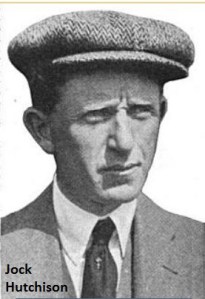
French was named to a 12-man team to oppose a team from Great Britain at Gleneagles Golf Club in Scotland in 1921. Hagen made French the captain of the team. The Americans were soundly defeated, but 2-1/2 of the 4-1/2 points the visitors garnered were won by French, who defeated Ted Ray in a singles match.

The 1922 PGA Championship was held at the Oakmont Country Club in August. The field was composed of 64 PGA members who had qualified in their PGA Sections. The first two rounds were 18-holes and the next four were 36 holes. French swept through the first five rounds winning each match by four holes or more. In the final he met Gene Sarazen, a 20-year old professional who had just won the US Open in July. The match was all square on the 27th tee, but Sarazen proceeded to win the next three holes. The match ended on the 33rd hole with Sarazen the victor by 4 & 3. First prize was $500 and a diamond studded medal. French picked up $300 and a gold medal.

 Later that year he won the Ohio Open at the Donald Ross designed Youngstown Country Club, with an 18 under par score of 274.  It was considered a world record.

French’s golf career would include a second place finish in a Western Open, along with winning a Philadelphia Open and a Pennsylvania Open. He played on another US PGA team in 1926 against the British at Wentworth, England, which was sponsored by Sam Ryder. One year later the first Ryder Cup Match was held.

Arthritis put an early end to French’s career as a tournament player.

Whitemarsh Valley CC hosted a substitute for the 1917 US Open, for charity only!

“DID YOU KNOW”
Whitemarsh Valley CC hosted a substitute for the 1917 US Open, for charity only!

In the early 1900s the USGA would ask the golf professionals where the US Open should be held. The professionals chose Whitemarsh Valley CC for 1917.

In January 1917 at the USGA’s annual meeting in New York, Philadelphia’s Howard W. Perrin was elected president. Perrin was a member at Philadelphia Cricket Club, St. Davids GC, Merion Cricket Club and president of Pine Valley GC. With the US Amateur slated for Oakmont CC and the Women’s Amateur for Shawnee CC, the delegates decided that holding all three of their 1917 championships in the same state would not be proper. With that the US Open was moved to Massachusetts’ Brae Burn CC, which had been the second choice of the professionals. 

In late January 1917 Germany announced a submarine offensive against any ships bringing supplies to its enemies. With that President Woodrow Wilson called for a vote of Congress for war with Germany, which passed decidedly in both houses. On April 6 Wilson declared war on the German government, not the people of Germany. In April the USGA canceled its championships for the year.

On May 21, Perrin announced that a tournament called National Patriotic Open, a substitute for the US Open, would be played at Whitemarsh Valley in June. The tournament would benefit the Red Cross. The New England golfers were not pleased with the shift to Philadelphia, but saying as much would have seemed unpatriotic.

There would be no prize money for the professionals or silver for the amateurs. The entry fee was $5. For the first time in Philadelphia, spectators were charged an admission fee. With no prize money it was thought that the professionals might not enter, but nearly all did.

The 72-hole 3-day tournament began on Wednesday June 20, with 100 players teeing off on what was described in the newspapers as strong winds blowing across the course. Walter Hagen telephoned to say he would be there on Thursday and catch up by playing 36 holes. Former Shawnee professional Alex Cunningham led by two strokes with a two over par 74. Only 16 players broke 80. Jim Barnes, holder of the 1916 PGA Championship title and professional at Whitemarsh Valley, posted an 84. After the score was posted Barnes realized that his scorer had made a mistake and he had actually shot an 83. When the USGA ruled that the score Barnes had signed for had to stand, the professionals made a protest. They said that if Barnes had to be held to the rules, then Hagen should also and not be allowed to arrive late. Hagen did not play. The officials were surprised how serious the professionals were; considering there was no prize money. 

Thursday the wind died down and Pittsburgh’s Allegheny CC professional, Jock Hutchison, took the lead at 149. In Friday’s 36-hole finish, Hutchison put together rounds of 71 and 72. His 292 total won by 7 strokes. Boston’s Tom McNamara, who was national sales manager for Wanamaker’s golf division, finished second at 299.

At that time in a US Open, the top ten professionals would have received checks, so the top ten were presented with framed certificates commemorating the tournament and their showing. In those days the winner of major tournaments would receive a gold medal. The Red Cross came through with a gold medal, which had a red cross in the middle, for Hutchison. Also the USGA presented him with a medal similar to what a winner of the US Open would receive. With the player’s entry fees and the admission monies, $5,000 was raised for the Red Cross.

Perrin was only president of the USGA that one year. When the US Open resumed in 1919 after WWI, it was played at Brae Burn and the winner was Hagen.
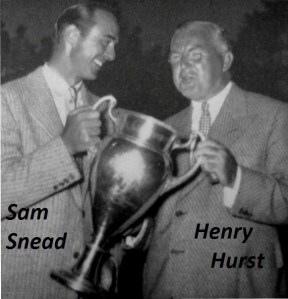
With a unique plan, Torresdale-Frankford CC held a PGA Tour tournament!

“DID YOU KNOW”
With a unique plan, Torresdale-Frankford CC held a PGA Tour tournament!

One year a young boy received a bow and arrow for Christmas. He tried out his archery skills by setting some arrows on fire and launched them into Torresdale-Frankford CC’s golf course maintenance building. The building caught on fire. With that the club realized it needed a fence around the property to tighten its security.

TFCC member Henry Hurst, a linen merchant and member of Augusta National GC, was attending the 1940 Masters where he purchased Jimmy Demaret in a Calcutta Pool. When Demaret won Hurst picked up $5,000, some of which he shared with Demaret. Demaret told Hurst that if he ever ran a tournament in Philadelphia he would play and recruit some of the touring professionals as well. 

Hurst approached the TFCC Board, of which he was a member, with a proposal. If they would let him hold a PGA Tour tournament at their Club, he would make enough profit to build the fence. The Board agreed and a date for September 1941 was secured with the PGA.  

In April 1941 Hurst began promoting his tournament to the press. The Henry A. Hurst Invitation would have a field of 50 professionals and amateurs along with ten professionals from the Philadelphia PGA. Hurst announced that Ben Hogan, Byron Nelson and Sam Snead along with Demaret had already accepted invitations. Prize money would be $5,000, with another $2,500 for special feats during the practice rounds.

By August 20, 13,000 season tickets which included the practice rounds had been sold. A ticket for the full week cost $2.50. Daily tickets were $1.10. Hurst wanted the tickets to be affordable for everyone.

When tournament week arrived in the third week of September 1941, Hurst and TFCC were ready. Three grandstands had been erected on the course, with one near the 18th green seating 2,500.  There were large scoreboards at various locations. Scoreboard operators were connected by 6,000 feet of cable to tees 4, 9, 13, 16 and 18 for updates.

Pre tournament days included more than practice rounds for the contestants. There were exhibitions on Tuesday, Wednesday and Thursday. As a favor to Hurst, Bobby Jones played on Tuesday and Wednesday. Hogan played on Tuesday and Bud Ward, 1941 US Amateur champion, played on Wednesday. Bob Hope was the draw for Thursday. 

There was prize money for the low practice round scores each day. Hogan won a driving contest, held on the 10th hole, with a drive of 287 yards, and picked up $75. On Wednesday evening 12 touring professionals showed off their golf shots across the street at Holmesburg CC under floodlights, which was free of charge to the public.  

On Friday 73 professionals and amateurs teed off in the first round. Sam Snead took the lead with a course record 64 for the 6,397 yard course. Despite a second round 74 Snead was still in the lead, but tied. On Sunday morning Snead posted a 69 to lead by 5 and then an afternoon 65 ended all doubt. His 272 total won by nine strokes. Dick Metz (281) was second and Demaret (282) was third. First prize was $1,500, as 12 professionals shared the $5,000.
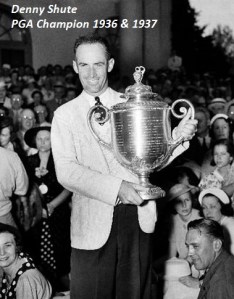
At the closing ceremonies Hurst announced that the prize money would be $12,300 in 1942, but by December the USA was at war. The Club had the money to build its fence, but due to war the needed steel was not available for several years. The tournament was not held again.

There was threat of a players strike at the 1939 PGA Championship!

“DID YOU KNOW”
There was threat of a players strike at the 1939 PGA Championship!

In the second week of July the 1939 PGA Championship was played at the Pomonok Country Club, which was in the Queens borough of New York on Long Island. The tournament was at Pomonok because it was just two miles from where the World’s Fair was being held that summer.

Two weeks before the championship former Llanerch Country Club professional Denny Shute, was informed by the PGA that he was not eligible for the tournament because he had been late paying his $25 dues. The deadline was May 20 and Shute’s check had arrived two days late. When news about Shute became known, some of his fellow tournament professionals began voicing threats not to play. Shute, who had won the PGA Championship in 1936 and 1937, appealed the ruling.

When the professionals arrived at Pomonok for the tournament, Shute was informed that his appeal had been denied. The PGA officers and District Vice Presidents, which made up an 11-man executive committee, had voted 6 to 5 against Shute playing in the tournament. As a Ryder Cup Team member and former PGA champion, he had been exempt from local qualifying.

When the other professionals entered in the tournament heard the results of the vote, 51 prominent tournament players signed a petition stating that they would not play unless Shute’s entry was accepted. A Pomonok member, Corky O’Keefe, who had put up $15,000 to sponsor the tournament, threatened a lawsuit against the PGA and Pomonok, stating there would not be a tournament unless Shute was playing.  More meetings of the PGA executive committee were held. Philadelphia CC professional Ed Dudley, who was the PGA Tour tournament chairman and a national vice president, was in favor of Shute playing. 

36-hole qualifying began with the issue unresolved. There were 120 competing for the 64-man match play ladder. Shute teed off in a pairing with Walter Hagen. He was not issued a score card. When Hagen learned that, he sent someone back to the clubhouse for a scorecard.

During the second day of qualifying, Tom Walsh secretary of the PGA, approached Shute after nine holes and offered him a check for $300 to withdraw. He said Shute could consider it an exhibition fee. Shute refused the offer and went on to post a 143 and qualify comfortably.

The committee had voted again and this time the vote was 8 to 3 against Shute. George Jacobus, president of the PGA, and Walsh emerged from the clubhouse. Walsh announced that Shute was out of the tournament, but Jacobus said that he was president and was overruling the committee. Shute was in.

Match play began with Shute losing in the third round. The final was a neighborhood battle. Hershey Country Club professional Henry Picard defeated Reading Country Club professional Byron Nelson in 37 holes. The purse was $10,600 with a first prize of $1,100. The players were reimbursed for their travel expenses which used up the remainder of O’Keefe’s $15,000.

The final 4 spots on the 1931 Ryder Cup Team were decided by a 72-hole playoff!

“DID YOU KNOW”
The final 4 spots on the 1931 Ryder Cup Team were decided by a 72-hole playoff!

The PGA of America held its annual meeting in Chicago in November 1930. One topic of discussion was the Ryder Cup eligibility. Tommy Armour, who had been born in Scotland and was now a resident of the United States, had won the PGA Championship that year. There were PGA members who thought that Armour should be on the US Ryder Cup Team. After much discussion the delegates passed a by-law stating that all members of the Ryder Cup Team had to be born in the United States, which meant no Armour. Up to that time it was only an unwritten rule that the Team members had to be native born.

PGA President Charles B. Hall announced the PGA of America’s selections for the 1931 Ryder Cup Team, which was being held at Scioto Country Club in Columbus, Ohio. Walter Hagen was the playing captain for a third time. Five other professionals; Gene Sarazen, Johnny Farrell, Horton Smith, Al Espinosa and Leo Diegel who would be the professional at Philmont CC three years later, were on the team. Having lost the Cup in 1929 Hagen was determined to take it back. At the 1929 Ryder Cup, British captain John Henry Taylor had his team out running on the beach at sunup each day. Hagen named 13 professionals that he was inviting to Scioto for qualifying, to determine the last five places on the team.

On Monday June 22, the contingency of professionals trying to qualify for the last four Ryder Cup spots were at Scioto. One of those professionals was Pennsylvania’s Ed Dudley, the professional at the Concord Country Club. Dudley, the winner of the Los Angeles Open in January, had won the Western Open on Sunday in Dayton beating runner-up Walter Hagen, by four strokes. Now on Monday, he had to battle it out for a berth on the Ryder Cup Team.

On Monday and Tuesday, the hopeful professionals played 36 holes each day. At the conclusion Billy Burke led with a one over par 289. (Bobby Jones had won the 1926 US Open at Scioto with a 293) Wiffy Cox (294) was next and Craig Wood (299) picked up the third place. Denny Shute, who would be the professional at Llanerch Country Club two years later, tied Frank Walsh and Henry Cuici for the fourth and last spot with 302 totals. On Wednesday they played an 18-hole playoff which Shute won with a 72. Dudley, who had been on the team the previous year, missed the playoff by one stroke with a 303 total.

On Thursday the Ryder Cup began. The matches, which were all scheduled for 36 holes, began with 4 foursomes the first day and 8 singles the second day. With 90 holes under his belt in three days, Shute was in Thursday’s starting lineup along with two of the other qualifiers, Burke and Cox. Hagen paired himself with Shute. They won their foursomes match 10 & 9. The next day Shute won his singles match 8 & 6. With temperatures topping out in the mid 90s each day the Brits were out of their element. The US Team won by 9 points to 3.

The US Open was one week later in Toledo at the Inverness Club.

The 1959 Ryder Cup was awarded to Atlantic City CC, but it was moved to California!

“DID YOU KNOW”
The 1959 Ryder Cup was awarded to Atlantic City CC, but it was moved to California!

The Ryder Cup, which was first contested in 1927, was interrupted by World War II, and postponed twice. The 2001 Ryder Cup was postponed to 2002 due to the 9/11 attack and now in 2020, due to COVID-19, it has been rescheduled for 2021.

With war in Europe and then World War II there were no matches from 1939 to 1946. That could have been the last of the Ryder Cup if not for Robert A. Hudson, a fruit grower and canner from Portland, Oregon. Hudson had been sponsoring the PGA Tour Portland Open and had spent $25,000 as the sponsor of the 1946 PGA Championship at the Portland Golf Club. He decided to revive the Ryder Cup. His club would be the host and he would provide whatever finances were needed for a 1947 match.  

Hudson paid the travel expenses for the British Team on the Queen Mary. He met them in New York upon their arrival. They were wined and dined at the Waldorf Astoria, before boarding a train with Hudson to travel on the three-day cross-country trip to Portland. Hudson paid for the British Team’s housing, meals and everything else. To help the British professionals make up for lost income while away from home, the PGA of America arranged paid exhibitions. The American Team swept the foursomes and lost only one of the eight singles, posting an 11-1 victory. Hudson spent $70,000 of his own money hosting that Ryder Cup. He is often referred to as the “The Savior of Ryder Cup”.

In 1949 the US Team was at the Ganton Golf Club in England for the Ryder Cup with its non-playing captain Ben Hogan, who was recovering from his near fatal auto accident.  Hudson wanted to be sure the US Team was properly fed. He shipped a half ton of meat to England with the Team; 600 steaks, 6 hams, 12 sides of beef and 4 boxes of bacon. The British newspapers ran articles about their food being not good enough for the Americans. Hogan said he read more about food in the sports pages than golf. In the end, the US Team shared their food with the British Team.

With the 1951 Ryder Cup back in the states, Hudson was a co-sponsor of the match, which was held at Pinehurst. Four years later he sponsored the Ryder Cup at the Thunderbird Golf & Country Club in Palm Springs, California, where he had a winter home. Just as before, Hudson paid the expenses; travel, lodging and meals, for the British Team.

In May of 1957 the Philadelphia Inquirer reported that the officials of the Atlantic City Country Club had been practically assured that the 1959 Ryder Cup would be played at their club. In November, at the PGA’s national meeting it was announced that Atlantic City CC would be hosting the Ryder Cup in 1959. The club and its pro-owner Leo Fraser would be sponsoring the match. In December, an article in the Inquirer mentioned that new championship tees were being built at Atlantic City CC for the Ryder Cup, adding 400 yards to the course. As late as August of 1958, news articles were still mentioning the upcoming Ryder Cup at Atlantic City.
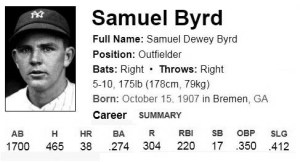
Later in 1958 Robert Hudson decided that he would like to host the Ryder Cup at another one of his Palm Springs clubs, the newly opened Eldorado Country Club. For all that Hudson had done for the PGA, its officials decided to grant his wish. Hudson was also a member of the PGA’s advisory committee. Leo Fraser agreed to release the PGA from its commitment. Again Hudson paid all expenses for the British Team, including travel from England.

As a favor to Fraser, the British Team would practice at Atlantic City CC before heading to California. The British Team had also practiced at ACC in 1955. They practiced for two days and then participated in a pro-am that was held in a driving rainstorm. Everyone played the 18 holes and then were treated to a five-course dinner. From there the British Team traveled to the White House to visit President Eisenhower, who would later become an honorary member at Eldorado.  From Washington it was on to Augusta National and California. Having lost the Cup in 1957, the US Team won by a margin of 8-1/2 to 3-1/2 points.  

A Philadelphia PGA pro was the only person to play in a World Series and a Masters!

“DID YOU KNOW”
A Philadelphia PGA pro was the only person to play in a World Series and a Masters!

Samuel Dewey “Sam” Byrd was born October 15, 1907 in Bremen, GA and grew up in Birmingham, AL. As a young boy he learned to play golf as a caddy. In high school he was a star on the basketball and baseball teams.

In 1926, at age 18, he began a professional baseball career in Class D. He batted .348 and was promoted to Class B Knoxville, where he hit .331 in 1927. The New York Yankees purchased his contract and sent him to Albany, NY, which was in the Class A Eastern League. At Albany he batted .371 and was invited to the Yankees spring training in 1929, where he made the team.

At that time the Yankees had three great outfielders; Babe Ruth, Bob Meusel and Earle Combs. Byrd was relegated to pinch hitting, pinch running and playing in the late innings as a defensive replacement along with filling in for Ruth when he was not feeling well from too much beer or too many hot dogs. Byrd was a great defensive outfielder, with a rifle arm and legs to match.

In late 1934 the Yankees released the aging Ruth. They were bringing Joe DiMaggio up from the Pacific Coast League. After six seasons with the Yankees, Byrd was no longer needed. He was sold to the Cincinnati Reds, where he played two years before being traded to the St. Louis Cardinals. That is when he decided to leave baseball and concentrate on golf. His batting average for his eight major league seasons was .274. Baseball historians later wrote that Byrd’s baseball career was wasted sitting on the Yankees bench during his prime years.

Byrd had turned pro in 1933, playing in a few professional tournaments during the winter months, but now he was all in. Philadelphia Country Club professional Ed Dudley hired Byrd as an assistant. In 1939 he won the Philadelphia Open. The next year he moved over to Merion Golf Club as an assistant. During his four years at Merion, Byrd won the 1942 Pennsylvania Open and won twice on the PGA Tour; 1942 Greensboro Open and 1943 Chicago Victory Open.

In 1940 Byrd was invited to play in the Masters Tournament. At that time the tournament was strictly an invitational tournament. A player was there solely at the invitation of Bobby Jones. It may have helped that Dudley, his boss at Philadelphia CC, was also the professional at Augusta National GC as well. The next year Byrd finished third in the Masters, and a year later he finished fourth. In 1945 as the professional at the Plum Hollow CC in Detroit, Byrd was runner-up to Byron Nelson in the PGA Championship.

In spite of getting a late start in professional golf, and the cancellation of tournaments during World War II Byrd played in 5 Masters, 9 US Opens and 6 PGA Championships. During his career he won eleven professional tournaments of note.

Late in one of the 1932 World Series games Byrd played one inning. Today he is still the only person to play in both a World Series and a Masters Tournament.

82 holes were needed to determine a winner at the two-day 1936 Wildwood Open!

“DID YOU KNOW”
82 holes were needed to determine a winner at the two-day 1936 Wildwood Open!

In 1936 the PGA Tour was still finding its way and wasn’t organized like it is today. The third Masters Tournament, that was not yet called the Masters, had ended on Sunday April 5th. The tournament with a purse of $5,000 was still listed as the Augusta National Open on the PGA schedule.

After Augusta the professionals began working their way north. The next week they were in Richmond for the three-day, 72-hole, $3,000 Richmond Open. The tournament ended with 36 holes on Sunday, which Shawnee Country Club’s playing professional Jimmy Thomson won with a first prize of $700.

From there some of the professionals drove to Wildwood, NJ for the two-day 72-hole Wildwood Open which would begin the next day. Due to the tight schedule and a purse of only $1,500 the field wasn’t filled with big names. Many of the pros had returned to their club jobs after having been out on the tour for most of the winter. Sam Parks, the holder of the U.S. Open title, and international tournament player Joe Kirkwood, Sr. were in the field.

The Wildwood Golf & Country Club was starting the golf season off with a bang. A three-day amateur tournament had ended on Sunday, and the two-day Wildwood Open was beginning the next day. On Sunday evening the members opened pari-mutuel betting on the Open tournament and posted odds.

Missouri professional Leonard Dodson, who had tied for tenth at Richmond, arrived in time to see he was posted at 50 to 1. He promptly bet $100 on himself. Dodson may have been an unknown in Wildwood, but he had won the St. Petersburg Open in February that year and was in 20th place on the 1936 money list, leaving Richmond.

On Monday Ray Mangrum (brother of Lloyd) jumped out to a four-stroke lead with what Fred Byrod of the Philadelphia Inquirer called “a sparkling 71-72—143 over a wind-whipped course”. Philadelphia Country Club’s defending champion George Smith and Atlantic City’s Clarence Hackney were in second place.

Tuesday, opening day for major league baseball, was another cool windy day. The Phillies were hosting the Boston Bees at the Baker Bowl before 10,000 fans. Mangrum posted a 73 in his morning round to take a five stroke lead into the final round. In the afternoon he took 78 strokes, but still appeared to be the winner. He retired to the bar, while waiting for the rest of the field to complete their rounds. Later in the afternoon Dodson brought in a 72 to tie Mangrum at 294. First prize was $500 and second was $225. Woodcrest CC professional Bruce Coltart (296) finished third, and Smith (298) was fourth. Kirkwood (299) and Hackney (299) tied for fifth.  

The two pros were all set to call it a tie, split the top two prizes and move on out of town, but the tournament chairman, Gus Heil, stated that there had to be a tournament champion and no unsettled tie. Heil suggested a nine-hole playoff. Mangrum protested saying “I can’t go out now I’ve had a few drinks to warm me up.” “How many did you have” asked Dodson who was said to not drink. “About four” said Ray. “Set up four for me,” said Dodson. He tossed them down one after another. “Now we’re even” Dodson said. “Let’s go.”

Out they went into a cold twilight wind. The golf was not of championship caliber and when Mangrum three-putted the ninth green Heil still didn’t have a winner. They had ended up tied again with 42 strokes apiece. They then agreed to a sudden-death playoff. On the tenth hole, Mangrum made a par four, and when Dodson missed a five-foot putt for his par Mangrum was the winner. Mangrum and Dodson completed 46 holes that day and it was only April 14th. The touring pros must have played much more quickly in the 1930s.

A little-known Philadelphia professional, helped stop Byron Nelson’s 1945 winning streak!

“Did You Know”
A little-known Philadelphia professional, helped stop Byron Nelson’s 1945 winning streak!

George Low, Jr. was born in 1912 next door to the Baltusrol Golf Club in New Jersey where his father George, Sr. was the golf professional. He began golf by putting on the Baltusrol greens when the golfers were not around. George Sr. was one of many pros who had emigrated from Scotland to the United States in the late 1800s. He tied for second in the 1899 U.S. Open and won the Met Open in 1906. He was one of the most respected golf professionals in the country.

In early 1928, feeling that he had made his fortune in America, George Low Sr. decided to leave Baltusrol. He moved back to his homeland of Scotland and settled in St. Andrews, where he planned to live on his American investments. That is when George Jr. was exposed to something that would support him for the rest of his life. For three years he putted for eight to twelve hours a day on the 36-hole putting course at St. Andrews. When the stock market crashed in 1929 George Sr. found that he needed to go back to work. He returned to the states in 1931 as the professional at the Huntingdon Valley Country Club, with young George in tow as his assistant.

George, Jr. became the head professional at Plymouth Country Club in 1936 and the next year he was the assistant at the Manufacturers Golf & CC, but those jobs were probably too much like work for him. He was good enough to be able to make a few dollars playing golf and for the next few years he assisted his father with a driving range in Jenkintown. He qualified for the 1931 PGA Championship and two US Opens.  After that he spent his down time in Clearwater, Florida while playing the PGA Tour off and on.

In August 1945 Byron Nelson arrived at the Memphis Open riding a streak of 11 straight PGA Tour victories. At Memphis his streak would finally end at the hands of two amateurs and a little-known professional, George Low, Jr. Fred Haas, Jr., who was still an amateur, was the winner at 18 under par 270. George, Jr. and amateur Bob Cochran tied for second at 275. Low picked up first money, which was either $2,666 in US War Bonds or $2,000 in cash. (If a player wanted a check, they received 25% less than the War Bond value.) Nelson and Jug McSpaden, who had been the professional at the Philadelphia Country Club for the past three years, tied for fourth at 276. Haas’ prize was a $100 War Bond, which was the acceptable USGA limit for amateurs.   

In late 1945 Ben Hogan and Sam Snead returned from the service and picked up right where they had left off, winning tournaments. It didn’t take long for George Jr. to figure out that there had to be an easier way to make a living than trying to beat the likes of Nelson, Hogan and Snead week in and week out. He knew more about putting than anyone else and could beat everyone on the practice putting green for money. Sometimes he would beat them putting with the side of his shoe. At Aronimink Golf Club in qualifying for the 1938 US Open he had put together a 141, which was low for the day, while putting right-handed with a left-handed putter.

Soon, instead of entering tournaments, George, Jr. was just hanging around the PGA Tour. He would give putting instructions to any golf professional or multimillionaire who would pay for his room, buy him dinner or loan him his car. He had a deal with Ramada that meant he had a free room in any town that had a Ramada Inn. His shoes were courtesy of Foot Joy. Later on he was on retainer with Arnold Palmer, Jack Nicklaus, Lee Trevino and Frank Stranahan for assistance with their putting whenever it was needed. He designed a line of putters with his name on them that sold very well. Some are selling on the internet today for more than $1,000. Nicklaus and Gary Player won on the PGA Tour with Low’s putters. With the help of golf writer Al Barkow he wrote a book titled “The Master of Putting.” George, Jr. had a way with putters before the technology of today. He could give a recalcitrant putter a little whack on his foot, or bend the shaft a bit on his knee, and improve the putter’s performance.

In a practice round before the 1962 PGA Championship at Aronimink, Nicklaus, on leaving the 11th tee, summoned George who had been resting next to a shade tree. George took Nicklaus’ putter and massaged the shaft on the tree, gave the shaft an eyeball inspection and handed it back to Nicklaus. In the mid 70’s he was quoted as saying that he was spending $50,000 a year of other people’s money.  He said that he didn’t want to be too specific about his income, since the best line of defense with the IRS was a little discretion.
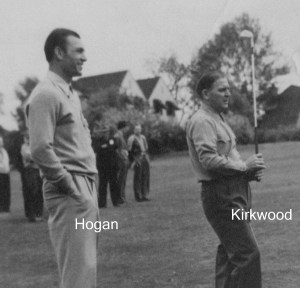
At the Masters he always drove up Magnolia Lane in someone else’s Cadillac with a clubhouse pass. You would see him sitting on the veranda under an umbrella sipping a drink with corporation presidents. Inevitably one of the top players would come and invite him to the putting green for a few tips. The PGA Tour and tournaments like the Masters haven’t been the same since he passed away in 1995. George Low, Jr. was called “America’s Guest” because he would never pick up a check and always found a way to avoid paying for anything. He should be in someone’s hall of fame.  

The world’s greatest trick shot artist was a great golfer!

“DID YOU KNOW”
The world’s greatest trick shot artist was a great golfer!

Joe Kirkwood was born in Australia in 1897. He grew up working on a sheep ranch where he learned to play golf on its rudimentary three-hole golf course. While tending the sheep he passed the time by experimenting with trick shots. At age 19 he turned pro.

During World War I he entertained the wounded veterans with golf shots and found that they were more interested in his trick shots. In 1920 he won the Australian Open, New Zealand Open and New Zealand PGA, all in that one year! At the New Zealand Open he broke the tournament record by 12 strokes.

A year later he left Australia to test his golf game on the world stage. In April he was playing his first tournament in the states at the North and South Open in Pinehurst where he was paired with Walter Hagen the first day. He played well enough to tie for ninth but had putting problems having never played on sand greens before. In 1922 he was back playing in the North and South Open where he finished second.

In 1923 he made the United States his permanent residence, settling in Glenside a suburb of Philadelphia and joined Cedarbrook CC. From 1923 to 1949 he was a dues paying member of the Philadelphia PGA. He played in PGA Tour tournaments and gave trick shot exhibitions. He traveled the world with Hagen and Gene Sarazen. He might have become one of the great players of all time, but money came easier through golf exhibitions.

During Kirkwood’s playing career he won 13 times on the PGA Tour, without being a regular participant.. He was also a semifinalist in the 1930 PGA Championship. He won five times in 1923. In 1933 he won the Canadian Open and the North and South Open, but what he did in 1924 may have been his greatest feat. In the month of February, Kirkwood won three straight PGA Tour tournaments in Texas: Texas Open, Corpus Christie Open and Houston Open. He won the Texas Open by seven strokes and Houston by five, but his margin of victory at Corpus Christie of 16 strokes is still the PGA Tour record, tied but not bettered. With cold north winds sweeping across the course both days, Kirkwood put together a total of 285. Bobby Cruickshank finished second at 301 and Johnny Farrell was third, two strokes further back.

With the Great Depression of the 1930s money for golf exhibitions dried up. So Kirkwood, in need of regular income, signed on as the professional at Huntingdon Valley Country Club. He stayed there from 1938 through the 1940s, when money for golf exhibitions began to flow again.

In 1941 the Philadelphia PGA held its second annual Golf Week. To promote golf, Section president Ed Dudley, Leo Diegel and other Section members played exhibitions and staged golf clinics at numerous locations. One of those exhibitions was held at the Langhorne Country Club on Saturday May 10. The host professional Al MacDonald and Jimmy Thomson, the longest driver in professional golf, took on Kirkwood and Ben Hogan, who was in his first year as the professional at the Hershey Country Club. Hogan, who was not known for watching others hit golf shots, can be seen in the photograph watching Kirkwood warm up.

The annual winner of the Australian PGA Championship receives the Kirkwood Cup.

More than 200 players teed off in the first round of the 1946 Orlando Open!

“DID YOU KNOW”
More than 200 players teed off in the first round of the 1946 Orlando Open!

World War II was over and the PGA Tour was back in full swing. Entries were pouring in for tournaments, especially during the winter months when northern golf courses were closed and the club professionals could get away. Due to the increase in entries, tournament management was becoming an issue. Some tournaments had limits to the entries; some held qualifying rounds and some just accepted whoever entered.

The PGA of America’s national meeting was held in Chicago in the middle of November. Ben Hogan, who was the professional at the Hershey Country Club, while playing a full schedule on the PGA Tour, made an unannounced appearance at the meeting. Hogan, the leader of an unofficial players group met with the PGA Executive Committee the day after the meeting ended. He presented a proposal for establishment of a seven-man player constituted board. The board would arrange schedules, control the PGA Tournament Bureau and punish absenteeism. A date was set to meet with Hogan’s committee later in the month at the Orlando Open. PGA President Ed Dudley, who had been a tour player, stated that Hogan’s committee and the PGA were both working toward the same objectives.
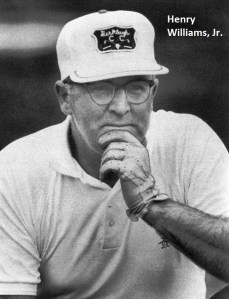
The Orlando Open was held in late November at the 6,454 yard Dubsdread Country Club. An edict had gone out from the PGA that future PGA Tour events would have no more than 100 players. There were 25 amateurs entered. Some thought had been given to a qualifying round for the amateurs, but it was decided to let them all into the starting field. The problem was that entries were accepted right up to the day of the tournament, so it was difficult to have qualifying rounds for the marginal players. 210 were in the starting field.

On Thanksgiving Day, Thursday November 28, the Orlando Open with Hogan as the defending champion began at 6:45. The low score for the day was 65, with Hogan shooting 75. Even with less daylight to operate with, everyone finished. The field was cut to 100 players for the second round, and 70 for the last 36 holes. Dallas professional Harry Todd won the tournament with a nine under par 275, while Hogan finished six strokes back at 281. First prize was $2,000.

At Orlando a seven-man player board was elected and met with the PGA officers on Saturday evening. After the meeting Hogan and PGA Tour tournament manager Fred Corcoran made a joint announcement. Among other items, Hogan mentioned standardization of appearance money for the top players, better promotion of the tournaments, and the restriction of tournament fields to 150 players. Hogan said that they hoped to have the policies in place by the Los Angeles Open in January. Hogan and Corcoran stated that there was no friction between the players and the PGA. The control measures were necessitated only due to the increased number of tournaments, and the expansion of the entry lists. Hogan said that they were only trying to help Corcoran have a smoother running operation.

That all lasted in some form until 1968 when the tournament players and the PGA split up and became two organizations.     

A Philadelphia PGA pro won the 1952 Tucson Open and wasn’t invited to the Masters!

“DID YOU KNOW”
A Philadelphia PGA pro won the 1952 Tucson Open and wasn’t invited to the Masters!

Henry Williams, Sr., the professional at the Lehigh Country Club, showed his son Henry Jr. how to grip a golf club and then told him to just go hit some golf balls. As a lifelong club professional in the Philadelphia PGA, Henry Jr. had an outstanding playing record.   

His first position as a head professional was at the nine-hole Phoenixville Country Club (1938 to 1941), where he was the pro and green superintendent. During the week he worked on the golf course and on the weekends he manned the golf shop. That program wasn’t conducive to becoming a great golfer.

With the United States suddenly at war in late 1941, Henry went to work in a defense plant. That is when he became a real golfer. Every day after work, for nearly three years, he would play until dark at the Spring-Ford Country Club, where his father was now the golf professional.

After the war he became a head professional again and began entering the local PGA tournaments. Each winter for ten years, right after Christmas, Henry would head for the west coast to join the winter tour with $1,500 in his pocket. He would follow the tournament trail, playing the Monday qualifiers and winning a check on some occasions. When the $1,500 was gone he would head home. He said he usually lost money, but the lessons were invaluable. In those days the players would spend their evenings sitting around hotel lobbies talking about the golf swing.

In 1949 Henry made it to the quarter-finals of the PGA Championship, and won the Philadelphia PGA Championship. By being a quarterfinalist in the PGA he earned an invite to the 1950 Masters Tournament. That year he went all the way to the final of the PGA, losing to Chandler Harper. With that he qualified for the Masters again.

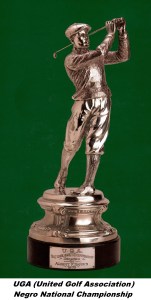
Out on the winter tour again in 1952, Henry won the Tucson Open in early February. That year he made a profit on the tour but there was no invitation to the Masters. Invited were former winners of the Masters, all winners of a US Open, US Amateur champions, Ryder Cup team, Walker Cup team, PGA winners and quarter-finalists, US Amateur quarter-finalists, top 24 in the 1951 Masters and top 24 in the 1951 US Open. 104 invitations went out, but winning a PGA Tour event did not earn an invite. 76 entered.

Along with the two trips to the Masters, Henry played in 12 PGA Championships and 7 US Opens. He won the Philadelphia Section Championship three times along with the Pennsylvania and Philadelphia Opens twice each. In 1962 at the age of 45, he won the Jamaica Open on the Caribbean Tour.

On the other hand, three pros from the Philadelphia Section had invitations to the Masters and did not play. In 1937 Zell Eaton, an assistant at Saucon Valley Country Club, had an invitation and did not play. He was at Saucon Valley only that one year. In 1940, Leo Diegel, a two-time winner of the PGA Championship in the 1920s and his assistant at Philmont Country Club were both invited to play but did not enter. Diegel hadn’t played for several years. Eaton and Kowal had invites off their finishes in US Opens.  

Even though Henry did not receive an invitation in 1952, he attended nearly every Masters until he was well into his 80s on his complimentary ticket through his PGA membership. In the late 1990s three of us professionals had the privilege of attending several Masters with him. On the way to Augusta he would tell us “You won’t hear anyone yelling ‘You da man’ or ‘In the hole’ at this tournament.

We would begin each day at the practice area watching the players warm up. Then he would take us to the best locations on the course to see the golf shots. Late in the day we would be back watching the players practice. Every year during Wednesday’s practice round when Arnold Palmer was playing the eighth hole, Henry would be on the right side next to the gallery rope about fifty yards up the fairway. Somehow Palmer would always find him and they would have a short visit. 

Along with a great golf swing, one thing that made Henry successful was his conviction that he was right. He was very sure of himself. He said he never played well at the Masters, because by the time it was played, he had been back in Pennsylvania stuck in cold rainy weather for awhile and had lost his tournament edge. With the $2,000 he won at Tucson in 1952 he was able to play the winter tour until it was time to report for work at Berkleigh CC. If invited he might have fared better that year.  

Every year at the Masters, Henry would be talking about not being invited in 1952 and say, “They owe me one.” 


Charlie Sifford was not the best black golfer at Philadelphia’s Cobbs Creek Golf Club!

“DID YOU KNOW”
Charlie Sifford was not the best black golfer at Philadelphia’s Cobbs Creek Golf Club!

Charlie Sifford was born in Charlotte, NC in 1922 and learned to play golf as a caddy there. At age 17 he had an altercation with a white man. For his safe keeping, his father sent him to Philadelphia to live with an uncle. He got a job with Nabisco, working in the shipping department. One day he saw a black man with a set of golf clubs waiting for a street car and asked where he was headed. The man told him about Cobbs Creek Golf Club. Charlie started spending his weekends at Cobbs Creek. After a few weeks of practice he felt the swing that had made him one of the best golfers in Charlotte returning.

Won Negro National Championship 6 Times

Someone had told Charlie that the best golfer at Cobbs Creek was a black man named Howard Wheeler. When Charlie saw Wheeler on the practice tee, he challenged him to a game. He did not think a man with such a strange golf grip could beat him. Wheeler asked Sifford how much money he had. When Charlie replied $10, Wheeler said let’s go, we’ll play for $10 on the front nine and $10 on the back nine. With several holes left to play, Charlie’s $20 was in Wheeler’s pocket.

Howard Wheeler was born in Atlanta, Georgia in 1911 and learned to play golf as a caddy. Six feet-two-inches tall and one of the longest drivers in professional golf, he played cross-handed (left hand below the right). After serving in the US Army during World War II, Wheeler was discharged from Fort Eustis, Virginia as a Corporal in the summer of 1946 and moved to Philadelphia, where he could play golf at Cobbs Creek any day he wanted to. At Cobbs Creek there was a steady supply of money games.

At that time the PGA Tour was not open to black golfers, so they created their own tour, the United Golf Association (UGA). They held a series of tournaments on public courses. Each year there was a championship called the Negro National Championship. From 1933 to 1958 Wheeler won the championship six times. He qualified for the 1950 and 1951 US Opens.

Charlie practiced and played more rounds with Wheeler. He observed how Wheeler played the course and certain shots. Then he began to beat Wheeler on occasion. Wheeler began taking Charlie as a partner. Both lost valuable time serving in the US Army during WWII. When the war ended the UGA was back with a schedule. Wheeler took Charlie to the 1946 Negro National Open in Pittsburgh. Wheeler told Charlie that major tournament golf was different from playing money games at Cobbs Creek, but Sifford just thought Wheeler was messing with his mind. When he got there he could see what Wheeler was talking about. There were more than 200 entries, with an amateur division and ladies tournament along with the professional 72-hole tournament. In order to handle the number of entries the amateur events started a day before the professionals began. Celebrities like Joe Lewis and Billy Eckstein were entered. Wheeler won the tournament and Charlie did not fare well.

The next year the Negro National Open was at Cobbs Creek. Wheeler won again and Charlie finished second. From 1952 to 1956 Charlie won the tournament five straight times. He would win it one more time. The best day of golf in Charlie Sifford’s life was the day he met Howard Wheeler.

In 1961 the PGA removed the “Caucasian Only” clause from its constitution at the annual meeting and black golfers like Charlie Sifford got a chance to play in more PGA Tour events. Some tournament sponsors in southern states turned their tournaments into invitationals and only invited white professionals. The PGA should have taken a stand against this, but didn’t for fear of losing sponsors.

One day in the 1970s a man named Chet Harrington, who played golf, was in a trophy store in Philadelphia. He saw a dusty golf trophy on a shelf high up behind the counter. The clerk took it down from the shelf for him, saying that he was not sure what it was for. Having heard of Howard Wheeler, one of the names on the trophy, he bought it, cleaned it up and stored it in a bank vault for 35 years.

The trophy for the winner of the Negro National Championship was donated in 1935 by a black lawyer from Washington DC named Albert F. Harris. It must have been left at the trophy store for engraving and then forgotten. The trophy is now on display at the United States Golf Association.


The Philadelphia PGA professionals taught the world’s greatest blind golfer how to play!

“DID YOU KNOW”
The Philadelphia PGA professionals taught the world’s greatest blind golfer how to play!

At the Philadelphia PGA’s 1943 spring meeting, Section President Marty Lyons gave the tournament chairman Leo Diegel full authority to use the Section’s tournament program in any way to assist the World War II effort. Before the meeting was over Diegel had come up with a plan.

Diegel’s plan was for the Philadelphia PGA, Golf Association of Philadelphia and Women’s Golf Association of Philadelphia to hold an exhibition. Woody Platt, Glenna Vare and Diegel would each put together a team of twelve partners to play an exhibition with a male amateur, lady amateur and golf professional in each pairing.

To host the event a club had to pay $500, with all proceeds going to the Philadelphia PGA’s wartime charity fund. Bala Golf Club agreed to be the host. The admission fee for the spectators was $1 or a steel shafted golf club for the country’s scrap iron drive. The exhibition was played on the third Sunday of July. The amateurs received two handicap strokes and the ladies seven strokes. Some of the 36 team members were two-time PGA champion Leo Diegel, six-time US Women’s Amateur champion Glenna Vare, George Fazio, Jug McSpaden, Sam Byrd, Billy Hyndman, Dot Germain and Helen Sigel. All 36 players agreed to donate blood to the Red Cross on a specified date.

Two thousand spectators turned out that day, with the proceeds coming to $3,000. The plan had been to purchase an ambulance for the Red Cross, but the Red Cross officials suggested that the golf professionals visit the Valley Forge General Hospital near Phoenixville where the wounded service men were being sent for rehabilitation. Lyons and Diegel visited the hospital and decided to build a golf course for the hospital’s patients. More exhibitions and pro-ams were played to raise money and with the assistance of the Philadelphia Golf Course Superintendents, a nine-hole golf course consisting of holes from 95 yards to 275 was constructed. Every golf professional in the Philadelphia PGA gave his time, equipment or money to the project and many donated all three.
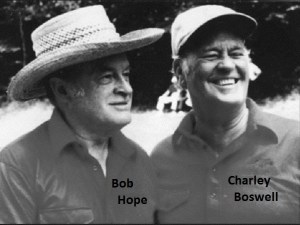
Charley Boswell, who had been a football player at the University of Alabama, was pitching for the Atlanta Crackers in Double AA when Japan bombed Pearl Harbor. Now, the United States was in World War II. Boswell was drafted into the U.S. Army and sent to Officer Candidate School in Fort Benning, Georgia. After graduation from Fort Benning, Boswell was fighting the war in Germany when a Sherman Tank caught on fire. While trying help his men out of the burning tank it exploded, blinding Boswell permanently. He was sent to VFGH, which specialized in eye injuries. The golf professionals introduced Boswell to golf, which he had never played before. 

In 1946 Boswell finished second in the National Blind Golf Championship and the next year he won the tournament. He went on to win the U.S. championship 16 times and the international title 11 times. He played golf with celebrities like Bob Hope.
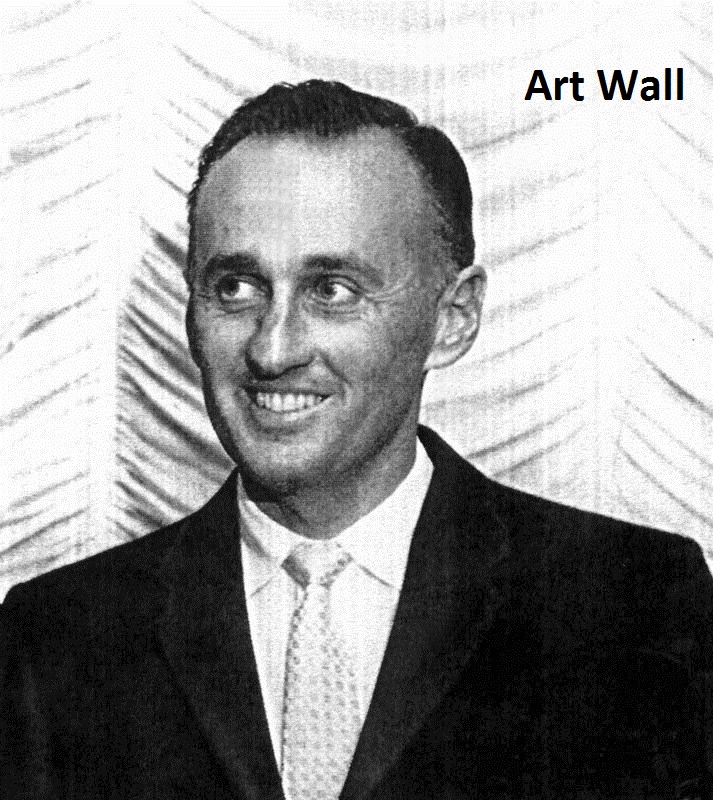
Back in his hometown of Birmingham, Alabama, he managed the Boswell Insurance Agency for more than 40 years and served as the Revenue Commissioner for the state of Alabama for nine years. Thanks to the Philadelphia PGA, Charley Boswell had a full and successful life.

Art Wall won the 1959 Crosby Pro-Am, while making only one par on the last nine!

“DID YOU KNOW”
Art Wall won the 1959 Crosby Pro-Am, while making only one par on the last nine!

Watching the more recent AT&T Pro-Ams at Pebble Beach is a reminder of how difficult some golf courses were before technology took over the game of golf. A great example is the last eleven holes at the Pebble Beach Golf Links.  

The tournament, a brainchild of entertainer Bing Crosby, began in southern California in 1937. After World War II the tournament moved north to the Monterey Peninsular. It was played for 50 years as the Bing Crosby National Pro-Am, sometimes referred to as the “Crosby Clambake”. The tournament was held over three courses with 150 pros paired with 150 amateurs playing better-ball stroke play. Also the professionals were competing on an individual basis in a stroke play event, which offered the largest portion of the purse.

In January of 1959 Honesdale, Pennsylvania’s Art Wall arrived at Pebble Beach for the Crosby Pro-Am at the height of his career. Wall had won two times on the PGA Tour in 1958 and just two weeks before the Crosby he had led the L.A. Open going into the last round only to be done in by a 63 from Ken Venturi, which left him in second place. Wall opened the tournament with a 69 at Cypress Point and followed it up with a 65 at Monterey and a 70 at Pebble Beach. His 204 total carried him into the final round with a four-stroke lead over Jimmy Demaret.

On Sunday Wall began his round with birdies on the first three holes and he completed the front nine in 34 strokes. He was now seven strokes in front of Demaret and eight ahead of Gene Littler. A birdie on the 10th hole put Wall nine in front. On the next seven holes Wall carded one birdie, one par, four bogeys and one double bogey. Standing on the 18th tee Wall held a one-stroke lead over Littler, who was paired with him. Wall and Littler both reached the 18th fairway safely with their drives but Littler proceeded to hook his #4 wood second shot over the seawall and into Stillwater Cove. Wall completed the hole with a bogey six for a 75, giving him a 72-hole total of 279 and a two-stroke victory over Littler and Demaret.

The tournament was televised from 6 pm to 7 pm Eastern Standard Time, but the TV viewers didn’t see the final putts as the allotted time ran out and the network moved on to the next show. First prize from the $50,000 purse was $4,000 and Wall also won the pro-am in partnership with the national amateur champion, Charley Coe, for another $2,000.

That year Wall went on to win two more tournaments and the Masters. At the Masters he birdied five of the last six holes on Sunday to win by one stroke over Cary Middlecoff. Wall finished with a 66 and only one other player broke 71 that day. That finish, one of the greatest in Masters history, seems to be nearly forgotten. In 1959 Wall was the PGA “Player of the Year”, won the Vardon Trophy for the lowest scoring average, led the PGA Tour in money winnings and earned a spot on the Ryder Cup team.

A Philadelphia golf pro called in the 1987 Craig Stadler rules infraction at San Diego!

“DID YOU KNOW”
A Philadelphia golf pro called in the 1987 Craig Stadler rules infraction at San Diego!

The PGA Tour is in the midst of its wrap around season. With the world’s greatest golfers competing, memorable things occur, and sometimes they involve the rules of golf.

One of those took place during the 1987 Andy Williams San Diego Open at the Torrey Pines South Course. Craig Stadler and George Burns were tied for the lead after 36 holes with 13 under par 131s, and thus were paired together in the third round. Playing the 14th hole, Stadler’s tee shot came to rest under the low hanging limbs of a tree. To play the next shot Stadler had to get on his knees. With the ground wet from overnight rain, Stadler placed a towel on the ground to keep his pants dry.

One day later, Stadler made a birdie on the 72nd hole for a 270 total to finish in a tie for second place, four strokes out of first. Burns was the winner with a tournament record 266. Upon walking off the last green, Stadler was informed by a PGA Tour rules official that he had broken a rule during Saturday’s round.

Stadler was told that he had violated USGA rule 13-3. The rule covered building a stance, which took place when he used the towel to protect his pants. Someone had telephoned the PGA Tour office while Stadler was playing the 17th hole on Sunday, stating that a golf rule had been broken. After checking a TV replay, the PGA Tour had to disqualify Stadler. Because of a penalty of two strokes not being assessed on Saturday, he had signed for an incorrect score, which was lower than his actual score. The disqualification cost Stadler $37,333.33.

Robert “Skee” Riegel

The interesting part of this is that Skee had turned on his TV late Sunday afternoon and saw Stadler playing a shot while kneeling on a towel. Not realizing that he was looking at a replay from Saturday, he grabbed his telephone and called the PGA Tour. Thinking that what he saw had happened in the fourth round, he wanted to make sure that Stadler was penalized before he signed for a wrong score, which would have been two strokes lower than his score with the penalty. Skee was only trying to save Stadler from being disqualified.

Skee said, that if he had known what he was seeing had taken place the day before, he never would have made the telephone call. If the tournament officials had not been notified until after Stadler and all the other players had completed the last round, the results would have been final, with no penalty.

Al Besselink won the Tournament of Champions and donated half to charity!

“DID YOU KNOW”
Al Besselink won the Tournament of Champions and donated half to charity!

Merchantville, New Jersey’s Al Besselink turned pro in 1949. In late July of 1952 he picked up his first victory on the PGA Tour with a final round 64 at the Sioux City Open in Iowa.

A new event was created for 1953 PGA Tour, the Tournament of Champions. To play in that tournament one had to have won on the PGA Tour during the past calendar year. As the tournament was being played in late April, Besselink’s win at Sioux City made him eligible.

The tournament was held in Las Vegas at the Desert Inn Country Club. Before the tournament began Besselink bet $500 on himself to win at 25 to 1 odds, with a Las Vegas bookie. The tournament itself had a large purse of $35,000. The largest purse at any of the major golf championships that year was $26,000 at the Masters.

With rounds of 72, 68 and 68, Besselink led by one stroke entering the final round. On Sunday he made birdies on the 16th and 17th holes to regain that one stroke edge. On the last green, with 5,000 spectators looking on, he holed a six-foot putt for a par to win by one. First prize was $10,000 and he picked up another $12,500 from the $500 he had bet on himself. The $10,000 was delivered to him in a wheelbarrow filled with 10,000 silver dollars.

One year earlier, Babe Zaharias had asked Besselink to be her partner in the 1952 International Mixed Two Ball Open in Orlando, which they had won. Having recently heard that Zaharias had been diagnosed with cancer, Besselink donated half his first prize, $5,000, to the Damon Runyan Cancer Fund.
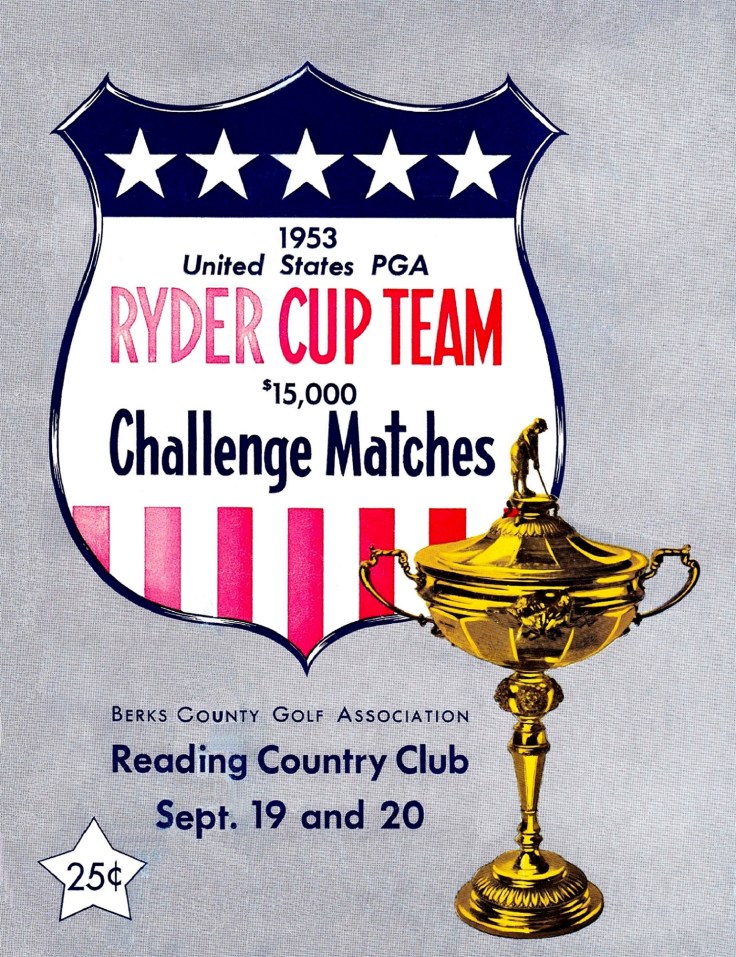
Being the gambler that he was, it was said that Besselink left Las Vegas that week with about the same amount of money he had arrived with.

The Berks County PA golfers provided financial assistance for the 1953 US Ryder Cup Team!

“DID YOU KNOW”
The Berks County PA golfers provided financial assistance for the 1953 US Ryder Cup Team!

Beginning with the first Ryder Cup match between the PGA of America and the British PGA, the matches always operated at a financial deficit. Over the years the Ryder Cup only existed with the financial assistance of those two organizations. Not only would they lose money on the Ryder Cup, the team members were impacted financially. There was no prize money and due to travel being by ocean voyage until the 1950s, the visiting team members would be away from home for a couple of weeks. As most of those professionals were head professionals at golf facilities, being away meant loss of income from golf lessons, tournament play or exhibitions. Only a few professionals, like Walter Hagen or Gene Sarazen, were able to make a living by just playing golf.

The Ryder Cup was played every other year from 1927 to 1937, only to be put on hold due to the war in Europe in 1939. The 1939 match was to have been hosted by the Ponte Vedra Inn & Golf Club near Jacksonville, Florida. A.B. “Al” Nelson, who had been the professional at the Yardley Country Club, and a Philadelphia PGA officer, was now the professional there.

During the war years the PGA still continued to select Ryder Cup Teams. The Cup Team would play challenge matches against other professionals of note with the proceeds going to wartime charities. Following the war, the matches resumed, but continued to lose money.

In 1953 a challenge match was played with the ten Ryder Cup Team members facing off against ten challengers in the Ryder Cup format on the third weekend of September. The plan was to help defray the expenses of the team members who were going to be competing in the upcoming Ryder Cup match in England. A similar match had been played in Boston in 1949. It was through the hard work of the Berks County Golf Association and its history of having recently hosted five successful Reading Opens that Reading was selected by the PGA. 

On Friday, the 20 professional golfers, along with some local pros, played in a pro-am at Reading’s Berkshire Country Club, which offered $1,500 in prize money. Jackie Burke picked up $350 for the lowest professional score, while putting together a course record 63.

On the weekend the professionals were at Reading Country Club for the challenge matches. There were five two-ball (alternate stroke) matches on Saturday, five four-ball matches on Sunday morning and ten singles matches on Sunday afternoon. Tickets for spectators were $2 on Friday, $3 Saturday, $4 Sunday or $6 for the three days.

Lloyd Mangrum was the playing captain of the Ryder Cup Team. Two of his team members were Philadelphia PGA members, Ed “Porky” Oliver and Dave Douglas. The Challengers captained by Jimmy Demaret were a formidable group, with several players, like Tommy Bolt, Doug Ford and Lew Worsham who won major championships. He also had three Philadelphia Section members, Henry Williams, Jr., George Fazio and Al Besselink, on his team. The Ryder Cup Team members prevailed by the count of 12-1/2 points to 7-1/2. The exhibition drew 3,000 spectators on Saturday and 3,000 again on Sunday. Each Ryder Cup Team member received $850 and each challenger received $400. Another $2,500 was presented to the Ryder Cup Team to help with its expenses.

Reading, a small city of 100,000, had raised $15,000 along with the pro-am money, for the PGA of America and its Ryder Cup team members. The total purse at the PGA Championship that year had been $20,700. It was not a bad three-day gig, even for the challengers. One week earlier a tie for eighth at the $15,000 Eastern Open in Baltimore had earned $460.

A Delaware Valley professional golfer was the military’s longest serving professional athlete!

‘DID YOU KNOW’
A Delaware Valley professional golfer was the military’s longest serving professional athlete!

It was January 1941. There was war in Europe and the United States was building up its army.  Ed “Porky” Oliver, a 25-year-old established tournament player with three victories on the PGA Tour, was on the West Coast playing the Winter Tour. In the second week of January he was competing in the Oakland Open when a messenger boy broke through the gallery and presented him with a telegram on the 10th tee. The telegram contained orders to report to his draft board for a physical. Oliver shook hands with his fellow competitors and withdrew from the tournament.  He drove across the country to his hometown of Wilmington, Delaware. Even though he was the professional at Hornell CC in New York his home address with the Draft Board was Wilmington. Oliver passed the physical but was given a “Hardship Deferral”, as he was the sole support of his family. His brother was making just $16 a week working in a factory.

Oliver then got in his car and drove back across the United States to play in the Crosby Pro-Am, where he was the defending champion and Bing Crosby’s partner. When Oliver arrived back in California he opened the trunk of his car and discovered his golf clubs were not there. While he had been home in Wilmington his father had taken the clubs out of the car and put them in the garage, thinking that his son would not be playing golf for awhile. Using a borrowed set of clubs Oliver led the two-day Crosby tournament the first day with a 66 but did not win. (For another piece of trivia Ray Watson, a law student at Stanford and later the father of Tom Watson, won the pro-am, helping his partner 15 strokes to a twenty under par 124.)

Porky Oliver–1953 Ryder Cup

A week later Oliver won the Western Open at Phoenix and one month after that his deferral was withdrawn. In late February while playing in the St. Petersburg Open he received a letter from the Draft Board stating that his deferment had been revoked. He was to report for induction into the U.S. Army on Monday. Somehow thinking he had clearance to play in the International Four-Ball that next week Oliver headed for Miami.

On Sunday Oliver and his partner Clayton Heafner won their first round match in the Four-Ball, but then he received a telephone call from his brother saying that he had to report for induction that next morning.  Heafner was given a substitute partner. Oliver hopped on a plane to Wilmington and at 7:30 a.m. Monday morning he was inducted into the U.S. Army at Newark, New Jersey. He was the first big name professional golfer drafted into the U.S. Military.

You can see from the attached letter that Oliver thought he would only be in the Army for one year, but that was before Pearl Harbor. One has to wonder why Oliver had to spend four years and eight months in military service during World War II without serving overseas or reenlisting. That was much more than any professional athlete.

Jim Thomson’s honesty paid dividends!

“DID YOU KNOW”
Jim Thomson’s honesty paid dividends!

Born in 1881, James R. “Jim” Thomson immigrated to the United States from North Berwick, Scotland in 1905 to be the assistant at Merion Cricket Club (later Golf Club). One of the best golfers in North Berwick, Thomson had worked as a plasterer, because it paid better than golf. One year after arriving in the states, he was the head professional at Merion. Thomson won the 1913 Pennsylvania Open. In 1916 he was a founding member of the PGA of America and a board member.

John D. Rockefeller  & Jim Thomson 

In July of 1912 Thomson, now the professional at the Philadelphia Country Club, was playing in the Metropolitan Open at The Apawamis Club in Rye, NY, where he tied for third. After turning in his scorecard, he realized that he had signed for a score, one stroke less than what he had shot and reported it to the tournament committee. Thomson was disqualified. The tournament committee then proceeded to present a check for $62.50 to Thomson for what he would have won if not disqualified. The check for Thomson was extra and not a part of the tournament purse. .

In 1921, Thomson was now the professional at Overbrook Golf Club. Apawamis was looking for a new head professional and remembered James R. Thomson as a golf professional their club might like to be associated with. Thomson was hired and spent the remaining 25 years of his head professional career at Apawamis.

Ed Dudley saved golf during World War II!

“DID YOU KNOW”
Ed Dudley saved golf during World War II?

On December 7, 1941 Japan attacked Pearl Harbor and the United States was at war. As 1942 rolled along our country’s leaders were trying to figure out a plan of attack. One thing they knew was that all raw materials and man power were needed for the war effort. The U.S. Office of Price Administration (OPA) rationed gasoline on the East Coast on May 15 and by December it was nationwide. Based on your type of work, you would be issued a sticker for the car’s windshield. The average person was given an A sticker, which limited them to four gallons of gas a week. As it turned out it wasn’t gasoline that was being rationed, but tires. The Japanese army had cut off the supply of rubber from the Far East. To receive a gasoline sticker, one had to swear he had no more than five automobile tires. Driving to a golf course to play golf or be a spectator was considered pleasure driving and totally outlawed in 1943.

In 1942, except for the Masters Tournament and the US Open, the PGA Tour played nearly a full schedule, but 1943 was a different story. Even with the country at war, there were quite a few great players not in the service. Byron Nelson and Jug McSpaden were 4F. Players like Gene Sarazen and Tommy Armour were still competitive, but none of them could assure cities like Los Angeles or Miami that they would play there due to the gas rationing. In 1943 only four PGA Tour equivalent events were played.

Ed Dudley

Ed Dudley, who was then the president of the PGA of America, knew everyone. He had been the tournament chairman for the PGA Tour and a three time Ryder Cup team member. He had been a professional in California, Oklahoma and Philadelphia, and was now the professional at Augusta National Golf Club, even though it was closed for the duration of the war. With Augusta closed, Sonny Fraser engaged Dudley as the professional at his Atlantic City Country Club.

Dudley decided to go to Washington DC to see what he could do for the game of golf. He met with many people, getting the runaround. His efforts took some time, but in mid March of 1943 Paul V. McNutt, chairman of the War Manpower Commission “approved wartime golf provided it does not interfere with the war effort”. The ruling meant that professional golfers could purchase gas to travel to tournaments and people could attend golf tournaments without it being considered joy riding. Even the local golf professionals were able to revive their tournament schedules.

A few days later Joe Dey, executive secretary of the United States Golf Association, congratulated Dudley on “a good piece of work” convincing the United States government that playing golf during the war was not unpatriotic. Dey said “The USGA never had any doubt about this matter, but Dudley and the PGA are to be congratulated. The golfers wanted it, but it was Dudley who made it happen.”

A year later, in 1944, the PGA Tour was back with a schedule of 23 events, one being the PGA Championship. That year at the Tam O’Shanter Open in Chicago, 43-year-old Ed Dudley finished second to Nelson. If not for Dudley’s efforts, Nelson wouldn’t have had 11 straight wins in 1945, because there won’t have been 11 tournaments on the PGA Tour. 38 tournaments were played that year.

It took 55 holes of golf to decide the 1915 Pennsylvania Open!

“DID YOU KNOW”
It took 55 holes of golf to decide the 1915 Pennsylvania Open!

On the second Wednesday of July, 1915, the fourth Pennsylvania Open was held at the Shawnee Inn & Country Club. The tournament was contested over 36 holes, with a strong field which included Jim Barnes, who would go on to win the first PGA Championship one year later. At that time the Pennsylvania Open was open to all comers. The weather was intensely warm.

At the end of 36 holes Tom Anderson, Jr. (Montclair Golf Club), and Eddie Loos (Pocono Manor Golf Club) were tied for the title with 149 totals. Loos had posted rounds of 79 and 70 while Anderson’s rounds were 78 and 71. On the 36th hole Anderson had a putt to win the tournament, but due to his ball being in a cuppy lie, it would be difficult to hole it. Because his ball was in the line of a fellow competitor Anderson was asked to move his marker to the side. A.W. Tillinghast, the designer of the Shawnee course and president of the club was refereeing the match. He said that he watched very closely to see that Anderson replaced his ball in its original lie. He did exactly that. (At that time in open tournaments because of the money, a referee was sent out with each professional pairing but not with the amateurs.) Anderson missed the putt as expected.

The Pennsylvania State Golf Association committee decided that an 18-hole playoff would be held that day. At the conclusion of the playoff, Anderson, who had won the first PA Open in 1912, and Loos were still tied with 76’s. It was 8 pm and the playoff went to sudden-death. On Shawnee’s first hole Anderson won the title for a second time with a par four. It was the 55th hole of golf for the two professionals that day.

Anderson and Loos split the top two prizes of $100 and $70. Tom Anderson was the brother of four-time U.S. Open champion Willie Anderson, who had died in 1910 as the professional at the Philadelphia Cricket Club, at the age of 31. One month later Tom Anderson would die learning to drive the automobile he had just purchased.

Leo Diegel played 90 holes in two days to win the 1924 Shawnee Open!

“DID YOU KNOW”
Leo Diegel played 90 holes in two days to win the 1924 Shawnee Open!

The 1924 Shawnee Open was played in mid July, just three days after the Metropolitan Open ended in New York. Hagen, having won the British Open in late June, was still in Europe playing exhibitions, but another strong field on hand, with players like Gene Sarazen, Tommy Armour and Johnny Farrell. The tournament was scheduled for 72 holes in two days. Trick shot artist Joe Kirkwood led the first day at 143 with Leo Diegel at 144. Par was 74. The next day Diegel put together rounds of 72 and 71 for 287 that left him in a tie for the top prize with Willie Macfarland who was also in at 287 with the help of a third round 69. Kirkwood fell one stroke short at 288.

The tournament committee decreed an 18-hole playoff that same day was in order. In those days most important tournament ties were settled with 18-hole playoffs and on occasion they were 36 holes. The 1931 U.S. Open took two 36-hole playoffs to determine a winner. Nowadays anything more than 18 in one day is considered quite a challenge. The players caught a break as the high temperatures in the Poconos, for the two days, was in the low 70s.

Diegel, a superb ball striker who struggled with his putting, but when he was on form he was practicably unbeatable. Diegel known to be a great twilight golfer. With the sun just above the mountain tops, the two professionals set out for another 18. Form held as Diegel equaled the low round of the tournament with a 69 against a 75 for Macfarlane. First money was $500 from a prize pool of $1,300. Six professionals picked up checks. The prize money at the U.S. Open earlier that year had been $960.

A year later Macfarlane won the U.S. Open and Shawnee. Diegel went on to win the 1928 and 1929 PGA Championships. From 1934 to 1945 Diegel was the professional at the Philmont Country Club.   

A club professional was responsible for changing the PGA Championship to stroke play!

DID YOU KNOW’
A club professional was responsible for changing the PGA Championship to stroke play!

In July 1957 Lyons and several Llanerch members took a trip to Ohio to check out the PGA Championship that was being played at the Miami Valley CC. They were there to learn what they could about hosting a major golf championship.

On returning home, Lyons began talking to the Llanerch members along with PGA club professionals and playing professionals about the possibility of changing the format of the PGA Championship, which had been contested at match play for 42 years, to stroke play. Finding a large majority in favor of a change, Lyons wrote a letter to the PGA of America laying out his reasons for a change to stroke play.

He wrote that he had recently witnessed the best championship the PGA had ever held, but it had lost money. The $42,000 in prize money was almost $14,000 more than that years’ U.S. Open but some of the PGA’s best players did not enter. He said there was something missing other than losing money.

With stroke play more PGA members could play in the tournament and the best players in the world would enter. Four days of stroke play would draw more spectators than match play. The tournament would show a profit and more facilities would be bidding to host the championship. Also with stroke play television companies might be interested, which would make the tournament even more profitable.

In November Lyons was in California at the PGA’s national meeting campaigning for changing the PGA Championship to stroke play. The delegates from the various PGA Sections then voted in favor of a change to stroke play. With the change in place Lyons spoke to Llanerch member John Facenda, who was the nightly news anchor at Philadelphia’s CBS affiliate WCAU, and later the voice of NFL films, about televising the tournament. Facenda spoke to his superiors at CBS. A contract with the PGA was worked out.

When the championship was played in July 1958 the last three holes on Saturday and Sunday along with the trophy presentation were televised, for a total of two and one-half hours. A young man named Frank Chirkinian who was the program director for WCAU produced the telecast and Jack Whitaker, who reported on sports, interviewed the stars like Tommy Bolt who had just won the U.S. Open.

Lyons spent many hours promoting the tournament. He made 70 talks to civic groups and the media, sold advertising for the program book and tickets to the tournament. Before it was all over Lyons had attended more than 100 planning meetings at his club.

After the tournament was over and all the counting had been done the PGA officers announced that their championship had turned a profit for the first time in recent years. Attendance for the week was 45,000 and the receipts from the ticket sales were $81,557. Revenue from advertising in the program book came to $43,919. The PGA and their tournament manager received 60% of those monies and the other 40% went to the Llanerch Country Club. The PGA paid out $37,500 in prize money and other expenses from its share. Llanerch kept all the money from concessions such as food and parking.

As a bonus the PGA and its championship received a great deal of added publicity.

Byron Nelson’s 1937 first place Master’s check was far from his largest that year!

                                                      “DID YOU KNOW”
Byron Nelson’s 1937 first place Master’s check was far from his largest that year!

In April 1937, 25-year-old Byron Nelson won the Masters Tournament, by finishing two strokes in front of Ralph Guldahl and three ahead of Ed Dudley, the host professional.

A few days later Nelson reported to Reading, Pennsylvania as the new head professional at the Reading Country Club. It was a busy summer for the new head man. In May he played in the PGA Championship and in June he was competing in the U.S. Open. Even though Nelson had won the Masters and was fifth on the PGA Winter Tour money list, he had to qualify locally for both the PGA and US Open

Next Nelson was off to Southport, England for the Ryder Cup which was held in late June. In the second week of July he was playing in the British Open in Scotland. Soon after returning from Scotland he won the one-day 36-hole Central Pennsylvania Open at his home course, RCC. Tying for first he won an 18-hole playoff five days later. First prize was $150. The country was in the middle of “The Great Depression” and money was tight.

In early September Nelson was playing in Milton Hershey’s 72-hole Hershey Open, which had a first prize of $1,200. Nelson’s first prize from the Masters win had been $1,500. He would later tell people that he used the $1,500 to stock his golf shop at the Reading Country Club. First prize at the U.S Open that year was $1,000 and $1,200 at the PGA Championship. The best was yet to come, later that month.

In the fourth week of September the golf professionals were in Massachusetts vying for the largest purse of the year, along with some amateurs. The Belmont Country Club was hosting the Belmont Open Match Play, with a purse of $12,000. That year the purses at the Masters, US Open and PGA had been $5,000, $6,000 and $9,200.

Even though the Philadelphia PGA Championship was less than seven days away, every Philadelphia golf professional who thought he could play a little was there, 16 of them. It seemed like everyone was there, 221 golf professionals and amateurs were entered. A 36-hole qualifying tournament was held for all entries with a cut to the low 150 players after round one. After 36 holes the low 64 qualified for match play.

The first two matches were 18 holes and the four after that were 36-hole matches. After seven days and 180 scheduled holes, Reading Country Club’s Byron Nelson and Hershey Country Club’s Henry Picard were in the final. At the end of 18 holes the match was even. In the afternoon there was a steady pelting rain, but it did not seem to bother Nelson who prevailed by the margin of 5&4. First prize was $3,000 which was double what Nelson had won at Augusta in April and Picard picked up a check for $2,000.

A Philadelphia golf professional was the father of the PGA Merchandise Show!

“DID YOU KNOW”
A Philadelphia golf professional was the father of the PGA Merchandise Show!

Sprogell, Frank (TGH) (2)Johnny McDermott, Morrie Talman and Frank Sprogell all grew up on the same city block in West Philadelphia and were within a few years of each other in age. They were introduced to golf as caddies at the Aronimink Golf Club, which was then located near where they lived. McDermott went on to win back to back US Opens and Talman became the head professional at the Whitemarsh Valley Country Club where he held forth for 40 years.

Frank T. Sprogell was born in Philadelphia in 1895. He turned pro in 1913 to take a job as the assistant at the Pocono Pines Golf Club. The next year, he was the professional at Philmont Country Club, and from 1915 to 1916 he was the professional at Bon Air Country Club, which later changed its name to Llanerch CC. From there Sprogell moved to Tennessee, where he worked as a head professional. While in Memphis he won the Tennessee Open.

After that he was the professional at several well know golf clubs in Michigan, where he became involved in PGA affairs. For five years he was a PGA of America vice president, which is now called director. At the national meeting in late 1940 he was elected to the office of secretary, which he held for five years. At the same time, he was president of the Michigan PGA for eight years.

In 1957 Sprogell took on a new challenge when he was hired to be the golf professional and general manager at the PGA National Golf Club in Dunedin, Florida. He had noticed that for a few years the pro-golf salesmen had been displaying their wares on card tables in the parking lot during the Senior PGA Championship. That January, Sprogell rented a tent from Ringling Brothers Circus that was wintering in Sarasota. The tent was put up next to the club’s parking lot during the senior championship, and sold exhibit space to 50 golf salesmen and golf companies. The next year he rented a larger tent and then a second tent.

Under cover the show grew by leaps and bounds and came to be known as the PGA Merchandise Show. It became one of the PGA’s largest revenue producers. With the move of the PGA National Golf Club to Palm Beach Gardens, the show continued on in larger tents. From there it moved indoors to Disney World near Orlando. After that it was in Miami and then back to Orlando at its present home, the Orange County Convention Center in Orlando. There is a demo day, where the golf professionals can try the newest golf equipment outdoors. For the next three days the latest golf merchandise is on display with salespeople on duty for the placing of orders at 1,100 booths. The show which is now televised by the Golf Channel will attract 40,000 people from the golf industry this January.

In 1998 the PGA of America sold the show, which still exists with the same name, for more than 100 million dollars. The golf show was the brainchild of Philadelphia’s Frank T. Sprogell, and he should he remembered as the “Father of the PGA Merchandise Show”.

************************************

A Philly man hit his first golf ball at age 23, won the US Am, and almost won the Masters!

“DID YOU KNOW”
A Philly man hit his first golf ball at age 23, won the US Am, and almost won the Masters!

Robert Henry “Skee” Riegel was born in 1914 in New Bloomfield, Pennsylvania, and grew up in Upper Darby. He attended Harrisburg Academy, West Point, and Lafayette University before graduating from Hobart College. At Lafayette he captained both the football and baseball teams. An exceptional athlete, he could walk on his hands almost as well as he could on his feet.

At age 23 Riegel got married and honeymooned in Reno, Nevada. His wife Edith, a very good golfer, suggested that he take a golf lesson. After that first golf lesson, which was provided by the hotel chef who was substituting for the absent golf professional, Riegel attacked golf with a vengeance. When Skee began golf Edith quit. She said one golfer in the family was enough.

Skee and Edith moved to Southern California, where Skee played and practiced every day. Less than three years later, he was playing in the 1940 US Amateur, qualifying locally and on site. The next year he made the round of 16 in the tournament. A man who owned a golf course in Glendale gave Skee a membership so he could enter USGA tournaments. He never played a round of golf there.

When the United States declared war on Japan and Germany in late 1941, Skee was off to Florida to study at Emery Riddle University’s flight school in Miami. While in Miami, he won his first big tournament, the 1942 Florida State Amateur Championship. Riegel then joined the US Army Air Corp and taught flying during the war.

Riegel, Skee (TGH) (2)When the war ended, Skee rose to the top of amateur golf. In the 1946 US Amateur, which was played at Baltusrol Golf Club, he qualified for the match play with a score of 136, which set a record that stood for more than 30 years. The next year he won the US Amateur at Pebble Beach. He won the 1948 Western Amateur and the Trans-Mississippi Amateur in 1946 and 1948. As a member of the 1947 and 1949 Walker Cup teams, he never lost a match.

On the way home from the 1947 Walker Cup, which had been held at St. Andrews, Skee and Edith were having dinner with the ship’s captain. During dinner Skee shinnied up the smokestack. He said that everyone thought it was funny except Edith and the president of the USGA. After climbing back down to the floor, Skee exited the dining room and could not be found. Some feared that he might have jumped overboard, but he had just crawled into a lifeboat and gone to sleep.

In late 1949 at the age of 35, Skee turned pro. At the 1951 Masters Tournament it looked like he might be the winner when he finished with a six under par 282, but Ben Hogan who was playing well behind him put together a 68 for a 280 total. Skee finished second alone. That year he finished eighth on the PGA Tour money list.

After four years on the PGA Tour and now age 39, Skee returned to Philadelphia as the professional at the Radnor Valley Country Club. In late 1961, he left Radnor Valley for the opportunity to participate in the ownership of a new golf course in Bucks County called York Road Golf Club.

Skee played in 16 US Opens, 11 straight Masters Tournaments and 9 PGA Championships. He was not eligible for the PGA Championship until age 40. In those days only PGA members could play in that tournament and everyone had to complete a five year apprenticeship to become a PGA member. He finished second in the 1952 Insurance City Open. While at Radnor Valley, Skee won two Pennsylvania Opens and a Philadelphia Open. For fifteen years after leaving the PGA Tour, he returned to the tour in the winter months and continued to finish in the money quite often. Until late in life, Edith walked every hole of tournament golf that Skee played.

Skee was an expert on the rules of golf. He knew the rules as well or better than the people at the USGA, which makes the rules of golf. For more than 30 years he was rules chairman for the Philadelphia PGA. He was always the non-playing captain of the Section team that played matches against the Middle Atlantic PGA. He is a member of the Philadelphia PGA Hall of Fame and its Playing Legends.

Skee Riegel died in West Chester, Pennsylvania in 2009. Radnor Valley Country Club is going to unveil a plaque commemorating Skee’s golfing achievements in June.

************************************

The graphite golf shaft was created in a golf ball factory at Plymouth Meeting, PA!

“DID YOU KNOW”
The Graphite Golf Shaft Was Created in a Golf Ball Factory at Plymouth Meeting, PA!

The Plymouth Golf Ball Company was founded in 1916 in Plymouth Meeting, Pennsylvania. The company’s best known golf balls were the Stylist and Blue Goose. The company survived by manufacturing golf balls for other companies.

Shakespeare, headquartered in Kalamazoo, Michigan, purchased Plymouth Golf Ball In 1968. Shakespeare had been around since 1900 and was the leading maker of fiber glass fishing rods.

Fiber glass golf shafts had been marketed since 1954 by a California company named Golfcraft, but without much success. The Golfcraft shafts, which were composed of a steel rod and fiber glass, tended to flutter and shiver at impact, causing a loss of distance and accuracy.

Shakespeare had ventured into the golf equipment business in the 1940s, selling balls and clubs.

By 1962 Shakespeare thought they had solved the Golfcraft shaft problems and began producing clubs with their version of fiber glass shafts. These shafts, all fiber glass, were a slight improvement on the Golfcraft shaft. They were strong and didn’t flutter, but too heavy. Shakespeare produced a Black Knight model and paid Gary Player to play the clubs. Player represented Shakespeare but played with steel shafts painted black to resemble the fiber glass shafts.  By 1968 Shakespeare had given up on fiber glass for golf shafts.

In 1967 Shakespeare hired Frank W. Thomas, who had just graduated from Kalamazoo College with a BSC in mechanical engineering. Thomas was born in South Africa, where he played golf as a teenager. In 1963 he left his native country with a friend for the United States in a 25-foot sailboat. After several life threatening experiences they arrived in the States in 1964.

When Shakespeare purchased the Plymouth Golf Ball Company, Thomas was sent to its factory in Plymouth Meeting with the title of Sales Manager. Sales Manager may have been his title but it was not his job. The president of Shakespeare, who was frustrated with the fiber glass golf failures, told Thomas to spend every minute of his working day applying his golf and mechanical engineering knowledge toward making the best golf shaft possible.

About that same time True Temper, the leading manufacturer of steel golf shafts, had come out with an aluminum golf shaft, which was lighter than steel. That shaft had a brief spike of success when Arnold Palmer won the 1967 Los Angeles Open with aluminum shafts in his golf bag. The shaft was pretty good, but the better golfers did not like how it felt when they struck a golf shot. The aluminum shaft met its demise because the great golfers weren’t using them in tournament golf.

Thomas experimented with several materials until Union Carbide, a company that had been providing graphite fibers to NASA for the space industry, called on him. Graphite was expensive but it was 14 times stronger than steel at the same weight. Thomas had been working on the wrapping of various fibers into a golf shaft.  He impregnated the graphite fibers with epoxy, wrapped them around a steel rod, covered it with a cellophane sheath and then hung it in an oven to cure. After the epoxy had set the cellophane and the steel rod were removed. Now Thomas had a golf shaft that weighed half the weight of a steel shaft. When connected to a driver head it produced a club that weighed 12 ounces instead of the 13.5 ounces of a steel shafted driver. Some of that saved weight was added to the club head. The golf world now had a driver that could be longer in length with less overall weight. The end result was more club head speed.

Perla, Tony (TGH) (2)Gary Player and Don January tested the shafts. Thomas introduced the graphite shaft at the 1970 PGA Merchandise Show. Tony Perla, professional at Sunnybrook Golf Club and a two-time winner of the Pennsylvania Open, became Thomas’ local test pilot for the graphite shaft. Perla, the longest driver in the Philadelphia Section, was the perfect test for the shaft. With his power any flaws in the shaft were obvious.

Somehow due to the timing of Thomas’ introduction of the graphite shaft and application for patents Shakespeare never received a patent on the shaft. That was a blessing for the golfers. More than a dozen entities began working on graphite shafts. By 1974 several golf companies were offering clubs with graphite shafts. The only downside was the price of those golf clubs. A driver with a graphite shaft cost $100 to $120 opposed to $40 for a steel shafted driver.

Frank Thomas went on from there to spend 26 years as the Technical Director of the United States Golf Association, testing all new golf products for their compliance with the rules of golf.

************************************

Forty eight golf professionals came out of the East Falls Section of Philadelphia!

“DID YOU KNOW”
Forty eight golf professionals came out of the East Falls section of Philadelphia!

The Falls of Schuylkill, known as “East Falls”, is a little neighborhood in Philadelphia on the east bank of the Schuylkill River between Strawberry Mansion and Manayunk. In the 1890s seventy-five percent of the area’s workers were employed by Dobson’s, a weaving mill that had supplied blankets to the Union Army during the Civil War. Dobson’s had two classes of employees; English weavers and Irish laborers. In 1893 the Philadelphia Country Club constructed a golf course on its grounds a mile or so west of the Schuylkill near City Line Avenue. There was now a need for caddies, and golf was introduced to East Falls. Up until that time the Irish boys usually dropped out of school when they reached the age of 14 and went into the mill, but now there were caddy jobs and the parents were happy to get them out in the fresh air, away from the drinking in the mill.

It didn’t take long for some of the boys to become accomplished golfers. They chipped and putted in the caddy yard while awaiting employment, and they played the course on Mondays. By the early 1900s the boys from The Falls were becoming assistant pros, and within a few years they were being hired as head pros by the Philadelphia clubs.

At one point there were 48 young men holding positions as head pros or assistant pros who had lived in East Falls. Some became famous, and some were colorful characters.

Jack Burke, Sr (2)East Falls’ most famous golfer was Jack Burke, Sr. who worked at several Philadelphia clubs before moving west. Burke missed winning the 1920 U.S. Open by one stroke while working at the Town & Country Club in St. Paul, Minnesota. He went on to win the Senior PGA Championship in 1941. His son Jack Burke, Jr. won a PGA Championship and a Masters Tournament.

Another caddy graduate of East Falls was Joe Roseman, who went west to work for Burke and became a pro-green superintendent. Roseman also designed more than 50 golf courses, pioneered the use of complete underground watering systems, and in 1922 built a night-lighted par-three course. Elected in 1922, he was the Illinois PGA’s first president. Roseman invented and manufactured golf course mowers that were sold under the Roseman name. One of his inventions was a hollow mower roller to preserve the turf. Some golf courses are still using Roseman mowers and looking for parts on the Internet.

Bill Byrne, an East Falls caddy, turned pro at age 17 to work for the professional at the Philadelphia Country Club. While later serving as the head professional at Aronimink G.C., Overbrook G.C. and St. Davids G.C., he was a founder of the PGA of America and the Philadelphia PGA. He met a caddy named Johnny McDermott while working at Aronimink. Later McDermott would give Byrne credit for strengthening his game sufficiently to win the U.S. Open in 1911 and 1912.

A famous East Falls caddy who didn’t become a golf professional was John B. Kelly, Sr., the father of the actress Grace Kelly. Kelly won gold medals in rowing at the Olympics in both 1920 and 1924. Kelly became a successful business man and a power broker in Philadelphia. His brother George Kelly wrote a prize-winning play called “The Showoff” using Matt Duffy, one of those colorful caddies from East Falls, as his inspiration for the lead character.

For years the caddies from East Falls were always arguing about who was their best golfer, so in 1920 they decided to hold an East Falls Open. The tournament, 36 holes in one day, was only for golfers who lived in East Falls or had lived there. The Philadelphia Country Club hosted the tournament on a Monday and went on to host the first 17. The winner was Bill Leach who was the professional at Overbrook for 33 years. He would win three more East Falls Opens and in 1930 he finished second in the Miami Open to Gene Sarazen.

In September the East Falls Open, which is now called the East Falls Golf Championship, will be played for the 100th time.

************************************

Ben Hogan won his first PGA Tour event at the Hershey Country Club!

“DID YOU KNOW”
Ben Hogan won his first PGA Tour event at the Hershey Country Club!

Most golfers know that Ben Hogan won every major golf championship, along with many other titles. You probably have heard about how Hogan struggled for years to become a successful touring pro, but you may not know that his first win came at the Hershey Country Club.

Hogan, Ben-late 1930s (TGH) (2)In the early days of the PGA Tour Milton Hershey was making money selling chocolate, and was also a golfer who owned the Hershey CC. In 1933 he held the first Hershey Open at his course, which offered a purse of $1,500. The Hershey Open continued for the next four years, but in 1938 Mr. Hershey changed the format. He had his professional, Henry Picard, invite 16 golf professionals for a “round-robin” event composed of eight two-man teams.  It was seven 18-hole rounds, with each team playing a match against the other seven teams, one by one. All of the 16 invited professionals had wins on the PGA Tour except one, Ben Hogan. Mr. Hershey questioned Picard about inviting Hogan. Even though Hogan hadn’t won anything yet, Picard replied that he thought Hogan was going to be a great player.

All of the big name golfers were there, including Byron Nelson, Sam Snead, and Gene Sarazen. Hogan’s partner was Tommy Armour, who at the age of 42 may not have been up to 126 holes of competitive golf in four days. Hogan may have gotten lucky when Armour broke a bone in his hand and had to withdraw. Vic Ghezzi, who lived in New Jersey and had won the North & South Open earlier that year, was brought in at the last minute to team up with Hogan. Now Hogan and his partner were the youngest team in the event. The Hershey Country Club members held a Calcutta Auction the night before the tournament began, and the Hogan-Ghezzi team sold for less than all of the other teams, by a large amount.

One round was played on Thursday September 1, and two rounds were played on each of the next three days. In the first round the Hogan-Ghezzi team put together a twelve under par 61 (12 birdies and 6 pars) to defeat the team of Picard and Johnny Revolta by five holes. That put the winners at plus 5, and they never looked back. They led by nine points after the second day, and by eight after the third day. In the seventh and last round they beat Nelson and Ed Dudley five down. When it was all over Hogan and Ghezzi were plus 17 and 15 points ahead of the second place team of Sam Snead and Paul Runyan, who were plus 2. All of the other teams were at zero points or minus.

Hogan and Ghezzi played the 126 holes in 53 under par, and they each took home $550 from a total purse of $4,600. The total prize money at the U.S. Open that year was $5,800. In 1941 Hogan, on the recommendation of Henry Picard, became golf professional at the Hershey CC and Ghezzi won the PGA Championship.

************************************

A doctor of veterinary medicine changed the golf industry!

“DID YOU KNOW”
A doctor of veterinary medicine changed the golf industry!

As a young man Joseph M. Braly lied about his age to join the Air Force, and served as a fighter pilot in World War II and the Korean War. After WWII he enrolled at Auburn University and bought a gas station in Auburn on the same day. At Auburn Braly earned degrees in aeronautical engineering and veterinary medicine.

After graduating from veterinary school in 1960 he moved to Lancaster and then Chester County, where he opened a small animal hospital. He joined the Kennett Square Golf & Country Club and as a golfer he became interested in the design of golf clubs.

In 1973 he designed the Console Sand Wedge, which had a wide concave sole and sold quite successfully. Soon after that he designed a golf club using titanium for the head, which was a first. In 1976 he created and patented a frequency-matching (FM) tool that revolutionized the steel golf shaft. The tool measured the flex in a shaft. With the shaft clamped in a vise the tip would be flipped and as it vibrated it would break a light beam which registered a reading. The stiffer the shaft the faster it vibrated and the higher the reading.

Before Joe Braly the golf shaft came in five flexes; from L for ladies to X for extra stiff. The tolerances for each flex were far from tight. The good golfers were able to sense that their irons did not all perform quite the same and had the ability to make adjustments for each club.

Braly came up with flex readings from1.0 to 9.9. A reading might be 6.1 or 7.6. Most golfers needed something from 5.0 to 8.0. Every time Dr. Braly tested a good players’ clubs, he would find several different flexes. He would ask the person which clubs he liked the best, and then he would reshaft all of the set with that flex.

Robertson, Tom 2The Ram Golf Company was the first to embrace Braly’s idea. Ram Golf salesman, Brian Doyle, recruited Tom Robertson, who was one of the best ball strikers in the Philadelphia PGA as a test pilot for the FM shaft. Braly was able to tell right away which shaft was the right one for Tom and whether his FM idea was any good. With the FM shafts in his bag Robertson qualified for the 1983 PGA Championship and the PGA of America Cup team for club professionals that traveled to Scotland to take on the British PGA club pros.

From there Dr. Braly took a tour-van out to the PGA Tour, which was also a new idea, to promote his invention. At the 1982 Western Open Braly reshafted Tom Weiskopf’s clubs and he went on to win that week. There were numerous success stories. Tom Watson was on the Ram Staff and used the FM system. Calvin Peete, the straightest driver on the PGA Tour, won all of his tournaments after switching to Ram and FM shafts. Other early disciples of frequency matching were Patty Sheehan and Jay Sigel. Today Rory McIlroy and Jordan Spieth use golf shafts based on Braly’s theories.

As a result of Joe Braly’s frequency matching idea the steel golf shaft is now offered by the shaft makers in many more flexes for each category, such as S100, S200, S300, S400 and S500. The Philadelphia pros and amateurs were always welcome at his lab. Some have called Braly the father of the modern steel shafted golf club. He died this past Memorial Day, 2015, at the age of 92 and was buried in Arlington Cemetery.

Ed Dougherty delivered his own Vietnam draft notice and wound up on the PGA Tour!

“DID YOU KNOW”
Ed Dougherty Delivered His Own Vietnam War Draft Notice and Wound Up on The PGA Tour!

After graduating from St. James Catholic High School Ed “Doc” Dougherty went to work at his local post office in Marcus Hook, Pennsylvania. One day while delivering the mail he had to deliver his own U.S. Army draft notice. Dougherty ended up in the Vietnam War launching mortars where he received a Purple Heart and earned two Bronze Stars for valor.

Dougherty was sent back to the states for duty at Fort Lewis, Washington. Having been a good high school pitcher, he volunteered for the baseball team. He was told baseball required too much time and as a Vietnam veteran he was needed for training soldiers who were headed overseas. The base also had a golf course, so Ed who had only played a couple of rounds of golf before, managed to figure out a way to play some golf.

Dougherty, Ed-75 S.C. TTTWhen Dougherty returned home as a civilian in 1969 a friend took him to Edgmont Country Club for a round of golf. Tiny Pedone, the golf professional and part owner, watched Ed hit a few golf balls and offered him a job running the practice range. A year later, through a Philadelphia connection, Ed landed a winter job at a golf course on St. Croix in the Virgin Islands working for golf professional Mike Reynolds. He was now able to work on his game 12 months a year. Under the tutelage of Reynolds, who had grown up playing golf at The Springhaven Club, Ed’s golf improved immensely.

In 1974 Dougherty became a PGA member and in March of 1975 he began playing the PGA Tour as a Monday qualifier. Most years he was able to earn enough money to stay exempt, but there were numerous interruptions due to elbow and shoulder injuries.

He played the PGA Tour until he was 50 and then joined the Senior PGA Tour. During his career he won many tournaments. Among those was a win on the PGA Tour, two on the Senior PGA Tour, the Philadelphia PGA Championship three times and a Philadelphia Open along with the 1985 PGA Club Professional Championship which is now called the PGA Professional National Championship.

Although not showing any symptoms, Dougherty was diagnosed with Agent Orange Leukemia in 2015, which is related to his time served in the Vietnam War. Dougherty was inducted into the Philadelphia PGA Hall of Fame in 2012.


Ed “Porky” Oliver tied for first at the 1940 U.S. Open and was disqualified!

“DID YOU KNOW”
Ed “Porky” Oliver Tied For First At The 1940 U.S. Open And Was Disqualified!

The 1940 United States Open was hosted by the Canterbury Golf Club near Cleveland OH. The tournament was played on June 6, 7 and 8. 1,181 professionals and amateurs paid the entry fee of $5 for a chance to be in the starting field of 165. For the first time in a U.S. Open the players were paired in threes.

In Thursday’s first round, Sam Snead, who was playing out of Shawnee-on-Delaware, posted a five under par 67. On Friday Snead got caught in a one-hour rain storm and shot a 74, but he still held a tie for the lead at 141, along with Horton Smith and Lawson Little.

On Saturday 36 holes were played to complete the 72-hole tournament. Journeyman Frank Walsh posted a 71 in the morning round to take a one-stroke lead with 18 holes to play. Snead and Little trailed by one stroke.

At that time the USGA, which runs the U.S. Open, did not pair the players by scores for the final rounds on Saturday, and of course the players were not re-paired after the morning round.

When some of the players arrived at the first tee to begin the final round after their lunch break there was no official starter at the tee. The sky was blackening from a threatening thunder storm and the scorecards were on the starter’s table. It was about 30 minutes before their designated starting times.

One of those was Wilmington, Delaware’s Ed “Porky” Oliver who had put together a 70 that morning, which put him at 216, just three strokes off a tie for the lead with Walsh. The other five were Dutch Harrison, Duke Gibson, Johnny Bulla, Ky Laffoon and Claude Harmon. Harrison stood at 218. The rest were out of contention with only the incentive to finish in the top 30, which would make them exempt for the 1941 US Open. Thirtieth place paid the last money of $30.

Oliver, Ed 2Oliver and five other players, all professionals, picked up their scorecards and teed off. Oliver was in the second group. After Oliver’s group had played their tee shots, someone mentioned that they might be pushing it by teeing off early. With that Oliver’s group waited until it was their time to begin their rounds before leaving the tee.

Soon after they began their rounds they were informed that they were facing disqualification for starting play before their tee times. They decided to continue on and play their rounds under protest.

Oliver proceeded to post a 71 for a total of 287. Snead shot an 81 and Walsh took 79 strokes. As Gene Sarazen was completing his first nine in 38, Little finished at 287. Sarazen came home in 34 to tie Little at 287. Oliver and the other five were disqualified. Sarazen and Little prevailed on the rules committee to rescind the disqualification and let Oliver take part in the playoff, but the USGA’s decision was final.

Grantland Rice, the dean of American sports writers, called the USGA’s decision to qualify the five golfers a travesty. He also penned that it was the worst run tournament in the history of the US Open.

Sarazen, who was 38 years old, told the press “I can beat both of them” but the next day Little won with a 70 against a 73 for Sarazen.

The Philadelphia Electric Co.’s golf pro was struck by lightning qualifying for the US Open!

“DID YOU KNOW”
The Philadelphia Electric Co.’s Golf Pro Was Struck By Lightning Qualifying For the US Open!

It was 1939 and the Philadelphia Country Club was hosting the United States Open in the second week of June. There were 1,201 entries for a starting field of 170. 29 players were exempt and the other 149 starters had to pass a 36-hole qualifying test at one of 32 sites in the USA. There was such a large entry in the Philadelphia region, that for the first time in U.S. Open history two courses were needed.

Qualifying in Philadelphia was held on the fourth Monday of May at St. Davids Golf Club and Overbrook Golf Club, which was then located near Philadelphia’s City Line Avenue. There were 171 players competing for 19 spots. One of those was 46-year old Walter Hagen, a two-time winner of the U.S. Open, who was trying for one more shot at his country’s championship. Half of the entries played St. Davids in the morning, and Overbrook in the afternoon, while the other half did the opposite.

The Philadelphia Inquirer’s Fred Byrod wrote in the next day’s newspaper “A late afternoon storm brought torrents of rain and terrifying thunderbolts-thrusts of lightning.” Overbrook got the rain but St. Davids got the lightning. Philmont Country Club amateur Dick Allman was playing the 16th hole at SDGC when the storm hit. Allman had just played an iron shot to the green when he was struck by a lightning bolt. His hand was black and blue for several hours after that, but he finished and he qualified.

19 Turner, Ted 2 (TGH) 3At that same time Max Cross was on the 18th hole at SDGC. As he was playing his second shot to the green with an iron, he was also struck by lightning. Cross was carried into the clubhouse unconscious. He was revived and returned to the 18th green where he had an eight-foot putt for a birdie. If he made the birdie putt he would qualify, and if he two-putted he would be in a playoff for the last four spots, but he took three putts. Ironically he was the professional at the Philadelphia Electric Company’s McCall Field Golf Course.
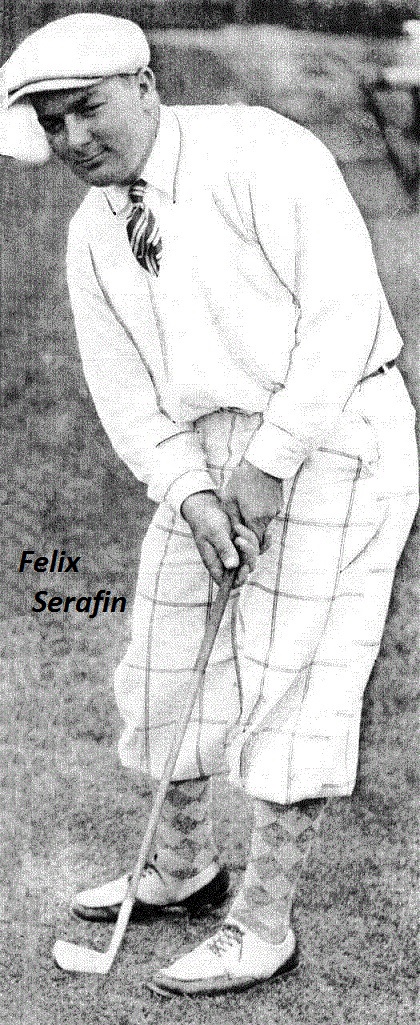
Pine Valley Golf Club’s playing professional Ted Turner finished just before the storm arrived with rounds of 72 at SDGC and 69 at Overbrook. He was medalist by three strokes. Hagen who was paired with Lawson Little failed to qualify. Little missed qualifying also, but one year later he won the U.S. Open.

Because of what happened at St. Davids with the lightning, the USGA had a fire truck stationed at the Philadelphia Country Club for the U.S. Open. The truck’s siren was used to warn the golfers of approaching thunder storms.

A Philadelphia PGA club pro may have been the victim of an Augusta National ruling!

“DID YOU KNOW”
A Philadelphia PGA Club Pro May Have Been the Victim of an Augusta National Ruling!

The fifth Masters Tournament kicked off on Friday April 1, 1938. The schedule called for one round on Friday, one round on Saturday and 36 holes on Sunday. There were five professionals from the Philadelphia Section in the starting field.

Serafin, Felix 2 TTTOne of those was Felix Serafin, the head professional at the Country Club of Scranton. Serafin was in the fourth pairing of the day at 12:45. With a field of only 44 players the first starting time was 12:30.
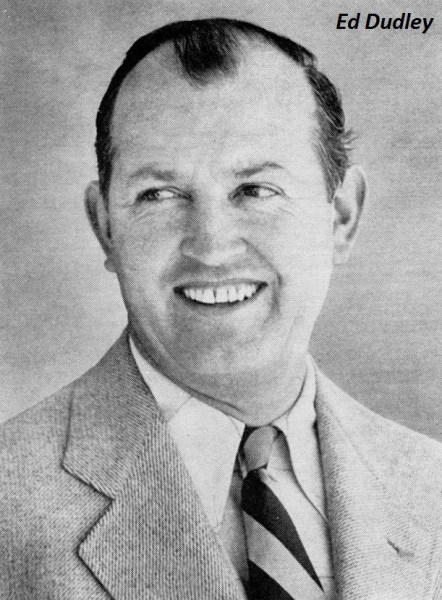
Within a couple holes of Serafin’s start it began to rain. Serafin finished the first nine with a four under par 32 and with rain continuing to fall Serafin made it to five under par at some point on the back nine. When Bobby Jones, the president of Augusta National, had to hole a putt from the back of the first green for a bogey 5 play was stopped and the golfers were called in off the course. The first round was then called a “Rain Out”. In those days when the full field could not complete a round due to weather all scores for that day were just “Washed Out”.

In 1938 communications and scoreboards for golf tournaments were not what they were later. On Saturday the New York Times reported Serafin being four under par on the front nine but losing strokes on the second nine. The next day the newspaper corrected its article and gave Serafin credit for his fine play. One thing that everyone knew was that Serafin was well ahead of the rest of the field when play was stopped.

Serafin wasn’t an unknown or he would not have been invited to the Masters. Along with other victories he had already finished second in the 1935 North & South Open and won the Pennsylvania Open twice. During his career he played in 11 U.S. Opens, 8 Masters Tournaments and 6 PGA Championships.

With a Monday finish, Hershey Country Club head professional, Henry Picard won by two strokes with a three under par 285. Serafin put together a 291 total and tied for sixth with the host professional Ed Dudley, who was also the professional at the Philadelphia Country Club at the same time. First prize was $1,500. Serafin and Dudley each won $275.

The PGA Tour pros played with 16 clubs during World War II!

“DID YOU KNOW”
The PGA Tour pros played with 16 clubs during World War II!

When the USGA declared that the long putter could no longer be anchored to the body as of January 1, 2016 there was an outcry from PGA Tour professionals who use that style to make a living.  A significant topic of discussion was the separation of rules, the Tour’s having their own set, with some difference from the USGA/R&A rules of golf.

This has happened before. In 1938 the USGA, for the first time, had imposed a limit of 14 clubs a golfer could use in a stipulated round. When World War II broke out the PGA Tour was faced with a depletion of competent playing pros. To keep the public interested in its tournaments, the PGA’s touring professionals voted to allow the players to carry 16 clubs. It was felt that with 16 clubs they would be able to show the spectators a wider variety of golf shots. (They also played “Preferred Lies” due to poor turf condition.)

Over the years the PGA Tour differed and deviated from the USGA over several other rules like; the stymie, cleaning the ball on the green, how to play preferred lies, embedded ball rule, method for marking balls on the greens and grooves on irons.

Dudley, Ed TTTIn January 1946 Ed Dudley, the president of the PGA of America and the pro at the Augusta National Golf Club, received a letter from the United States Golf Association informing the PGA that is was time to begin playing by the “Rules of Golf” again. Dudley fired a letter back stating that his organization had no apology to make. He stated that the PGA ran over 40 tournaments a year on the PGA Tour in all kinds of weather and course conditions. He also pointed out that the USGA only sponsored one tournament a year in which professionals compete and that was in the summer under favorable conditions.

In May 1946 at the Western Open Sam Snead disqualified himself after shooting a first round 69 with 16 clubs when he discovered that the tournament was being played under USGA rules and a 14 club limit.

It was not until the 1947 Masters Tournament that the PGA Tour returned to playing with a maximum of 14 clubs and most other USGA Rules.

Blog at WordPress.com.

Up ↑