
“Did You Know”
The USA Ryder Cup team played a match against mainland Europe in 1953!
In early October 1953 the PGA of America’s Ryder Cup team was in England to take on the Great Britain & Ireland Ryder Cup team. The match was being played at what was called the “tough” Wentworth Golf Club, which measured 6,700 yards. Ben Hogan, who was having a great year but still unable walk those 36-hole matches, had given up his spot on the team. Dutch Harrison also declined due to a fear of flying. News articles were stating that the US team was the weakest. No matter what others thought, U.S captain Lloyd Mangrum said, “We’re here to win.” The battle-hardened Mangrum was the perfect captain for this team. Less than ten years earlier he had been awarded two Purple Hearts while battling the Germans in France. Mangrum had been offered the professional’s position at the Fort Meade army base golf course but instead opted for deployment in the European Theater.
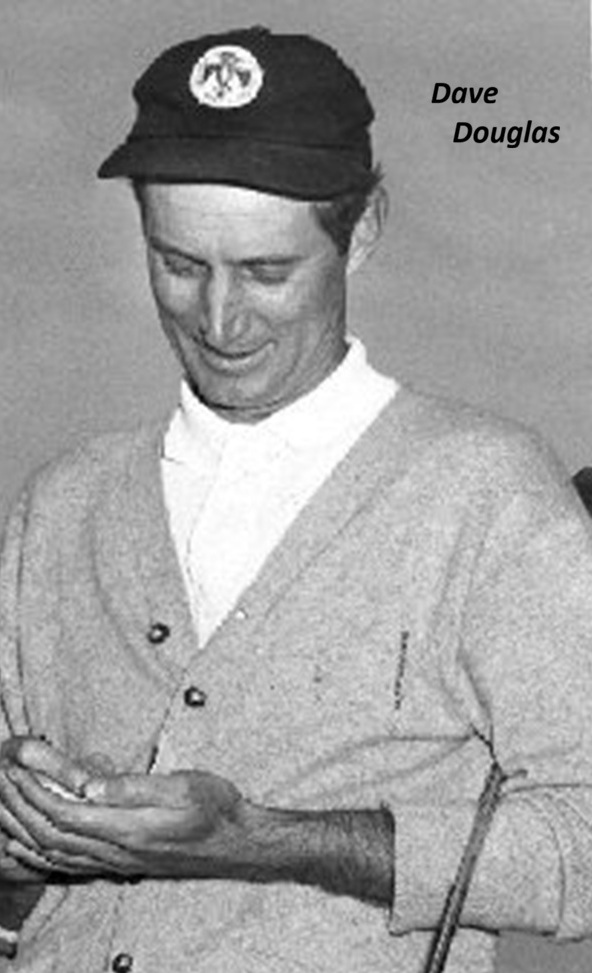
The Ryder Cup schedule consisted of four scotch foursomes (alternate strokes) the first day and eight singles matches the second day. On day one the US team won three of the four matches, and two by large margins, even though they seldom played that format at home in the states. One of the winning teams was Dave Douglas and Ed “Porky” Oliver, who had played as partners while growing up in Wilmington, Delaware. Douglas had earned his way onto the team by winning the Canadian Open that summer.
The second day the eight singles matches were a different story. To the dismay of the USA its two best players, Sam Snead and Mangrum, were both defeated in their matches. If not for two three-foot putts that failed to find the cup late in the day, GB&I would have won for the first time since 1933. The USA escaped with a 6-1/2 to 5-1/2 victory.
After eking out that win in England it was on to the France for the US team to play a two-day Ryder Cup format against the rest of Europe. The US PGA was there at the invitation of the European Golf Association. Mangrum was heading back to France where he had been embroiled in World War II only a few years before.
One player who did not travel to France with the US team was Oliver. For some reason captain Mangrum had benched Oliver for the singles matches. With ten on each team, two players had to be benched for each session. Mangrum was making sure that each team member played in at least one session. But Oliver probably didn’t think it should have been him and his feelings were hurt. That year he had finished second at the Masters to Hogan and won a tournament on the PGA Tour.
The match took place at the Golf de Saint-Cloud in Saint-Cloud, France. There was no need to sit-out anyone for this two-day encounter as there were five foursome matches and ten singles matches, all scheduled for 18 holes. Six European countries were represented; France, Spain, Italy, Germany, Holland and Belgium. In each session a PGA official traveling with the team filled in for the absent Oliver. The Americans won four of the five foursome matches and seven of the singles. Two singles matches were halved with the American sub taking the lone loss. An estimated 2,000 spectators, including the Duke of Windsor, followed the golf each day.
Forty years before in 1913, four American golf professionals, which included Johnny McDermott playing number one, had played a two-day match against four French professionals. There were two four-ball matches on the first day and four singles matches on the second day, all 36 holes. The USA did not win a point.
Twenty-six years after Mangrum took his team to France, the GB&I Ryder Cup was changed to include all of Europe. Now every two years, the Ryder Cup is one of the most important events on the sports calendar.


Leave a comment