
“Did You Know”
The definition of an amateur golfer in 1916!
On January 18, 1916, Frank Woodward, president of the United States Golf Association, issued a lengthy statement on the definition of an amateur golfer. President Woodward stated, “Efforts of manufacturers to exploit their wares through the medium of skilled golfers is more widespread than was generally suspected, and that it has become absolutely necessary to call a halt.” A detailed list of violations of a golfer’s amateur status was spelled out.
Below are violations of one’s amateur status in abbreviated form:
*Playing or teaching the game of golf for pay, including accepting travel or living expenses for playing in a golf tournament or exhibition.
* Making or repairing golf clubs, golf balls, or other golf articles for pay.
* Serving after reaching the age of 16 as a caddie, caddie master, or greenkeeper for hire.* Lending one’s name or likeness for the advertisement or sale of anything except as a dealer, manufacturer, or inventor in the usual course of business.* Permitting one’s name to be advertised or published for pay as the author of books or articles on golf when one was not actually the author.* Accepting or holding any position that includes the handling of golf supplies or engaging in any business where one’s usefulness or profits arise because of skill or prominence in the game of golf.
* One who had been a professional in any other branch of athletics.
At the same time the USGA clarified some of the endeavors in golf for compensation that did not affect one’s amateur status. Writing books on golf, articles for newspapers or golf magazines, and employment as a golf course architect or golf course consultant did not make a person a golf professional.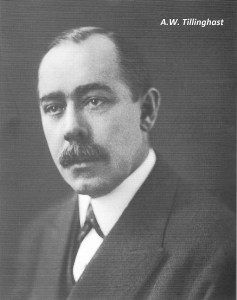 In order not to tarnish their amateur status, golf course architects like Philadelphia’s A.W. Tillinghast, George Thomas and Hugh Wilson had been wary of accepting compensation for their work.
When Francis Ouimet won the 1913 United States Open and became famous, some began to question his amateur status. Ouimet was working in sporting goods store, making $15 a week. In January Ouimet had been told that working in the sale of golf equipment was in violation of his amateur status.
On April 18, 1916, the USGA made it official. Ouimet received a letter from the USGA that his entry for amateur tournaments was no longer acceptable. By then Ouimet had formed a partnership with another man to open a store for the sale of golf supplies, but in the eyes of the USGA working in a store and owning a store was no different.
The New York Evening World newspaper stated “Based on the USGA’s definition of an amateur golfer, Ouimet had been a professional since 1911 when he began working in the sporting goods house”. That was at the age of 18. Two years later he had won the 1913 Massachusetts Amateur Championship and the 1913 US Open. A year later in 1914 Ouimet had won the US Amateur, the Massachusetts Amateur again, and the French Amateur. In 1915 he had won the Massachusetts Amateur for a third time.
Due to the USGA ruling, in 1916 Ouimet wasn’t able to defend his Massachusetts title or play in the US Amateur. Then with the USA in World War I there were no USGA championships in 1917 or 1918. Ouimet joined the US Army and participated in fund raising exhibitions for wartime charities.
When the USGA championships returned in 1919, Ouimet had a new line of work, banking. His amateur status was reinstated. Ouimet went on to win another US Amateur Championship, along with many other important amateur tournaments. He played on nine Walker Cup teams and was the captain six times. The 1919 Pennsylvania Open was at Whitemarsh Valley Country Club. Before John Beadle teed off his amateur standing was questioned. Someone had said that Beadle, a former caddy at Llanerch CC, who was now 19, had caddied after the age of 16. Beadle finished second to Charlie Hoffner in the PA Open that day. The real crux of Beadle’s amateur status was that he was also entered in the Pennsylvania Amateur Championship, beginning the next day at that same course, Whitemarsh Valley. Beadle produced a letter verifying that his last caddy days were before his 16th birthday. But, with all of the conversation about his amateur status, Beadle did not play well in the PA Amateur. He would go on to be the professional at Paxon Hollow Country Club (later White Manor GC) for 35 years.
Even as recently as the 1960s, a golfer would be deemed to be a professional by the USGA, if he worked in a golf shop, or as a caddy master after the age of 20 or received golf equipment for less than the listed price.
With the college golfers now being compensated, what is the definition of an amateur golfer in 2024?
 Trenham Golf History
Leave a comment