
“Did You Know”
The 1923 US Open was a marathon!
In the second week of July 1923, 360 golf professionals and amateurs came together at the Inwood Country Club on Long Island, New York for the United States Open. It was, by far, the largest entry in the history of the US Open. It was quite a commitment to travel from the western states without being assured a place in the tournament and only 12 money prizes to play for.
In order to pare down the large number of entries for the championship, the USGA scheduled four days of qualifying. The players were divided into four groups of ninety. Each day, for four days, ninety players played 36 holes, with the low 18 and ties, qualifying for the championship. Even the defending champion, Gene Sarazen, had to qualify.
There was a match between East and the West teams on Saturday to lead off the tournament week. Led by Sarazen and Walter Hagen, the East team defeated the West team 9 to 3. Golf professionals west of Pennsylvania were on the West team. Emmett French, who had grown up working in the locker room at Merion Golf Club and was now working in Youngstown, Ohio, was on the West team.
The following day 200 players were on the course for practice rounds.
The first segment of 90 entries played their 36-hole qualifier on Monday. The defending champion was given the benefit of being in the first day’s pairings. That game him three days of rest before the first day of the tournament. Sarazen stepped right up, playing the two rounds in 148 strokes, which was four better than anyone else that day.
Tuesday was day two of qualifying. Joe Kirkwood, who had recently arrived from Australia, was going along nicely until he made a bogey on the 9th hole. On the 10th hole his second shot clipped a limb and the golf ball ended up under a ten-foot-high wire out-of-bounds fence. But, part of the ball was still inbounds. Kirkwood climbed a tree near the fence and then lowered himself to the ground from a limb. He banged the ball back in play. Then he hitched an automobile ride back to the club’s entrance which was near the 10th tee. His fourth shot reached the green and he holed the putt for a bogey. Kirkwood finished the round in 70 strokes. With a 74 in the afternoon for 144, he finished ten strokes lower that anyone else that day. No one shot lower than 70 that week and there was only one other 70.
On Wednesday Macdonald Smith, who had traveled east from San Francisco, was low at 150, and the next day Jim Barnes and Johnny Farrell were low, also with 150s.
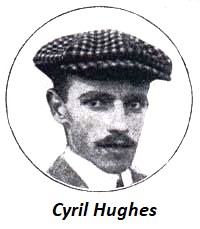
On Friday the first 36 holes of the championship were played. At the end of the day many of the favorites, like Sarazen and Hagen, were already out of contention. Jock Hutchison held the lead at 142. While others were faltering during Saturday’s final 36 holes, a 21-year-old amateur, named Bobby Jones was going along without problems until his last three holes. Jones finished bogey-bogey-double bogey, for a 76 to go with a morning 76. Still, he appeared to be the winner with a total of 296. Teeing off 90 minutes later than Jones in the last round, Bobby Cruickshank caught fire, playing seven holes on the front nine in 22 strokes. He stood on the 16th tee needing three pars to win. A double bogey on the 16th hole seemed to end his chances, but he finished with a par and a birdie to tie Jones. He had played the last two holes in four strokes less than Jones. Hutchison was third, six strokes back. Lancaster Country Club’s professional Cyril Hughes finished 11th.
In deference to church services, the 18-hole playoff didn’t begin until Sunday afternoon. Cruickshank had faced far more challenging situations. During World War I he had suffered shrapnel wounds and had seen his brother die right next to him from the shrapnel. Cruickshank later rejoined the conflict and would then spend eight months in a German prison camp, before escaping and rejoining his regiment. But victory was not to be for the Scotsman, who was now a professional in New Jersey. All even with Jones on the 18th tee, Cruickshank hooked his drive into heavy rough, laid up short of a pond with his second, and hooked his third into a greenside bunker, making a six. Jones won, 76 to 78. It was Jones’ first of many major titles.
After nine days in the middle of July, probably more with early practice rounds, the Inwood CC members got their course back. The USGA had decreed that the playoff, if still tied after the 18 holes, would not go into a second day, but be decided by sudden death.
The following year qualifying for the US Open was held before the tournament at two off site locations-one in the East at Worcester, Massachusetts and one in the West near Chicago, Illinois.
 Trenham Golf History
Leave a comment