
“Did You Know”
Ryder Cup eligibility is not a new quandary!
What the New York Times referred to as the Ryder Cup was first played in 1926 at Wentworth Golf Club near London, England. Five of the ten members of the US team were immigrants to the United States. The US team, which included Walter Hagen and Jim Barnes, was soundly beaten 13-1/2 to 1-1/2. The encounter was sponsored by Sam Ryder, a wealthy British seed merchant. Even though the match was unofficial the NY Times applied the name.
A year later, Sam Ryder put up a cup, similar to the Walker Cup, for the professionals from Great Britain to compete for against the US PGA professionals. The first official Ryder Cup was held at Worchester, Massachusetts in 1927. There was an unwritten agreement that all the team members would have been born in the country they represented. The US won 9-1/2 to 2-1/2. Two years later, back in England, the US lost the cup 7 to 5. On the second day 200 officials and 50 policemen tried to control the fifteen thousand spectators who turned out for the final day. 150 years later it was the British versus the United States again, but on the golf course. It took one-half hour for the last hole of some matches to be played.
US captain, Walter Hagen, said you don’t win all the time in golf and the US loss would be good for golf. It would make the future matches more interesting.
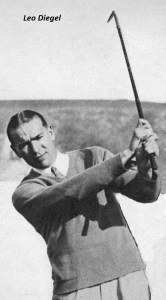 In 1931 it was now official, team members had to be born in the country they represented. Along with that, they had to be domiciled in the country they represented. The British PGA thought that two-time PGA champion Leo Diegel should not be eligible. Diegel was employed in Agua Caliente, Mexico, but when he showed that he had an apartment in San Diego 21 miles away, he was allowed to play. Three GB professionals who been on the victorious 1929 team were out. Two were working as club professionals across the English Channel on the mainland of Europe. Their best player, Henry Cotton, pulled out refusing to equally split any exhibition money he and the team members might earn while in the states. Cotton attended the Ryder Cup, working for a British newspaper. When Hagen held tryouts at Scioto CC, the host club, a US professional who played in the first two Ryder Cups failed to show, saying he was too busy at his club. It was thought that he might not have been born in the states. The US won 9-3.
When the 1933 Ryder Cup rolled around, Cotton was absent for another reason. He was holding down a club professional position in Belgium. When Denny Shute three-putted the last green, GB won 6-1/2 to 5-1/2, even without Cotton. One week later Shute won the British Open.
For 1935 the matches were moved to the fall in answer to GB professionals concerns about having to play in the US summer heat. To save the players having to make two trips a year, the matches had been scheduled close to the playing of the US and British Opens. Cotton was still based in Belgium and absent again. Played in late September, the US won 9-3.
In 1937 the US won the Cup on foreign soil for the first time. Then there was war in Europe and no Ryder Cup matches. When the Ryder Cup was resumed in 1947, Great Britain was not competitive due to little tournament golf for nearly 10 years. From 1947 to 1977 the US won all but two times; one loss and one tie.
Prior to the 1931 Ryder Cup the PGA of America had instituted a three-year apprentice program. Later it was increased to five years. In the US a touring pro had to make 26 cuts on the PGA Tour in one calendar year to knock one year off his apprenticeship. Players like Julius Boros, Cary Middlecoff, Arnold Palmer, Billy Casper, Lee Trevino and Jack Nicklaus were not eligible for the Ryder Cup until they had completed their apprenticeships and became PGA members. However, it did not have much bearing on the results as the US was winning without them.
In the 1950s the PGA of America instituted a requirement. For participation in the Ryder Cup, PGA members had to play in the two previous PGA Championships. With the PGA Championship being seven rounds of match play, three being 36 holes, some chose to skip it. Due to that Cary Middlecoff and Julius Boros were not eligible for the 1957 team. One year later, the PGA Championship, which was at Llanerch CC near Philadelphia, was changed to stroke play.
In order to make the matches more competitive it was decided in 1979 to include all European professionals and make it Europe versus the USA. That changed everything. It was much more competitive. Europe began to win more than the US.
To bolster the US team, in 1995 the PGA of America made all PGA Tour players, like Phil Mickelson, who was still an apprentice, PGA members–no more apprenticeships for PGA Tour members. They were given a special PGA classification. That move also cleared up confusion in the golf world about US PGA membership.
Once again in 2023, eligibility is a question. In 2022 some professionals from both sides defected to a professional tour financed by Saudi Arabian oil money. Defectors were banned from both the PGA Tour and the European Tour, which each own one-half of the Ryder Cup.
The European defectors are not eligible even through the captain’s picks. The defectors in Europe do have the option of returning to the European Tour by paying their fines. That was settled by binding arbitration.
Since 1968 the PGA Tour has been owned by the tour players. PGA Tour members also pay dues to the PGA of America. The PGA of America, composed of club professionals, owns the PGA Championship and the other half of the Ryder Cup.
In order to give the situation with the Saudi backed tour time to get sorted out, in 2022 the PGA of America granted the defectors PGA memberships for two years. By not having access to the PGA Tour, the defecting professionals have not been able to earn Ryder Cup points for the last two years. They are only able to play on the US team by receiving one of the captain’s six picks.
The Ryder Cup is being held in Rome this year. It was 1993 when the US last won the Ryder Cup on foreign soil.
 Trenham Golf History
Pete, Thanks for your articles. Henry
LikeLike