Struck by lightning at the Philadelphia Open, Ed Dudley should have been the winner!

“DID YOU KNOW”
Struck by lightning at the Philadelphia Open, Ed Dudley should have been the winner!

The 1931 Philadelphia Open, sponsored by the Golf Association of Philadelphia, was hosted by the Manufacturers Golf & Country Club in the second week of August. The tournament was scheduled for 72 holes over two days and attracted professionals from New York and the Middle Atlantic states.

On Monday morning more than 100 plus professionals and amateurs teed off in the first round and played in perfect sunny weather, but no one was able to even equal the par of 71. Concord Country Club professional Ed Dudley posted a 72 to lead the field by one stroke.

During the second round of the tournament that afternoon, severe storms swept across the course. Those players with decent scores from the morning round continued on, while many headed for the clubhouse. Some of the greens were so flooded the golfers had to use lofted irons to hole out. No one from the tournament’s committee appeared on the course to stop play.

At about 6:30 p.m. Dudley, paired with Clarence Hackney and Felix Serafin, was approaching the 18th green, which was near the clubhouse high above most of the course. With his umbrella over his head and putter under his arm, lighting struck nearby. Electricity reflected off Dudley’s steel shafted umbrella and putter temporarily paralyzing his right arm and leg. After a few minutes rest he putted out, finishing with an 81. Just after he putted out another bolt of lightning struck nearby. Dudley threw his putter into some bushes. 43 players turned in a score for the second round.
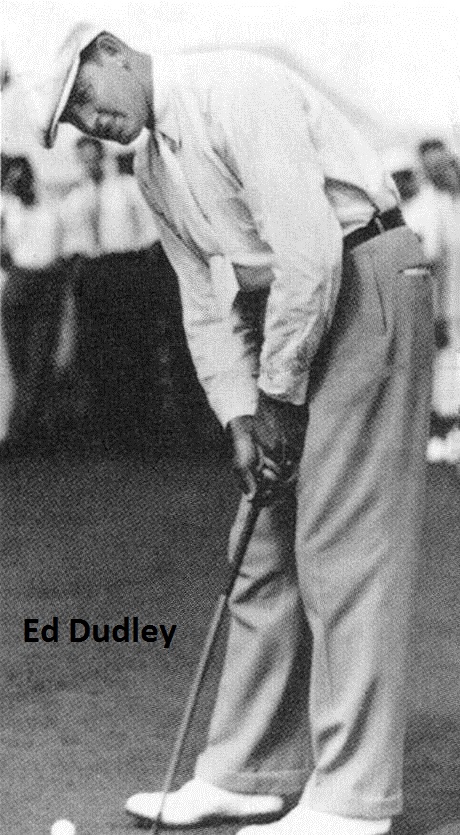
Dudley, Ed TTT

Dudley was examined at a hospital where he was found to have some red marks on his leg and his right arm and leg were stiff. He seemed to be alright other than that and was sent home. Due to Dudley being a member of the 1929 Ryder Cup team and having won the Western Open only a few weeks earlier, the incident made newspapers all over the country. Most of the articles mentioned that he would not be able to finish the tournament.  

The competitors assumed that the first round would count and the second round would be wiped out due to the course conditions, but the tournament committee canceled out both rounds and made it a 36-hole tournament. The committee sited a USGA rule.

Rule No.2 section 2 “If the committee considers that the course is not in playable condition or that insufficient light makes the proper playing of the game impossible, it shall at any time have the power to declare the days’s play null and void.

On Tuesday Dudley was back for his assigned time and played all 36 holes. Playing in what the newspapers described “an all day downpour” he posted a pair of 75s but it only earned him a four-way tie for second. Hackney, who benefited from the Monday cancellation after a first round 80, won with a (72-75) 147 total and picked up a check for $350.

If only Monday’s second round, when the golf course was unplayable for most of the time, had been washed out, Dudley would have won with ease.

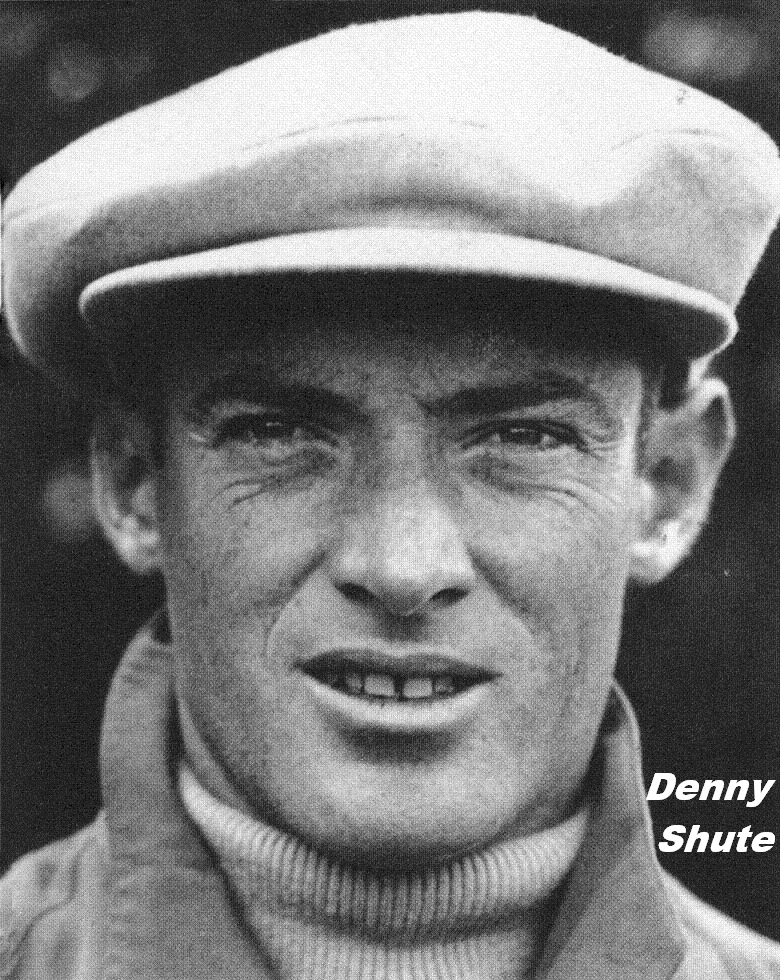
A Philadelphia club professional won the British Open after losing the Ryder Cup!

“DID YOU KNOW”

In early July 1933, Llanerch Country Club’s professional Densmore “Denny” Shute, was in St. Andrews, Scotland playing in the British Open at the Royal and Ancient Golf Club. Everyone, even the holder of the title, Gene Sarazen, had to pass a 36-hole prequalifying test. Once the tournament got under way, Shute never led until the 72nd hole. He started out with even par rounds of 73 and 73 to trail by six strokes. On the final day of 36 holes Shute began with another 73 and trailed by three as five were tied for the lead. On a windy afternoon, the scores ballooned. Craig Wood managed a 75 to take the lead in the clubhouse at 292. Later in the day Shute posted a fourth 73 to tie Wood at 292. In a 36-hole playoff the next day Shute was around in 75-74 to win by five strokes. It was nearly a home victory for the Scots. Denny’s father, now a golf professional in Ohio, had done his apprenticeship at St. Andrews, and his grandmother still lived in Scotland.

Just 10 days before that, Shute had been with the US PGA team competing against the British PGA team in the Ryder Cup at the Southport & Ainsdale Golf Club in Southport, England. With victories in 1927 and 1931 against a loss in 1929, the United States held the Cup and a slim lead. The British PGA was determined to retake the Cup with a win on their home soil. The great John Henry Taylor was the captain, and he took his appointment seriously. Taylor had his team members out running on the beach at daybreak each day.

Shute, Dennyx (TGH)

The match was played over two days. The first day there were four 36-hole foursome matches (alternate strokes), and the second day there were eight singles matches, which were also scheduled for 36 holes.

Taylor’s training may have helped. At the end of day one the British led by 2-1/2 points against 1-1/2 for the visitors. The second day’s singles matches were tightly contested. Late in the day the final score came down to the last match still on the course. The two combatants were Denny Shute and Britain’s Syd Easterbrook.  They came to the 36th hole, and after some indifferent golf, both reached the par four green in three. Both were putting from about 25 feet. Easterbrook putted first and was left with a three-foot putt.  The Ryder Cup result was now all on Shute. If he two putted, the match would most likely end in a tie and his team would retain possession of the Cup. If he holed his putt they would win.

The playing captain, Walter Hagen, should have been on the green to remind Shute that two putts would be alright, but Hagen was not there. He was up on a knoll behind the green talking to Prince Edward (who later as the King of England abdicated the throne). Shute, who was putting downhill, went past the hole by four feet and missed coming back. Easterbrook holed his putt and the British were victorious. When Hagen was asked why as captain, he was not there to advise Shute that a tie would keep the cup; he said that he felt it would be rude to interrupt a conversation with a future king.

One might say that Prince Edward won the 1933 Ryder Cup for Great Britain. Walter Hagen always called him Eddie.

Blog at WordPress.com.

Up ↑